How WFTDA certification shapes roller derby officiating worldwide
WFTDA’s officiating ladder puts training, peer review, and testable standards behind every roller derby call. The result is safer, fairer bouts across leagues and countries.
The loudest names in roller derby are usually the blockers, jammers, and pivots. But every jam also depends on a second cast of specialists, the officials who track penalties, keep the score moving, and make sure the bout is played under the same rules in one league as in the next.
WFTDA, the international governing body for women’s flat track roller derby, has built that work into a formal system. Its officiating program supports both referees and non-skating officials, or NSOs, through training documents, certification, standards, and clinics around the world. That is what turns officiating from a volunteer sideline task into a measurable job with levels, expectations, and a path upward.
Inside a bout, the officials are the game clock’s conscience
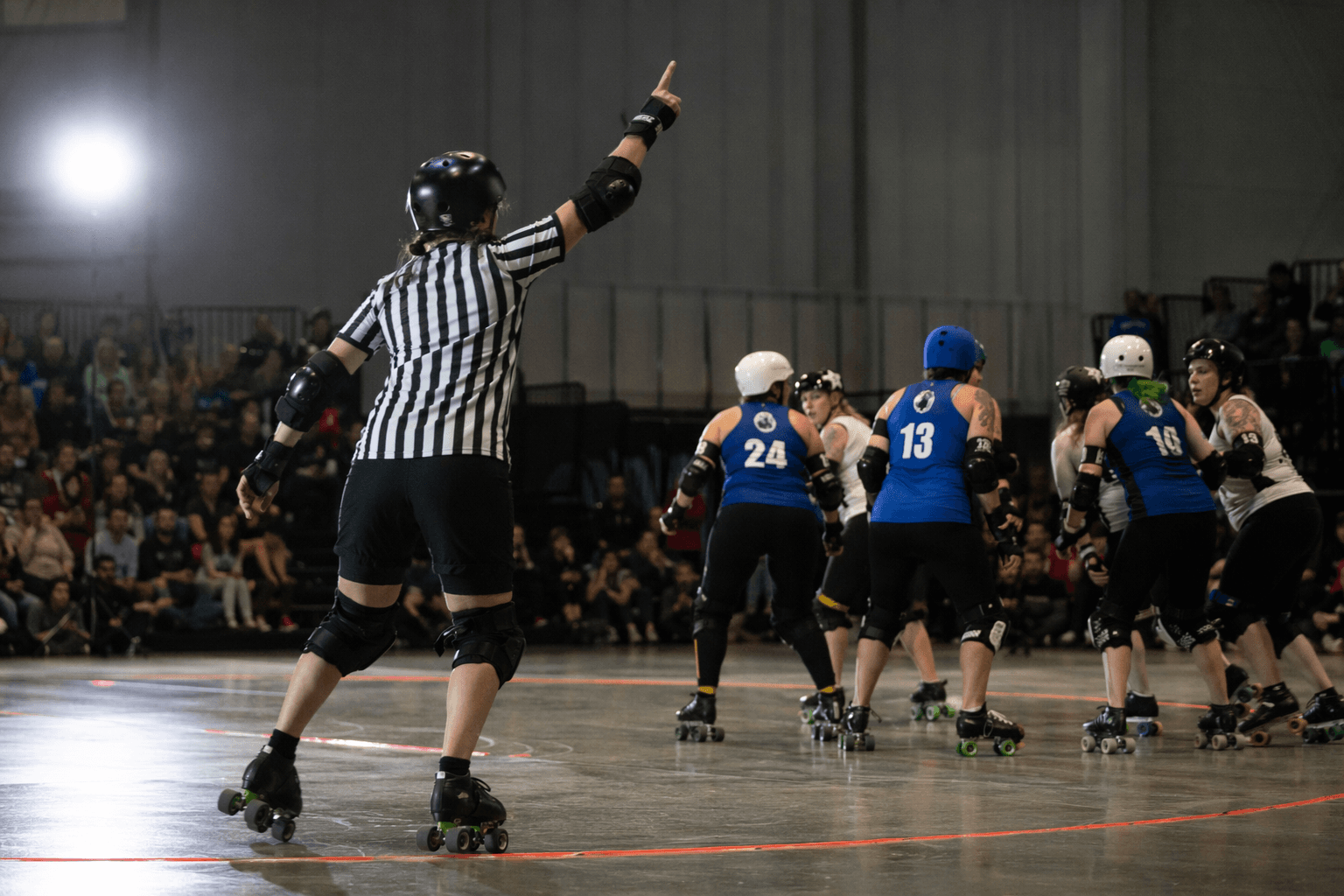
A roller derby bout runs on constant judgment. The Head Referee is the ultimate authority of the game, and that role sits at the center of the officiating crew whenever a jam gets messy, a block lands at the edge of legality, or a team needs a ruling that cannot wait. WFTDA’s rules and officiating materials also spell out officiating staffing, duties, communication between skaters and officials, and penalty assessment, which is why the crew’s work is built into the sport’s structure rather than layered on top of it.
The practical tools are specific, too. WFTDA’s Penalty Quick Reference Guide ties each penalty to the relevant rules section, hand signal, and verbal cue, so the call is not just seen, it is translated into a shared language that everyone on the track can understand. The StatsBook Manual focuses on correct paperwork and in-game procedures, which is the unglamorous work that keeps scorekeeping, penalty tracking, and bout records aligned while the skating keeps moving.
The certification ladder is not a badge, it is a process
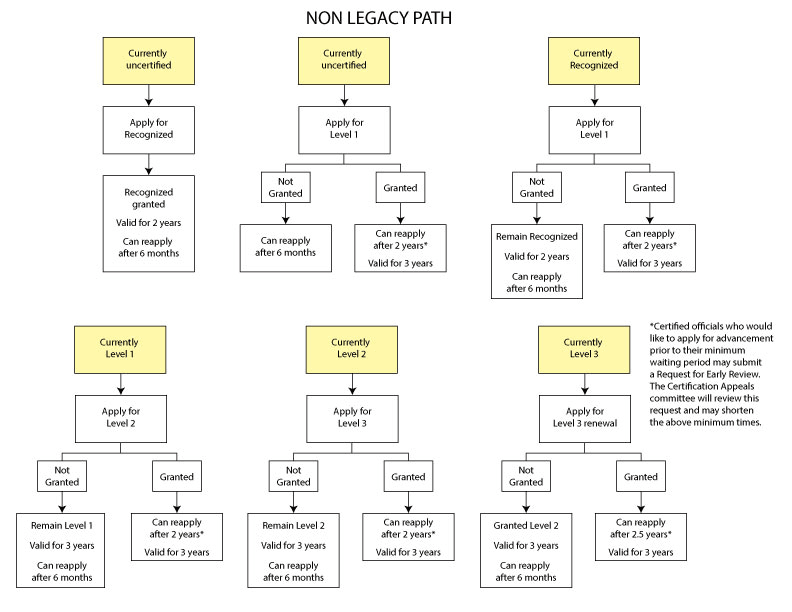
WFTDA’s current officiating certification system begins with Recognized status and then moves through Level 1, Level 2, and Level 3. The levels are tied to the kind of play an official is ready for: Level 1 covers Other and Regulation Play, Level 2 covers Regulation and Sanctioned Play, and Level 3 covers Sanctioned, Playoffs, and Championships Play. That ladder matters because derby does not ask officials to prove themselves only once. It asks them to show that they can keep doing the work as the stakes rise.
To earn certification, officials complete online training courses and a test. For Levels 1 through 3, they also have to prove performance over a minimum number of games and submit peer assessments, so the system depends on live observation rather than self-promotion. WFTDA bases certification on proven performance, with heads, mentors, and athletes observing officials in real games and building a complete picture of how they work under pressure.
That design makes the ladder feel closer to professional development than a local volunteer badge. It recognizes that one clean bout is not enough to establish readiness for a playoff environment, and that a referee or NSO has to show consistent judgment, communication, and accuracy before moving up.
The cost is modest, but the pathway still has support built in
The advanced coursework and tests cost $30 US and include access for two years. Basic lessons and the Recognized and Level 1 lessons are free, which lowers the barrier for officials who are just starting to learn the system or who are moving from casual local work into the certification path.
WFTDA also softens the financial edge cases. Officials who fail a certification test can retake it 30 days later, and any necessary retesting after the initial payment is free. The Bettie Mercury Officiating Scholarship exists for people who may have difficulty paying the learning management system fee, and WFTDA also encourages leagues to create their own funding systems for officials. Officials can pursue referee and NSO certification at the same time without paying a second fee, another detail that matters in a sport where many crews need people who can cross train.
The uniform and the paperwork are part of the competitive standard
At high-level events, officiating has its own dress code. WFTDA requires an officiating uniform policy for Continental Cups, International Playoffs, and Championships, and advises that standard for all play under its rules. That kind of consistency does more than make photos look neat. It makes crews easier to identify, reinforces the authority structure on the track, and signals that a bout is being run under a shared competitive standard.
The rules set also helps officials move from one venue to another without relearning the job each time. WFTDA’s materials cover the layout of staffing, the communication needed between skaters and officials, and the mechanics of assessing penalties. When the same framework is used in different cities and on different continents, the sport becomes easier to trust, because the process behind the call stays recognizable even when the jerseys change.
The system keeps changing because the sport keeps asking more of it
WFTDA launched the officiating certification program in May 2018 with support from the Men’s Roller Derby Association, framing it as a program owned and managed by WFTDA but built for all flat track roller derby officials. That launch was a marker of where the sport had gone: more sanctioned play, more travel, more playoff structures, and more pressure to make officiating consistent across regions.
The rollout kept moving after that. Level 2 applications reopened on September 15, 2019 after an earlier phase, and WFTDA later opened a certification survey in 2024 to the wider derby community. In October 2024, it started Officials Certification Office Hours, giving people a direct line to the Certification Committee to ask questions, raise frustrations, and push on the system in real time.
The most recent addition is the Tournament Head Officials Mentor Program, reopened in May 2026. It is aimed at first-time THOs, officials moving to a different level of gameplay, or people dealing with more complicated event structures. That kind of mentoring shows how seriously WFTDA treats the top layer of officiating, where one person’s decisions can shape the tone and control of an entire event.
WFTDA also continues to widen access through education. It has officiating clinics around the world, and its WFTDA-Recognized Clinic program supports independently run clinics whose curriculum matches WFTDA officiating education. That reach matters because roller derby’s officiating standard is only as strong as the people trained to use it, and the certification ladder gives those officials a path from first lesson to championship responsibility.
This article was produced by Prism’s automated news system from verified source data, official records, and press releases, then run through automated quality and moderation checks before publishing. The system is built and supervised by the people who set the standards it runs under. Read our full AI policy.
Did this article answer your question?