Roller derby pivot role, the key to star passes and strategy
The pivot is derby’s hidden control room, steering the pack and, with one legal star pass, turning a stalled jam into a scoring reset.
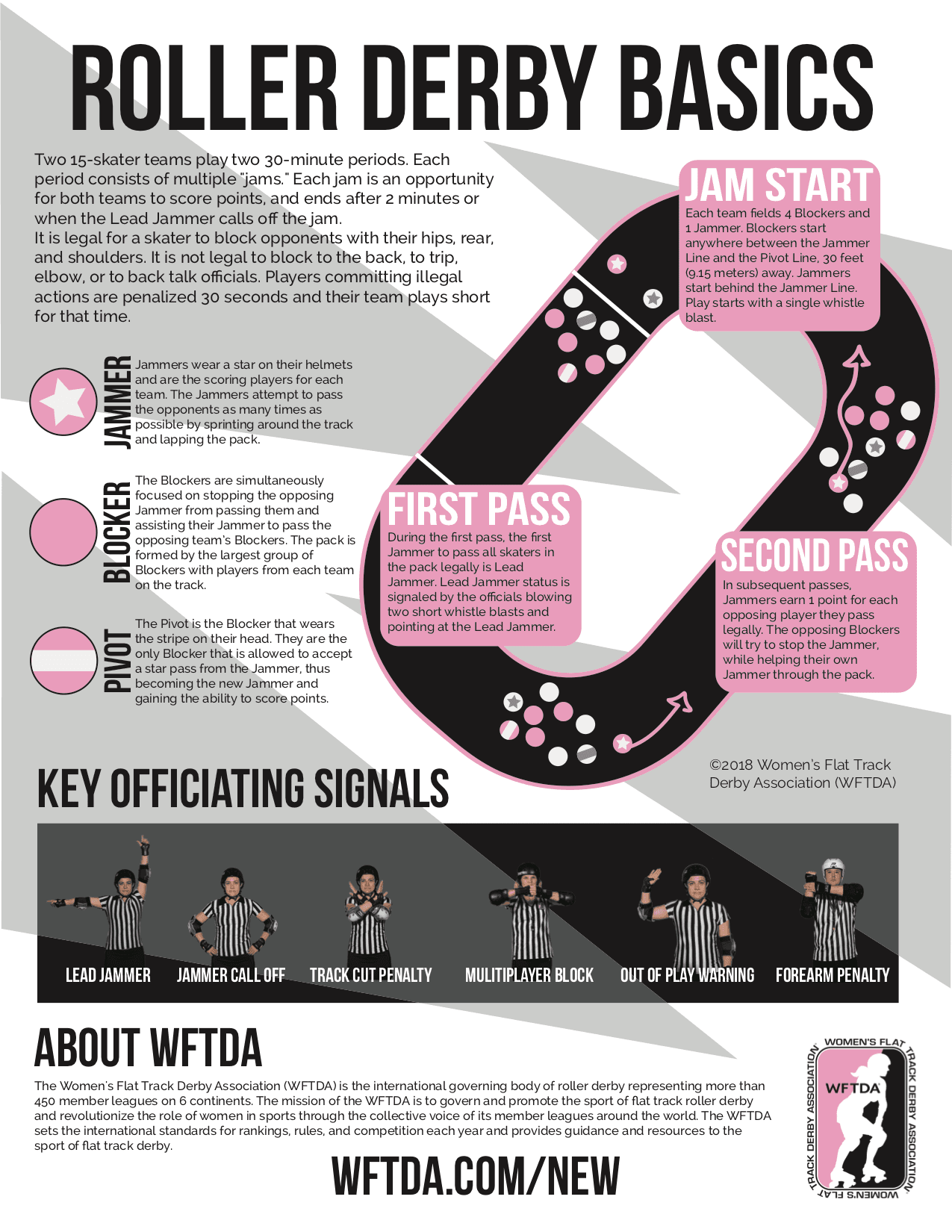
The skater in the striped helmet cover can steer the pack, communicate under pressure, and step directly into scoring duty when the star changes hands. In a game built around two-minute bursts and 30-second resets, that adaptability can decide a jam.
The pivot is the hybrid role most fans underrate
Under the Women’s Flat Track Derby Association rules, each jam starts with one jammer and up to four blockers per team, and one blocker can be designated as the pivot. That makes the pivot more than a standard blocker with a stripe. The role bridges defense, offense, and emergency adaptation.
The Women’s Flat Track Derby Association is the international governing body for women’s flat track roller derby, and its 2025 rules set is dated January 1, 2025. Leagues could begin adopting those rules immediately, and WFTDA-sanctioned play had to implement them by March 1, 2025. Because the pivot is defined by the rules, not just by tradition, those dates shape how teams set their walls, communicate inside the pack, and react when the jammer gets trapped.
The star pass is where the pivot becomes a weapon
The star pass shows the pivot’s value most clearly. WFTDA’s gameplay rules allow role changes during a jam only in that one situation, which makes the pivot the only blocker who can instantly become the scorer mid-jam. The jammer’s star can be controlled only by the jammer wearing it or by that team’s jammer or pivot holding it, and a legal star pass requires the jammer to hand the star to the pivot while both skaters are upright, in bounds, in play, and neither is headed to or queued for the penalty box.
The window is narrow. The star pass is a deliberate tactical switch that takes a jam that looks dead and gives it a second life. Once the pivot has the star, the role changes immediately: the pivot becomes the jammer for the rest of the jam. The casebook adds one more detail for live play: the skater visibly controlling the star is the jammer for that jam, even if the lineup on the track looks messy or the skater is not where you expected them to be.
Why the pivot controls tempo, not just possession
The pivot works as a pressure valve. If a jammer is stuck behind a set defense and the pack is swallowing the lane, the pivot can take the star and turn a stalled attack into a fresh one without waiting for the next jam. A jam lasts up to two minutes, and there are only 30 seconds between jams. In that little breathing room, a successful star pass can be the fastest way to reframe the shift.
There is also a defensive side to the same idea. Because the pivot is already embedded in the pack, that skater is often best positioned to judge whether a jam is salvageable, whether the wall has overcommitted, or whether the team needs to reset its offensive focus. The best pivots do not just react to contact. They call the shape of the pack, keep the blockers aligned, and make sure the team’s jammer is getting help instead of fighting alone.

- The pivot can direct the pack while still staying close enough to receive the star.
- The pivot can take over as jammer without waiting for a new jam.
- The pivot can help turn a broken play into a scoring chance in the middle of the same jam.
A star pass is a reset, not a bailout
The star pass is not only an emergency move. Yes, teams use it when the original jammer is trapped, boxed in, or out of options. But it also gives a team a way to reassign scoring responsibility without waiting for the whistle.
The old WFTDA rule language makes a distinction that still helps frame the tactic: a pivot who becomes the jammer can score points, but cannot gain lead jammer status. The star pass changes who carries the offensive burden, but it does not hand over every advantage in the rulebook.
If the jammer starts behind the pack and the blockers build the main battle in front, the pivot sits between those worlds. On one jam, the pivot is a pack leader calling traffic and setting walls. On the next, that same skater may be the scorer after a legal handoff, responsible for turning contact into points.
Why the role matters across the sport
Roller derby is played by about 1,250 amateur leagues worldwide, and that reach gives the pivot’s role real weight. The sport remains strongest in the United States, but the same basic logic travels well: every league needs skaters who can read space, communicate fast, and switch from defense to attack without hesitation.
This article was produced by Prism’s automated news system from verified source data, official records, and press releases, then run through automated quality and moderation checks before publishing. The system is built and supervised by the people who set the standards it runs under. Read our full AI policy.
Did this article answer your question?