Roller derby’s history is a story of reinvention and reinvention again
Roller derby has been remade more than once, from a Chicago endurance race to Austin’s flat-track reboot, and each reset changed what the sport meant.

Roller derby has never stayed still long enough to be mistaken for one fixed game. It emerged in Chicago as an endurance contest on a banked rink, turned into a televised collision sport, then returned in Austin as a flat-track experiment that fit modern gyms, parking lots, and do-it-yourself league culture. The story is not one of simple survival. It is a chain of reinventions, each shaped by the audiences, venues, and media that surrounded it.
From skating craze to endurance spectacle
The sport’s deeper roots reach back before the 1930s, to late-19th-century roller-skating races and a broader skating boom that spread through the United States and western Europe. Rinks opened in both small towns and large cities, and that infrastructure made roller skating a mass pastime long before roller derby gave it a formal name. The term “derby” was attached in 1922, but the sport that would carry it into the public imagination took shape a little later in Chicago.
That professional version took shape in Chicago in 1935, where Leo Seltzer built it as an endurance competition between male-female couples on a banked rink. The early format was extreme by design, built around 57,000 laps, roughly equivalent to traveling across the United States. In its first incarnation, roller derby sold stamina as drama. The spectacle was not yet a contact sport in the modern sense, but it already understood that exhaustion could be as compelling as a knockout.
A few years later, the format changed again. The sport was restructured as a contact game with two teams of five men and five women. That shift mattered because it moved roller derby away from pure endurance and toward physical confrontation, a model that would eventually define the sport’s most famous images. Even before television made it a mass spectacle, the game was building a new identity out of speed, falls, and deliberate collisions.
Television, theatrical franchises and the collapse of the original era
Roller derby’s first great boom came when it reached television in the late 1940s. Bigger crowds followed the move to TV, and the sport’s visibility soared enough to make it a cultural staple rather than a niche rink act. The sport was first televised from the Polo Grounds in New York in 1946, then captured national attention again with a broadcast from the 69th Regiment Armory at the end of November 1948. Those broadcasts helped turn a rink-bound pastime into a national product.
The appeal was partly athletic and partly theatrical. Professional roller derby was hugely popular in the 1940s, then increasingly scripted, with predetermined outcomes and performance elements overtaking the competition. The spectacle drifted toward theatrical franchises in the 1960s, and Jerry Seltzer shut down the original Roller Derby organization in 1973. By the mid-1970s, the original professional version had essentially disappeared.

Austin and the flat-track reset
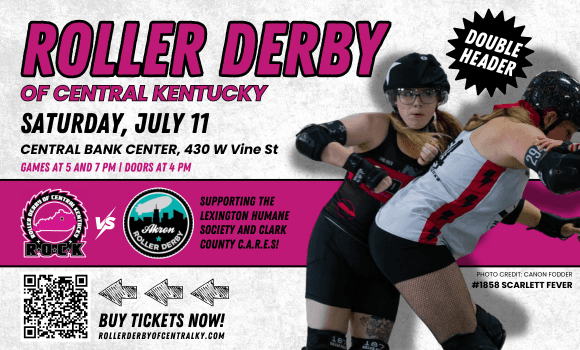
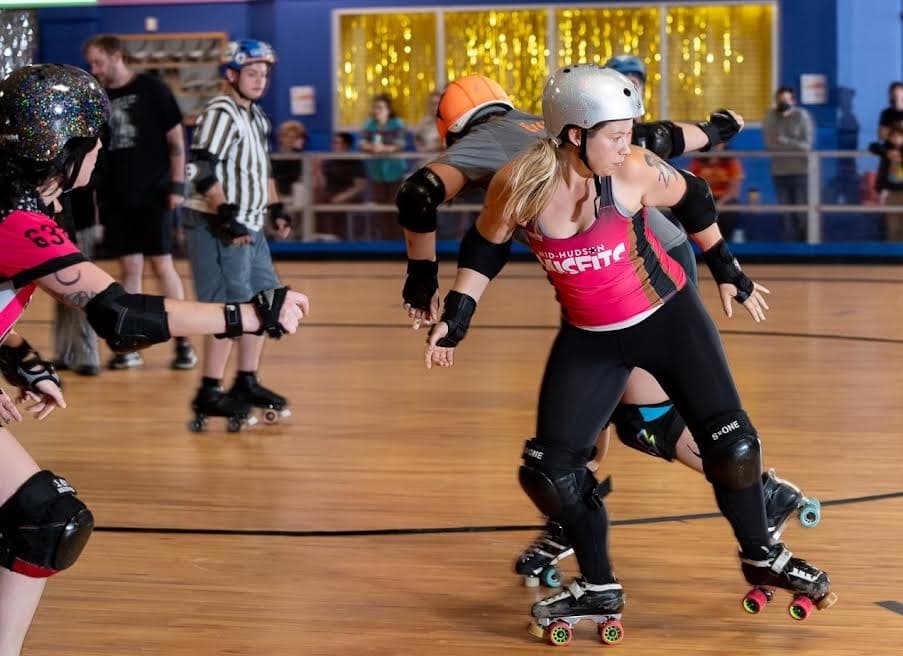
Modern roller derby began in 2001 in Austin, Texas, when women revived the sport on a flat track. That single design choice changed everything. A flat track made it possible to play on basketball courts or in parking lots, which meant leagues no longer needed the capital and space required to build or rent a banked rink. Accessibility, not nostalgia, became the organizing principle.
Austin’s Red River District punk scene helped drive that revival. Bad Girl Good Woman Productions helped birth the new roller derby movement there in 2001. TXRD traces new life in the sport there to that year, while the Texas Rollergirls trace the sport’s Austin start to 2003 and are often credited as originators of flat-track derby.
Building an international sport
The organizational side of the revival followed quickly. The Women’s Flat Track Derby Association began in 2004 as the United Leagues Coalition. At its first meeting in 2005, 20 flat-track leagues were represented, and the organization opened to new members in 2006. That sequence gave the sport a framework that the old professional era never had at the same scale: shared rules, a growing league network, and a clear path for expansion.
By 2011, the revival had already gone global. The inaugural Roller Derby World Cup took place in Toronto, Ontario, Canada, from December 1 through 4, hosted by Toronto Roller Derby at The Bunker at Downsview Park. Teams from 13 countries took part, and each sent 20 skaters plus alternates.
This article was produced by Prism’s automated news system from verified source data, official records, and press releases, then run through automated quality and moderation checks before publishing. The system is built and supervised by the people who set the standards it runs under. Read our full AI policy.
Did this article answer your question?