State College roller derby team finds family and belonging on track
SCAR sells derby as a hard-nosed sport, but the real hook is the community: skaters call it a family, a safe space, and a place to keep competing.
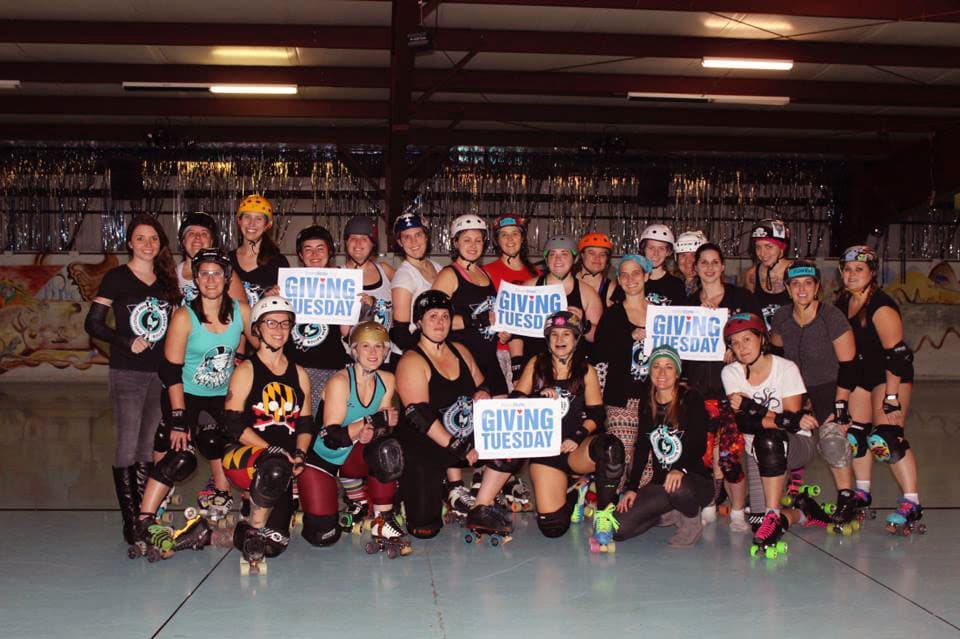
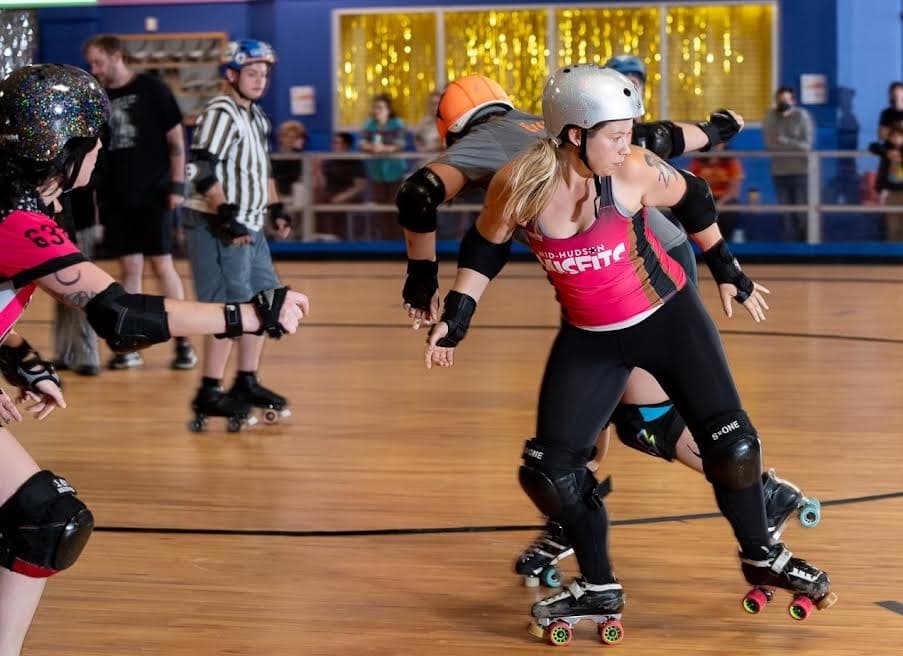
State College Area Roller Derby does not just keep skaters on their feet. It keeps them in the game. In a sport built on speed, contact, and bruises, SCAR’s bigger edge is what happens between whistles: a volunteer-run culture that feels less like a club and more like a home base.
Belonging is the real retention tool
Tiffany Kasper, who skates as Chemical Restraint, helps explain why the league keeps people around. She is the current president, has also served as vice president and secretary, and teaches many of the classes for newcomers, which gives her a front-row view of how a brand-new skater gets folded into the group. That matters because SCAR is not trying to sell derby as a one-off thrill. It is building a pipeline of people who can learn the sport, learn the culture, and stay.
The language tells the story as clearly as the roster does. The old phrase "fresh meat" has been replaced by "fresh muscle," a small shift with a big signal: this is a league that wants new skaters to feel respected before they ever take a hit. In a physical sport where beginners can feel exposed fast, that kind of terminology is not cosmetic. It is culture in one phrase.
Zoey Rhoads, known on track as Zoe Flake, brings the same point home from a different angle. After coming out as transgender in 2019, she wanted a place where she could still compete in sports, and roller derby gave her that lane. She says the team gave her a family when she did not have one, and that her mental health is better because of the people there. That is the retention story in plain English: the sport gets people through the door, but the community is what keeps them showing up on Monday and Thursday nights.
What the weekly rhythm says about the league
SCAR practices every Monday and Thursday from 8 to 10 p.m., and those four weekly hours are the backbone of everything the league becomes. Two nights a week may not sound dramatic until you remember what derby demands: timing, balance, communication, and trust under pressure. The schedule suggests a group that is not improvising its identity. It is rehearsing it.

That regularity also helps explain why the league can double as a support system. A team that meets twice a week has room to be more than a roster. It becomes a standing appointment, a place where skaters can train, catch up, and check in on one another. In a rural setting where belonging can be hard to find, that predictability is part of the value.
SCAR’s website says the league offers an inclusive and affirming environment that welcomes people of all gender identities and skill levels. That promise is not an abstract slogan. It is reinforced by the way the league handles entry, onboarding, and leadership, with seasoned skaters like Kasper teaching newcomers and modeling how the group operates from the first class onward.
A skater-owned league with real structure
SCAR describes itself as a skater-owned and operated flat-track derby league, and it also identifies as a volunteer organization. That matters because it explains why the community feels so embedded in the sport itself. The skaters, referees, and officials are not just supporting the product. They are the product, and that often changes how people treat one another on and off the track.
The league’s membership spans the Centre Region and includes people across a wide range of ages and lifestyles. That mix is part of the appeal. Derby has always made room for people who might not fit a single athletic stereotype, and SCAR leans into that openness by presenting itself as a place where age, background, and identity do not have to be barriers to competition.
WFTDA lists State College Area Roller Derby as founded in October 2010, and says it became a nonprofit in 2015. It also lists four teams inside the league: the Happy Valley Dolls, which serve as the travel A team and WFTDA team, Plan B as the travel B team, and the intraleague Mt. Nittany Mayhem and Pennsyltucky Punishers. That structure gives SCAR depth. It is not just one squad gathering for games. It is an ecosystem with multiple levels of competition and plenty of ways to belong.
Why inclusivity matters in a contact sport
Roller derby has long stood out as unusually inclusive for a contact sport, especially for trans and gender-diverse athletes. Recent reporting has noted that years before national sports politics turned trans participation into a flashpoint, derby was already wrestling with those questions and often chose inclusion, even if some skaters still faced discrimination. That history helps explain why a league like SCAR can feel so welcoming without treating that welcome as a novelty.
WFTDA’s gender statement makes the stance explicit: any individual of a marginalized gender is welcomed and encouraged to participate in WFTDA in any capacity, including skating on a charter or holding elected office. For a league like SCAR, that policy is not just a governing principle. It is part of the sport’s lived identity. When a trans skater can join, compete, lead, and help shape the league, the community stops being a side benefit and becomes the mechanism that keeps the whole program alive.
That is why the "safe space" language lands here. In a sport where hard checks and fast turns can be intimidating, the off-track environment has to be strong enough to hold people through the learning curve. SCAR’s model suggests that the healthiest leagues are not the ones that simply tolerate difference. They are the ones that organize around it, normalize it, and make it part of the team’s working rhythm.
The next season is already the point
SCAR says it is hard at work putting together its 2026 season, and it is also advertising a Saturday 6/27 mixer. That combination tells you where the league is right now: still building, still recruiting, still making space for new skaters to enter the fold. The competition matters, but so does the invitation.
That is the real lesson in the State College story. SCAR survives because it understands that retention is not a marketing trick. It is the result of rituals, leadership, and team norms that make a demanding sport feel worth the effort. The hits bring people in. The family keeps them there.
This article was produced by Prism’s automated news system from verified source data, official records, and press releases, then run through automated quality and moderation checks before publishing. The system is built and supervised by the people who set the standards it runs under. Read our full AI policy.
Did this article answer your question?