WFTDA curriculum maps roller derby beginners from first skates to proficiency
WFTDA’s beginner curriculum turns the first weeks on skates into a staged path, with safety, contact, and mixed-level play built into every step.
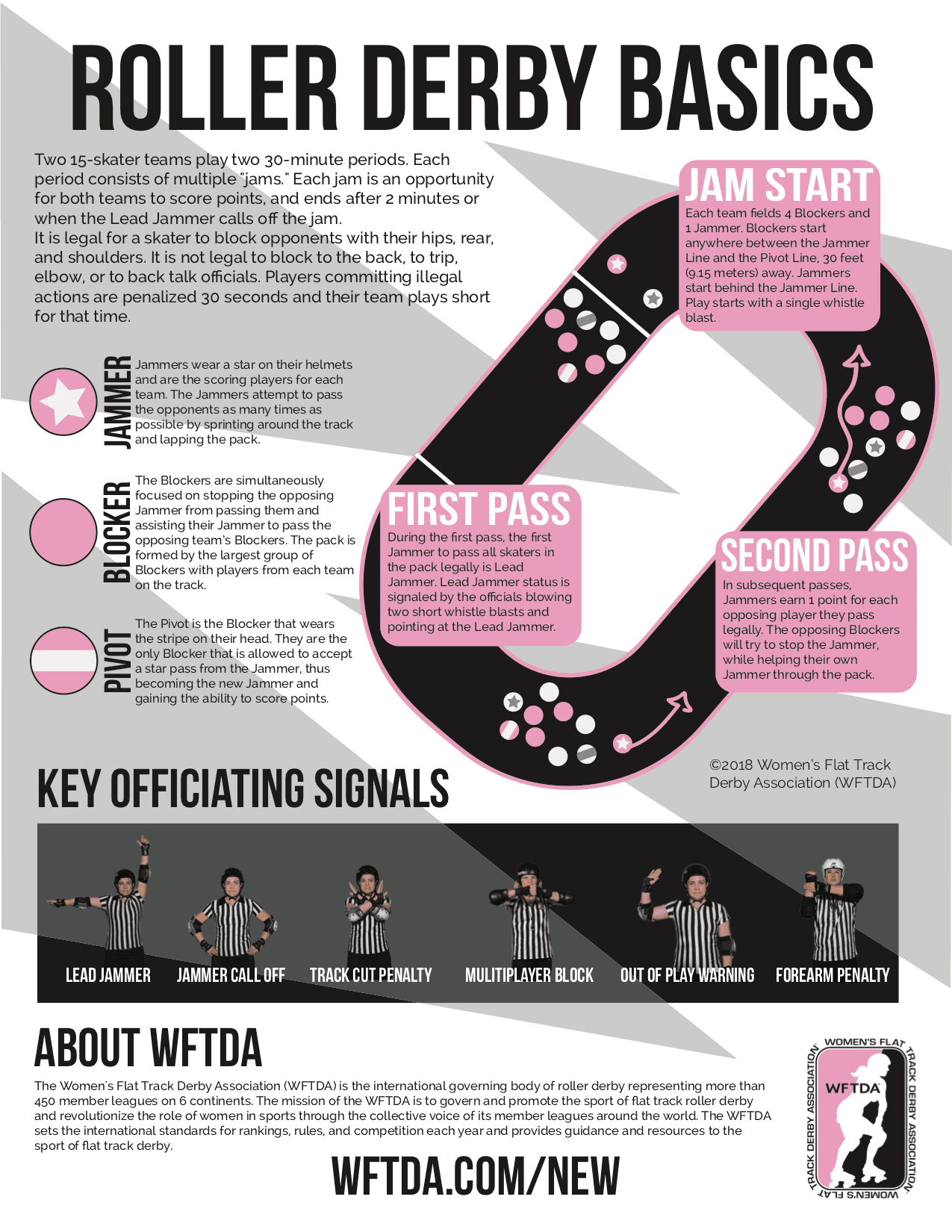
Fresh skates, borrowed pads, and a room full of coaches, referees, and veterans can overwhelm a new recruit in the first weeks of roller derby. In WFTDA’s This Is Roller Derby, that opening stretch is mapped as Introduction, Exploration, Development, and Proficiency, with safety and confidence built into each step. It arrives in a sport where the old minimum-skills gate is gone, so the first question is no longer whether someone can clear a fixed test, but how a league can build them responsibly.
A first practice built around progress
The curriculum is built on a participant-centered approach. A newcomer’s first practices are meant to feel like the start of a learning pathway, not a pass-fail audition, with time to understand gear, balance, movement, and the shared expectations of the gym before anyone is pushed toward full-contact play.
WFTDA’s skater-training resources include equipment check guidance and returning-after-a-break materials. The beginner curriculum also includes guidance for officials. Coaches, referees, non-skating officials, and volunteers all need a common framework if a league wants beginners to stick around and improve.
The four stages on the rink
The curriculum’s four development stages give leagues a practical way to pace the first weeks on skates. Introduction is the on-ramp, where the new participant meets the sport’s structure, culture, and safety expectations. Exploration opens the door to trying skills and roles in a lower-pressure setting, while Development asks for more repetition, more consistency, and more confidence as the skater starts connecting individual skills into real play.
Proficiency is the point at which a skater is ready for full regulation roller derby. The FAQ describes the goal of the new curriculum as training and developing new participants for WFTDA full regulation roller derby.
The PDF itself reflects that structure. Its contents include Principles of the Curriculum, Participant-Centered Approach, The Curriculum, How to Use This Curriculum, Development Stages, Introduction, Exploration, Development, Proficiency, and References & Acknowledgements. It is a teaching document built to help leagues turn abstract progress into day-to-day practice planning.
Why contact gets its own lane
In the companion guide Introducing Contact and Recovery, WFTDA says contact is an important part of WFTDA gameplay, and it carries additional risks for both new and long-term participants. That is why leagues are urged to dedicate specific training time so learning contact does not create additional risk. For a new skater, that means contact should be introduced deliberately, not folded casually into every session.

The companion guide Recommendations on Mixed Level Play is aimed at coaches, trainers, and leagues integrating new players into scrimmage, and it stresses that one size does not fit all. Leagues manage different skill levels, different progression pathways, and different numbers of skaters and officials, so the curriculum has to be flexible enough to fit a small home league and a larger travel program without flattening either one.
WFTDA’s 5 Tips on Where and How to Start with the New Curriculum acknowledges the pandemic context, asking what the change means for a league and how it wants to train to get back skating. The curriculum was designed for rookies and for leagues rebuilding habits, space, and confidence after interruptions.
More than players, more than one test
The FAQ addresses timeframe and implementation, testing and game requirements, safety and injury prevention, exclusion and favoritism, the role of officials, and transfer skaters.

Roller derby leagues rely on a wide support network, and the curriculum recognizes that the pathway into the sport can include officiating, volunteering, and other roles that keep the game running.
From minimum skills to a more flexible entry point
The new curriculum sits inside a longer WFTDA history of formal skill benchmarks. The earlier Minimum Skills Requirements document was revised January 31, 2013, and marked © 2017, which shows the association had long used written standards to define entry. Then WFTDA changed course: as of December 15, 2020, the former Minimum Skill Requirements were removed from the Charter Policy, are no longer required for WFTDA charter skaters in a sanctioned game, and are no longer recommended in general.
WFTDA says there are no other baseline skill requirements for entering a WFTDA-sanctioned game, and member leagues no longer have to provide or require the Skater Rules Test. The new beginner curriculum was part of that transition, and WFTDA’s transition plan says the change applied from December 15 on.
This article was produced by Prism’s automated news system from verified source data, official records, and press releases, then run through automated quality and moderation checks before publishing. The system is built and supervised by the people who set the standards it runs under. Read our full AI policy.
Did this article answer your question?