WFTDA guide helps new fans understand roller derby live
Roller derby snaps into focus once you can hear the announcer call the jam, the lead jammer, and the star pass. WFTDA’s guide turns the track’s fastest moments into a readable live game.
Roller derby looks chaotic until the announcer starts translating the action in real time. The Women’s Flat Track Derby Association’s announcer guide was built after months of collaboration and testing at events, and that matters because the job is bigger than hype: it turns a fast, crowded track into a game you can actually follow.
What to listen for first
The easiest way into a bout is to track three moments the announcer will keep naming: who becomes lead jammer, who is scoring, and when a star pass changes the shape of the jam. WFTDA’s scoring rule is simple and brutal at the same time: jammers score one point every time they lap an opposing blocker. Once you know that, the energy of the broadcast makes sense, because a jam can swing fast when a jammer slips past the pack even once.
The announcer guide is designed for that kind of live decoding. It includes a beginner announcers quick reference, which signals that it is meant to help people learn the sport, not just help them sound polished on a microphone. That is why it works so well as a fan guide: it teaches the language of the bout at the same pace the game unfolds.
How the track is built
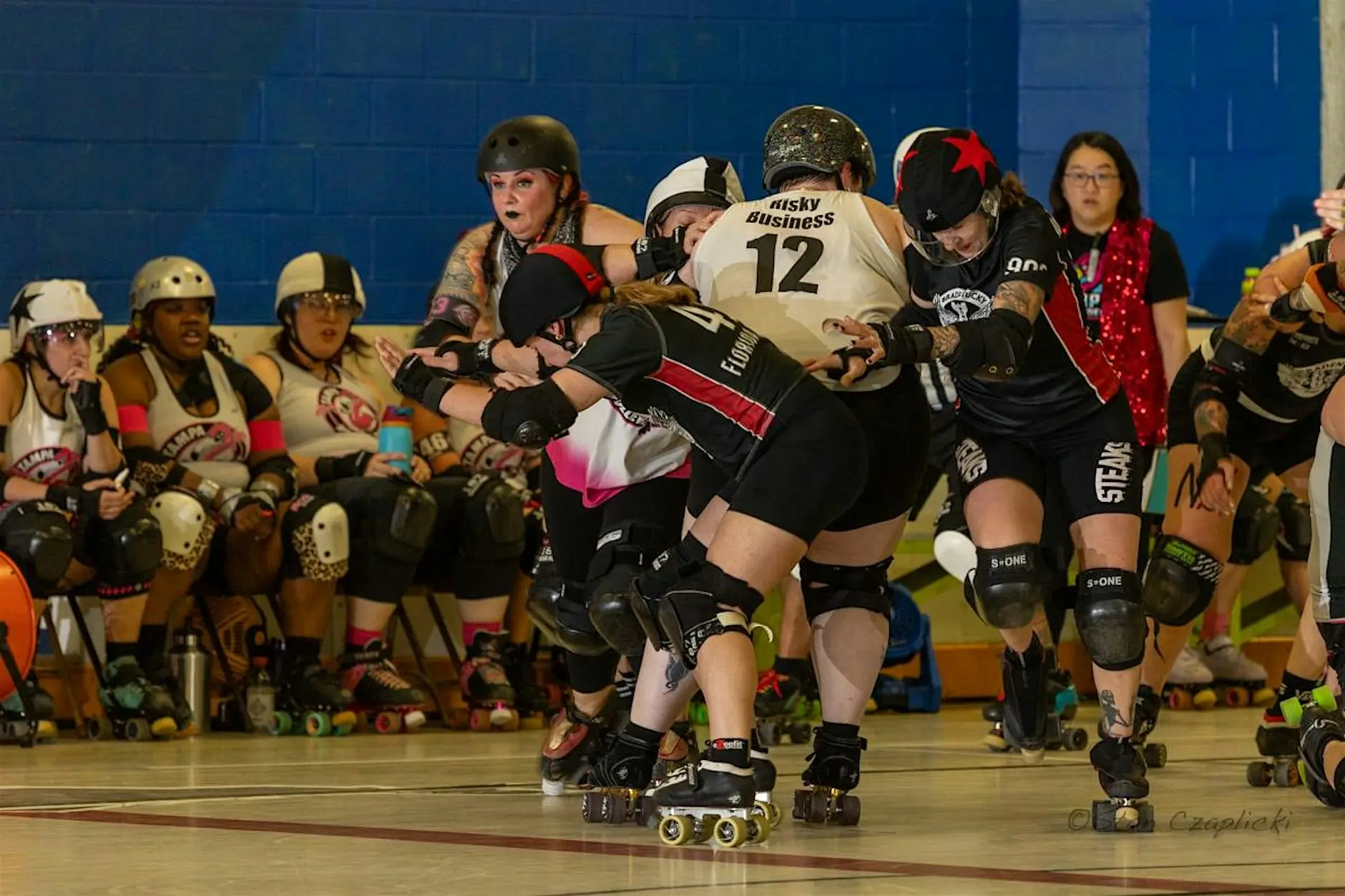
WFTDA rules say flat track roller derby is played on a flat, oval track, with two 30-minute periods and 30 seconds between jams. Each jam lasts up to two minutes, and each team fields up to five skaters during a jam. Of those five, four are blockers and one is a jammer, which is why the announcer keeps separating pack movement from scoring action.
That structure is what makes the sport feel frantic from the stands but manageable once you know where to look. The blockers form the pack, and the pack’s job is to control space, slow the other side, and create openings for their own jammer. When the announcer describes who is controlling the front of the pack, who is stuck behind it, and who has gained lead jammer status, the bout stops looking like motion for motion’s sake and starts reading like strategy.
The three track moments that change everything
A first-time spectator does not need to memorize the entire rulebook. The best entry point is to watch for a few repeatable moments that the announcer will flag out loud.
- The jam start: the whistle drops two short, intense minutes into motion. This is when you can identify the jammer, see the pack form, and hear who is trying to establish control.
- Lead jammer status: once a jammer earns lead, that skater controls the timing of the jam and can often decide when to call it off. That single call can protect points or kill an opponent’s chance to answer.
- The star pass: WFTDA Roller Derby Basics says the pivot is the blocker wearing the stripe on their head, and they are the only blocker allowed to accept a star pass from the jammer. When that happens, the pivot becomes the new jammer and gains the ability to score points.
- The scoring laps: because jammers score one point each time they lap an opposing blocker, every clean pass matters. That is why a brief breakdown in blocking can turn into a quick scoreboard swing.
Those are the moments that make the sport watchable in real time. Once you hear them called consistently, the track stops feeling crowded and starts feeling legible.
Why the pivot matters
The pivot is one of the most useful positions for a new fan to learn because the role connects the blocking game to the scoring game. WFTDA’s basics guide says the pivot wears the stripe on the head and can accept a star pass from the jammer, becoming the new jammer in that moment. That means a bout can change shape instantly, especially when a team uses the star pass to keep scoring pressure alive.
This is also where announcer skill becomes essential. A good call does not just identify the player with the stripe; it explains why the star pass matters, whether the new jammer can capitalize, and how the pack will respond. For a crowd, that is the difference between seeing a handoff and understanding a tactical shift.
From Austin to a global ruleset
WFTDA’s history materials trace the modern revival of roller derby to Austin, Texas, in 2003, when Texas Rollergirls helped launch the first modern league. The sport then spread in a viral way through word of mouth and the internet, which fits the DIY culture that still shapes much of roller derby today. WFTDA itself began in 2004 and now serves as the international governing body of women’s flat track roller derby.
That history explains why the announcer guide lands as more than a convenience. Derby grew from skaters building the sport themselves, so the tools around it, from rules documents to announcer training, have always mattered to how the game is understood and passed along. The guide continues that tradition by making the live experience easier for newcomers without flattening the sport’s edge.
The broadcast side of derby is now part of the sport
WFTDA has also pushed the announcing role into a more formal media lane. Its first-ever announcer clinic took place at the 2017 Roller Derby World Summit in Manchester, U.K., with 70 tickets priced at $100 apiece. That clinic focused on tournament-level skills and professional broadcast standards, a sign that announcing is treated as a craft, not an afterthought.
The move is visible in WFTDA.tv remote studio support as well. Leagues can livestream with remote help that includes a scoreboard overlay and live commentators, giving fans a cleaner way to follow the game even when they are not in the rink. Independent announcers have made the same point from the working side of the booth: King Crazy said in a 2019 guest guide that he had announced around 300 games and benched around 80, including work at four World Cups, WFTDA playoffs, MRDA playoffs, and other major events. That kind of experience shows how much game knowledge sits behind the mic.
For a new spectator walking into a community bout, the payoff is immediate. Learn the jam clock, follow the lead jammer, watch for the pivot stripe and the star pass, and listen for the announcer to tell you who is scoring. Once those pieces click, roller derby stops looking like chaos and starts sounding like a sport with a language of its own.
This article was produced by Prism’s automated news system from verified source data, official records, and press releases, then run through automated quality and moderation checks before publishing. The system is built and supervised by the people who set the standards it runs under. Read our full AI policy.
Did this article answer your question?