Artistic roller skating explained, disciplines, rules and global structure
Artistic roller skating is a rule-bound family of disciplines, and World Skate’s latest rule updates show how technical the sport has become.
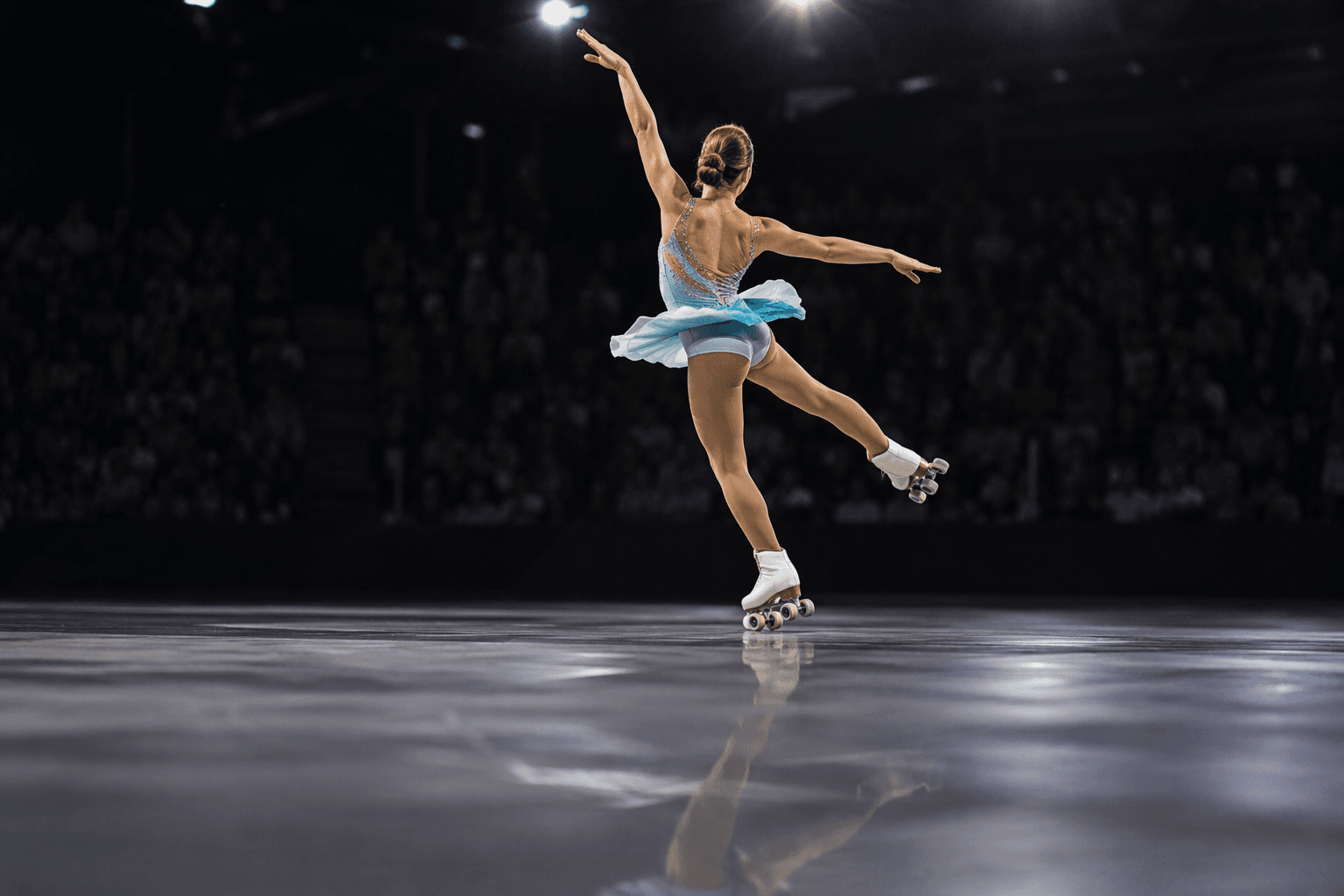
World Skate treats artistic roller skating as a family of disciplines, not a single event. At major championships, figures, dance, free skating, and precision reward different athletic skills, and winning margins are usually built on edge control, timing, and a ruthless reading of the rulebook. If you only track jumps or costumes, you miss how those events are judged.
How the sport is organized
World Skate’s Artistic Technical Commission writes the official rules for artistic roller skating competitions, and the sport is governed internationally through formal regulations rather than loose exhibition standards. The federation is the sole governing body recognized by the IOC for sports performed on skating wheels, with more than 135 member federations across five continents, giving the discipline a global competition structure.
That structure matters because artistic skating is split into categories that demand different strengths. Roller Sports Canada lists figures, free skating, dance, duo free, couples compulsory dance, solo compulsory dance, quartet, and more, while the National Museum of Roller Skating traces the historical core of the sport to figure skating, freestyle skating, and skate dancing.
World Skate’s rulebook shows how formal that separation has become. The general artistic rules were updated on September 1, 2023 for 2024, then updated again on October 12, 2024 for 2025.
Figures: the edge-control exam
Figures are the discipline where precision matters most. Skaters trace prescribed shapes and patterns on the rink, and the score lives in the quality of the edge, the steadiness of the body line, and how cleanly each pattern is held. Speed helps, but it does not rescue a weak curve or a shaky upper body.
World Skate’s July 2025 figures rules update keeps figure-skating duties and figure groupings in place. Figures remain a codified technical test at the heart of the sport.
- clean tracings with no visible wobble
- strong pressure on the correct edge
- balanced shoulders and hips through the turn
- consistent circles and lobes rather than drifting shapes
What to watch in figures:
Free skating: the most theatrical, still the most rule-bound
Free skating is the branch that most clearly blends athletic difficulty with performance. Jumps, spins, step sequences, and choreography are all packed into one program, so it is the easiest discipline for new viewers to follow and the easiest one to misread. The artistry matters, but the athletic base still decides whether the program lands.
World Skate’s 2026 free skating rules preview, updated in July 2025, makes that clear. In the junior and senior short program, the jump combination changes from two jumps to three, including connecting jumps. No more than two triples are allowed, and three- or four-jump combinations must include at least one one-rotation connecting jump.
The best free skaters separate themselves by landing under pressure, linking difficult elements without breaking flow, and making the choreography look inevitable. A routine can feel expressive and still be technically thin if the jump layout is weak; it can also be packed with difficulty and still lose ground if the edges, takeoffs, or landings are messy.
Dance and solo dance: timing, carriage, and partnership
Dance events ask for a different kind of athleticism. Compulsory dance and solo dance focus on rhythm, carriage, timing, and the ability to hit a prescribed pattern or musical structure without losing flow. The margin here is often posture and musical control, not the size of the jump or the force of the spin.
World Skate recently put a spotlight on solo dance. In Beijing, crowds were awed as skaters made history in solo dance, and the 69th World Artistic Skating Championships in the city gave the category a major stage.
The category split is visible in the championship structure as well. World Skate Europe’s official skating orders have included junior couples dance, senior ladies solo dance, and senior men’s solo dance.
Pairs, duo free, quartet, and precision
Partner and group disciplines add another layer because synchronization becomes part of the scoring problem. Duo free and couples events demand matching body lines, shared timing, and, in the paired formats, the ability to coordinate lifts or mirrored movement without breaking the technical standard. The challenge is not only difficulty, but sameness: the closer two skaters look to one another in motion, the stronger the performance usually feels.
Precision skating pushes that logic further. It is one of the most visually striking branches because the team is judged on formations, spacing, and unison, which turns the rink into a geometry test as much as an athletic one. In precision, the eye should be drawn to how cleanly the group rotates, opens, and closes as a unit, not just to any one skater in the line.
World Skate Europe counted more than 400 skaters at the European Artistic Skating Championships in Trieste, Italy, while World Skate counted more than 130 athletes competing for European titles at the European Junior/Senior Artistic Skating Championships.
How to read results at a major championship
At a big event, separate the questions each discipline is asking. Figures reward exact tracings and balance. Free skating rewards difficulty under pressure. Dance rewards timing, carriage, and pattern control. Precision rewards synchronization and group geometry.
This article was produced by Prism’s automated news system from verified source data, official records, and press releases, then run through automated quality and moderation checks before publishing. The system is built and supervised by the people who set the standards it runs under. Read our full AI policy.
Did this article answer your question?