Rose City Roll brings Portland skaters on citywide routes
Rose City Roll turns Portland into the course itself, trading rink laps for bridges, hills, and a 25-mile city route. The result is part endurance test, part moving tour, and part culture.
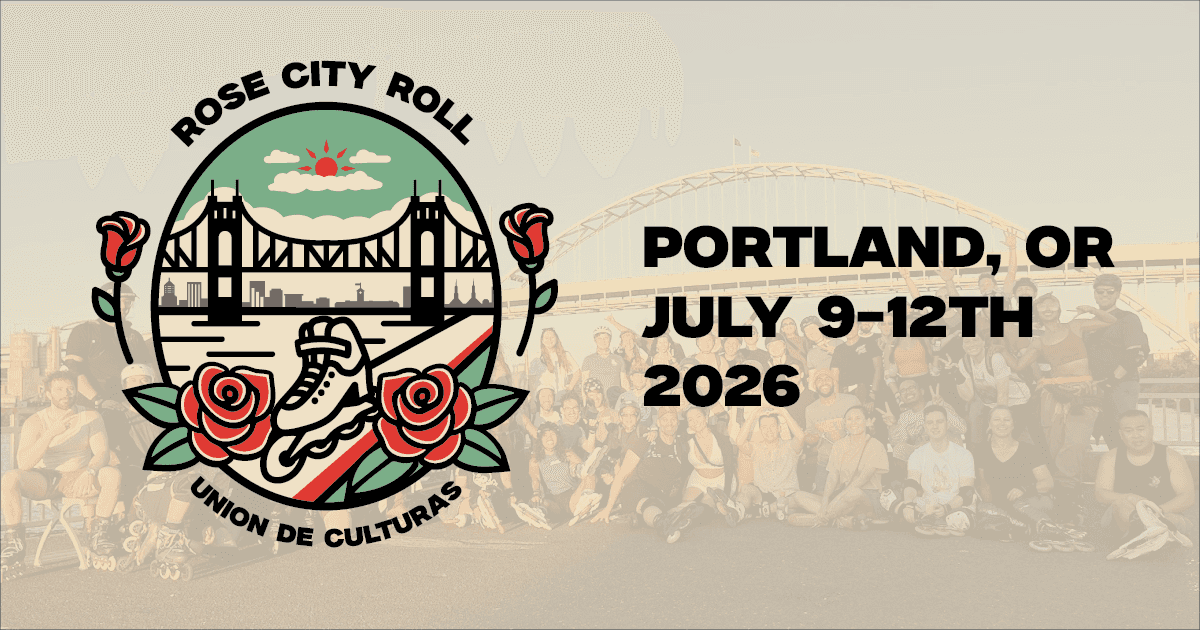
Rose City Roll turns Portland into the course itself, replacing rink walls with streets, bridges, waterfront paths, parks, and neighborhoods. The second annual edition ran July 9-12, 2026, and drew inline and quad skaters from across the country and beyond into a format that asks for stamina, balance, and comfort in open-city riding.
Portland becomes the venue
The event works because the city is not just the backdrop, it is the route. Travel Portland described Rose City Roll as Portland’s second annual multi-day urban skating event, and that framing matters: skaters are moving through downtown Portland, crossing Portland bridges, and rolling past the waterfront instead of circling a single rink.
That changes the athletic demand immediately. A rink competition rewards tight corners, controlled speed, and a bounded surface; Rose City Roll adds distance, terrain shifts, and the need to adapt to whatever the city throws at a group ride. Smooth pavement can give way to more demanding urban sections, and the same weekend can ask one skater to settle into a cruise while asking another to manage hills, bridge grades, and changing pace.
Route design shapes the challenge
The routes are built with variation in mind, and that is a big part of the event’s appeal. Planned group rides can differ in length and difficulty, which lets skaters find a route that matches their comfort level without breaking the collective feel that makes the weekend work.
Travel Oregon and Travel Portland both pointed to the same broad geography: streets, bridges, waterfront paths, hills, parks, and neighborhoods. That spread is the point, because it turns route design into part sport and part urban reading exercise. Skaters are not only moving from start to finish, they are learning how to conserve energy, handle surface changes, and stay connected to a group over a longer city-scale effort.
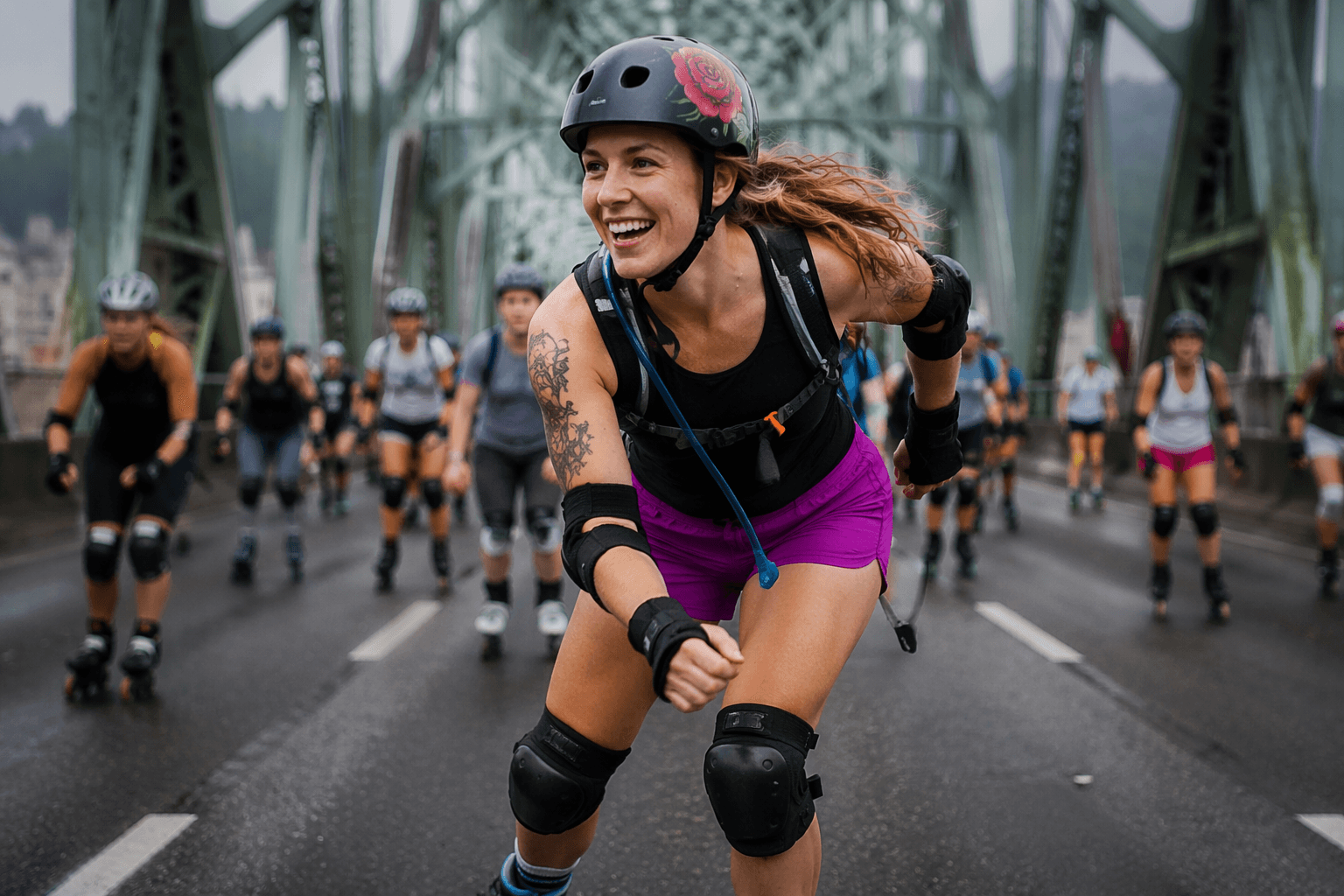
The weekend’s structure also gives Rose City Roll a different identity from bracketed competition. There is no single winner to chase, no elimination ladder, and no track loop to dominate. Instead, the performance lies in holding pace, keeping formation, and completing a route that is as much about shared momentum as individual technique.
Unión de Culturas gives the weekend a signature ride
One of the featured skates, Unión de Culturas, gives the event a sharper cultural edge. The route celebrates cultural diversity and unity through movement, and skaters are encouraged to bring a flag representing their heritage, which makes the ride feel like a moving expression of identity as much as a skate tour.
The scale is concrete too. EverOut reported that the Saturday morning route ran about 25 miles from The Fields Park to the WonderLove cart pod, which makes it one of the most ambitious public rolls in the weekend lineup. That distance changes the way skaters prepare, because a 25-mile city route demands pacing, hydration, equipment that can handle miles, and the judgment to know when to push and when to conserve.
The route also captures why destination skating has become more compelling. A ride like this is not just something to do after arriving in Portland, it is the reason to come in the first place. The city’s landmarks, the distance, and the shared symbolism of the flag-bearing ride all turn one skate into a destination experience with a memory attached to it.
Bridge City Skate built the framework
The event is organized by Bridge City Skate, the group founded in 2022 by Tyler Hotan after he searched for a skate community of his own. That origin helps explain why Rose City Roll feels rooted in participation rather than spectacle alone: it was built by someone looking for a place to skate with others, then scaled into a citywide gathering.
That newer organizer has also tapped into a Portland scene that was already ready for something like this. Rose City Rollers remains a major local roller institution, and recurring gatherings such as Secret Roller Disco have helped keep skating visible in the city’s cultural life. Rose City Roll now plugs into that ecosystem while broadening it, giving Portland skaters and visiting skaters a weekend that stretches well beyond derby and rink formats.
Why this model keeps growing
Rose City Roll reflects a larger shift in roller culture toward events that blend sport, travel, and community participation. Skaters are not only showing up for competition, they are showing up for a route, a setting, and the chance to move through a city in a way that feels both athletic and social.
That is why the event has traction beyond Portland. It gives inline and quad skaters a shared experience, but it also gives the city itself a starring role, with bridges, hills, neighborhoods, and waterfront paths helping tell the story of the weekend. In that sense, Rose City Roll is less a single event than a model for where urban skating is headed: away from the closed circuit, and onto streets where the route, the crowd, and the place all matter at once.
This article was produced by Prism’s automated news system from verified source data, official records, and press releases, then run through automated quality and moderation checks before publishing. The system is built and supervised by the people who set the standards it runs under. Read our full AI policy.
Did this article answer your question?