World Skate archive traces artistic roller skating champions since 1980
World Skate’s roll of honor shows artistic roller skating’s balance of power moving from an early U.S. streak to a USA-Italy tug of war that still defines the title race.
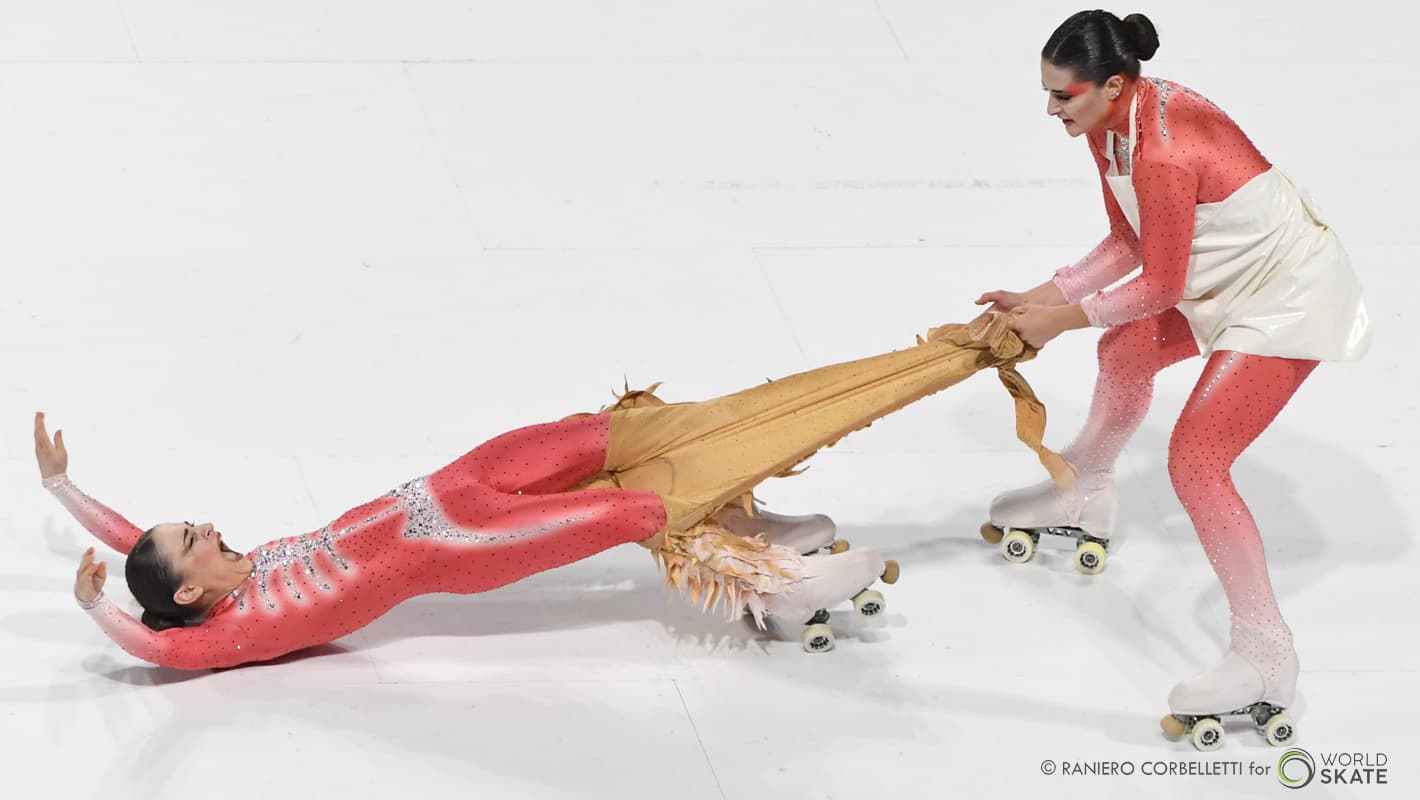
The senior artistic world champions roll of honor is World Skate’s cleanest power map for the sport: it lists men’s and women’s freeskating champions year by year starting in 1980, and the first names already show a title race that was never purely local. Kelly Mahon and Anna Conklin opened the record for the USA, but the archive quickly turned into a study of repeat winners, national depth, and the moment Italy forced itself into the championship conversation.
How the roll of honor works
World Skate’s archive does more than name champions. The federation says its championship history gathers results for Worlds, World Games, and Pan-Am events, which means the roll of honor sits inside a broader statistical memory rather than as a standalone trophy list. That matters because artistic roller skating is a judged discipline, and the rules that govern it are published by the World Skate Artistic Technical Commission.
The current rules for artistic skating competitions were updated on October 12, 2024. That gives the record book real competitive context: these champions were not produced by a casual exhibition scene, but by a codified international structure with formal judging standards and a long-running results archive.
The first dynasty line: USA control from the start
The early champions show just how quickly the sport built recognizable lineages. In 1980, Kelly Mahon of the USA and Anna Conklin of the USA sat at the top of the inaugural senior freeskating list. In 1981, Tim McGuire and Tina Kneisley both repeated the American hold on the titles, and McGuire stayed in the men’s record again in 1982 and 1983.
That kind of repetition is what turns a list into a power map. Kathleen O’Brien appears in 1982 on the women’s side, then Tina Kneisley reclaims the title in 1983 and remains there in 1984, while McGuire’s 1983 win makes the men’s side look like an early American stronghold. For a new viewer, the lesson is simple: the first wave of senior artistic champions came from programs that could produce both continuity and depth, not one-off winners.
Italy enters the ledger and the balance starts to move
The first clear break in that American pattern arrives in 1984, when Michele Biserni of Italy takes the men’s title while Tina Kneisley keeps the women’s crown for the USA. In 1985, the archive shows Scott Cohen of the USA on the men’s side and Chiara Sartori of Italy on the women’s side, which sharpens the picture further: by the middle of the decade, the competition had become an international exchange rather than a single-country run.
The 2008 World Skate artistic champions PDF shows that the record did not stop there. It continues with 1986 Scott Cohen of the USA, 1986 Chiara Sartori of Italy, 1987 Gregg Smith of the USA, 1988 Gregg Smith of the USA, and 1988 Raffaella del Vinaccio of Italy. That stretch matters because it confirms the early shift was not a brief disruption. The U.S. and Italy remained the key poles, and the archive preserved their back-and-forth as a defining feature of the sport.
What the archive says about the sport’s competitive center
Read year by year, the roll of honor shows three things at once. First, the United States established the earliest senior freeskating benchmark, with Mahon, Conklin, McGuire, Kneisley, Cohen, and later Gregg Smith all carrying the flag through the first run of the archive. Second, Italy arrived as a real title force by 1984 and stayed there through Biserni, Sartori, and del Vinaccio. Third, the women’s list moved with its own rhythm, with Kneisley’s repeated presence giving way to Sartori and then beyond.
That pattern is exactly why the archive is so useful for understanding artistic roller skating’s power structure. It does not just identify champions, it reveals where competitive gravity lived in each era. In the early years of the senior roll of honor, that gravity sat mostly in the USA, then started to split across the Atlantic as Italy established itself as a title nation.
The modern stage still carries that history
World Skate’s present-day calendar shows that this is not an archive frozen in place. The federation published coverage of the 69th World Artistic Skating Championships in Beijing, and its Beijing 2025 materials put more than 900 artistic skaters from 38 countries on the same stage. That scale shows how far the sport has traveled from the small set of names that opened the 1980 roll of honor.
The next phase is already framed in World Skate’s own language. A 2026 Artistic World Cup announcement calls it “a new era” for artistic skating, and World Skate has also announced the 2026 Artistic World Cup Final in Cesena, Italy. Those events matter because they show the sport’s future is being written in the same countries that helped define its past, with Italy still central to the competitive conversation.
Programs that carry the historical weight
Current institutions are carrying that record forward in different ways. USA Roller Sports keeps an artistic-figure skating archive and a Team USA archive, which mirrors the World Skate record from a national angle and keeps the American lineage visible. World Skate Academy does the same in a development context, and its artistic courses are presented by Artistic Technical Commission chair Nicola Genchi, linking education directly to the governing structure that writes the rules.
That combination is the real takeaway from the roll of honor. The champions list begins as a clean year-by-year record, but it quickly becomes a map of which programs were able to sustain excellence, which nations forced a shift in the center of power, and which present-day championships still sit on top of that history. Beijing, the 2026 World Cup, and the Cesena final show the ledger is still being updated.
This article was produced by Prism’s automated news system from verified source data, official records, and press releases, then run through automated quality and moderation checks before publishing. The system is built and supervised by the people who set the standards it runs under. Read our full AI policy.
Did this article answer your question?