World Skate RollArt brings clearer judging to artistic roller skating
RollArt turned artistic roller skating from vibe-based judging into a code-driven system, changing how skaters train, build programs, and chase marks.
In January 2019, World Skate put RollArt into effect after roughly five years of development that began with Nicola Genchi’s analysis of old scoring sheets. The system broke the score into named parts, reduced the numbers, and let coaches see exactly where a program was gaining or losing ground. The result is a sport that still lives on music, line, and performance, but now asks those qualities to survive inside a much stricter points architecture.
How RollArt replaced the old feel-based culture
RollArt was built to move artistic roller skating away from the older White judging system and toward a more explicit, auditable model. It was a deliberate rebuild of how the sport defines value.
Under the older culture, routines often lived or died on a judge’s overall impression of the performance. RollArt narrows that space. Instead of one broad sense of who looked best, the current framework itemizes what a routine contains and how well each part is executed. That is the sport’s biggest before-and-after shift: skaters are no longer trying only to impress the room, they are trying to satisfy a detailed code.
What RollArt scores now
The 2026 artistic rules make the logic plain. Artistic impression is no longer a vague presentation mark. It is the sum of four components: skating skills, transitions, performance, and choreography/composition. Judges score in 0.25-point increments, which gives the system a far finer grain than a loose eye test ever could.
Senior skaters can reach 10.0, junior 9.0, youth 8.0, and cadet, espoir, minis, and tots 7.0. A clean senior program and a strong cadet program are not judged on the same ceiling, but both are judged inside the same architecture.
The 2026 rules also spell out a standard that reaches beyond technique. Costumes are supposed to be modest, dignified, and appropriate for athletic competition.
Why the system changed training and choreography
RollArt changed what coaches prioritize because the scoring now exposes the building blocks of a routine. If a skater needs more points, the answer is not just “skate better.” It may mean cleaner skating skills, sharper transitions between elements, stronger performance quality, or a more coherent choreography/composition score. That pushes training toward structure, not just polish.
World Skate rolled out the system with clearer rules, clearer scores, and itemized final sheets that athletes and coaches can use to improve programs. A final sheet no longer just declares a winner. It becomes a diagnostic tool, telling a federation or coach which technical or artistic areas need work.
World Skate framed RollArt across free skating, dance, pairs, precision, inline, quartets, and show disciplines.
The official rollout, from testing to Barcelona
World Skate announced the system in 2017, tested it in 2018, and then introduced it on the world stage at the 2019 World Roller Games in Barcelona. Before that debut, World Skate staged the 2019 Orlando International Seminar in the United States as a training ground for judges, technical specialists, coaches, and skaters. The seminar included exams.
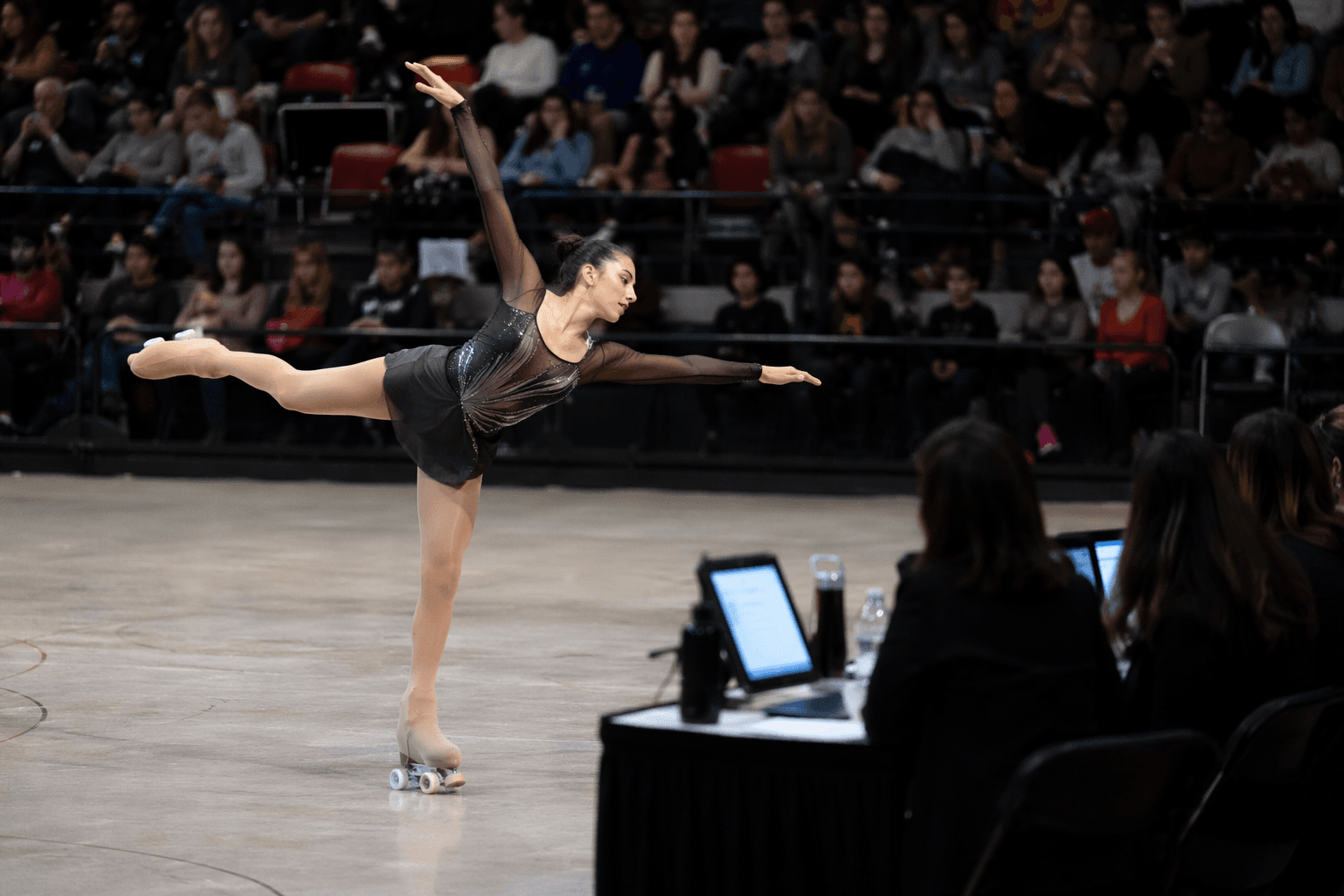
RollArt is a live judging workflow. The setup materials show a networked system with a technical panel, judge and referee panels, review tools, and laptops or tablets used for scoring. The modern artistic skating result is produced by choreography on the floor and by digital infrastructure at the rinkside.
World Skate also tied the rollout to a broader ambition: raising the sport’s level across all five continents.
Fairer and clearer, but less intuitive to watch?
RollArt’s strongest case is transparency. A skater, coach, or federation can now see where marks came from and where they were lost. That is a real upgrade over a system that depended more heavily on impression and interpretation. For athletes who invest months building programs, itemized final sheets are not a luxury. They are the difference between guessing and adjusting.
But the tradeoff is easy to feel in real time. The more specific the scoring gets, the more the sport can look technical from the outside. A routine that reads beautifully to a casual fan might still trail a program with better transitions, stronger skating skills, or a cleaner composition score. The judging becomes easier to explain, but not necessarily easier to read in the moment.
This article was produced by Prism’s automated news system from verified source data, official records, and press releases, then run through automated quality and moderation checks before publishing. The system is built and supervised by the people who set the standards it runs under. Read our full AI policy.
Did this article answer your question?