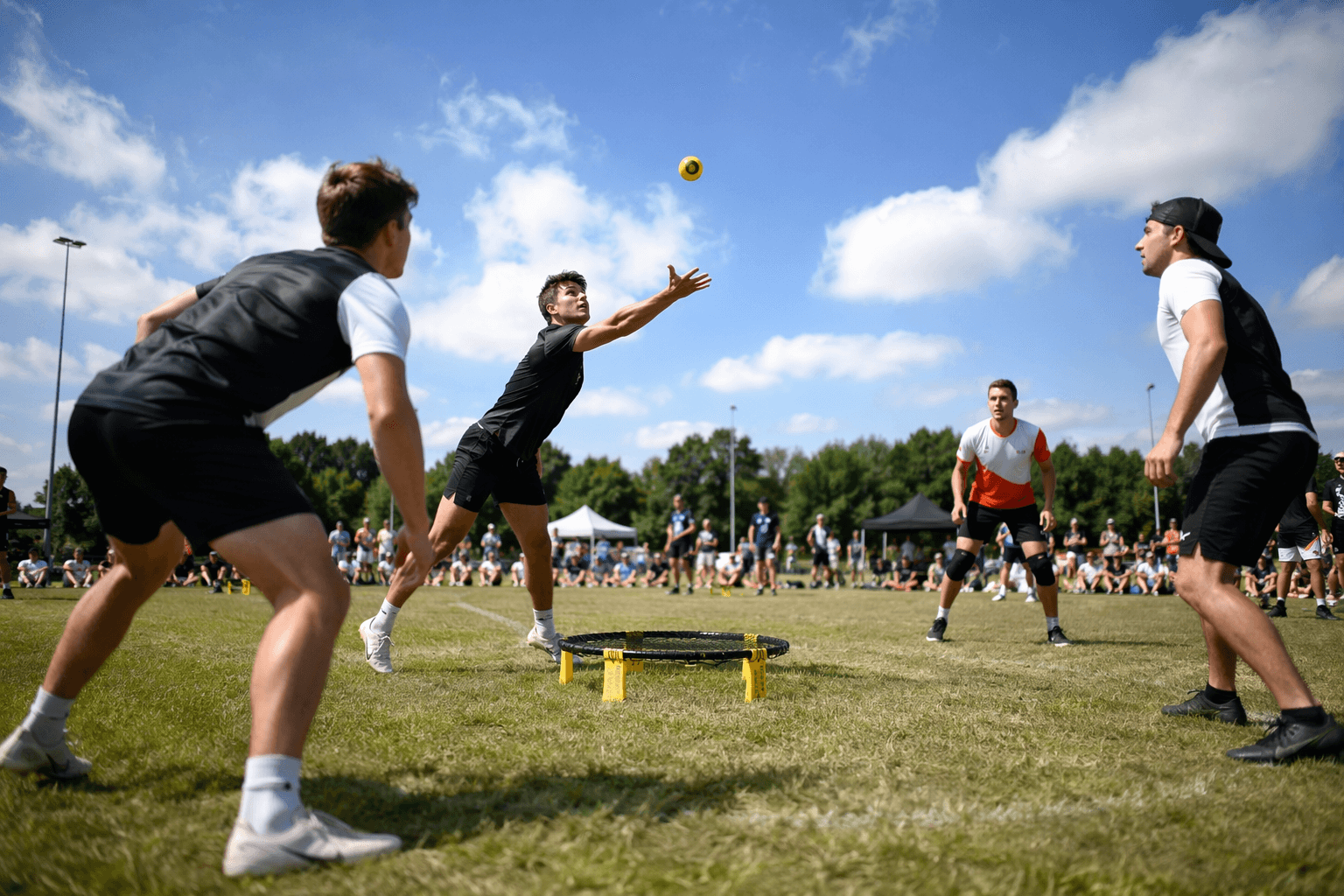
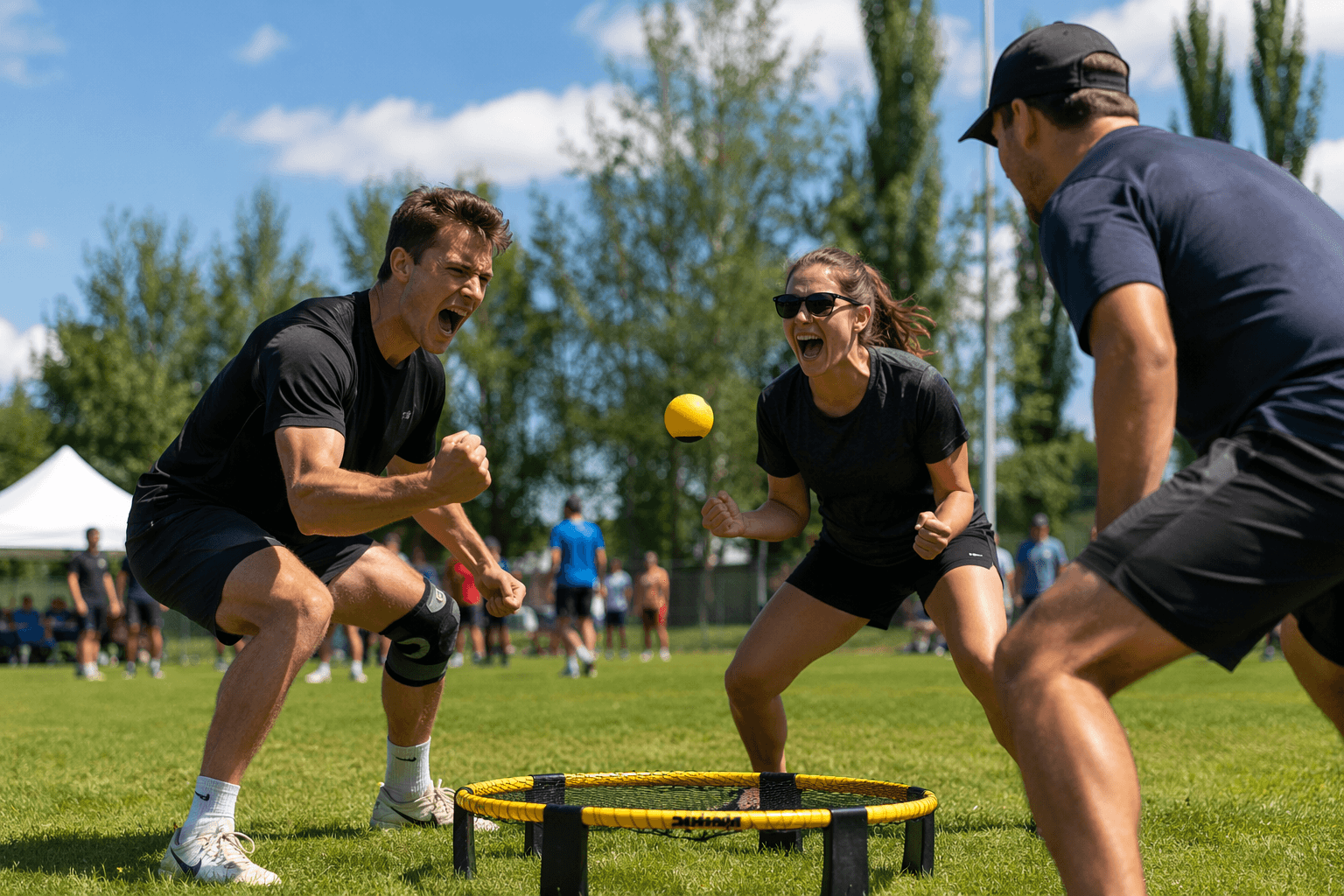
Next Level Roundnet tests raised net, streams elite squads live
Next Level Roundnet raised the net 10 centimeters and put eight elite squads under a six-court live broadcast to see if defense can catch up.
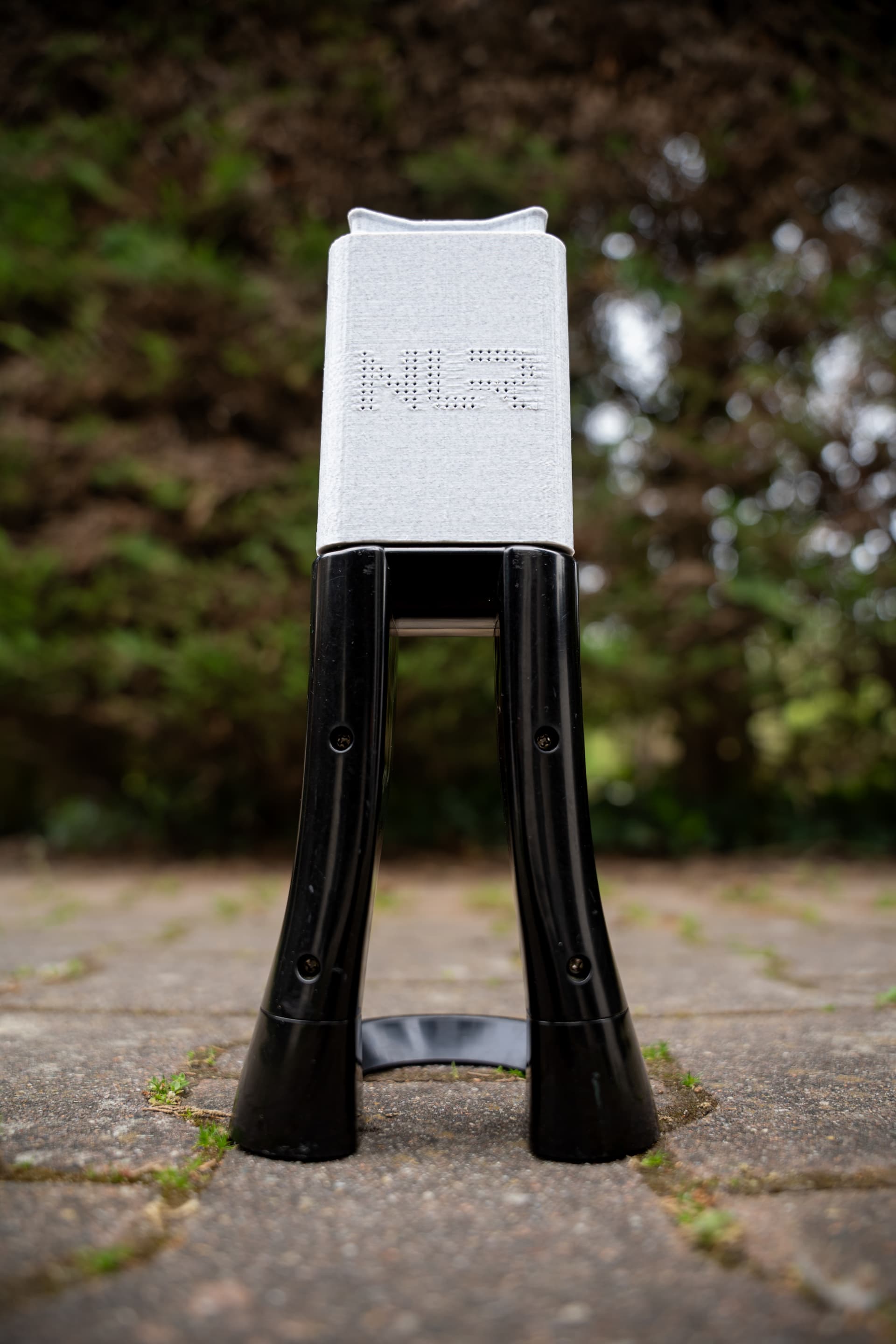
Next Level Roundnet turned a simple rule tweak into a full-scale test, raising the net by 10 centimeters and sending eight elite squads into a live, invitation-only experiment. The event paired the format change with an ambitious broadcast setup, including six courts shown at once and scoreboards with pedals under the net so players could keep their own scores updated.
The live bracket gave the idea immediate competitive stakes. On Court 1, Hansen / Beeks fell to Härtling / Lauterbach in three games, 13-15, 15-10, 15-9. On another side of the bracket, Joly / Lang lost to Rossetto / Ernestsone, 15-13, 15-2, 15-8, while Florinda / Dean handled Molli / Mezzetti 15-5, 15-10. The event’s other semifinal was tighter, with Lacombe / Bouchemoua and Tarnutzer / Rieser locked at 1-1 after the live board showed an 11-15, 15-18 start in one direction and a 15-7, 16-? swing in the other.
That is the kind of scoreboard pressure Next Level Roundnet was built to capture. The project has framed the sport as broken in favor of offense, arguing that hits are so low and fast that defense becomes extremely hard at the highest level. Its only rule change under inspection is the raised net, and the whole production is designed to film every angle and let the data speak for itself.
The experiment arrives at a moment when roundnet’s rule debate has already become formal. The International Roundnet Federation says its official ruleset was first adopted on October 21, 2021, then updated on August 10, 2022, June 24, 2024 and October 17, 2025. The federation says roundnet is played by two teams of two and that players are responsible for knowing the rules.
The IRF has also already acknowledged the balance problem Next Level is trying to attack. In its 2025 Roundnet Rule Revolution project, the federation said the sport’s growth is limited by current game dynamics, with hitting overpowered, defense nearly impossible and rallies too rare. That project was built to increase rallies and reduce aces and double faults, with test support from ETS, Roundnet Germany’s Masterseries, the USAR tour, Spikeball’s STS and PremierSpike.
For elite roundnet, that makes this more than a novelty. If the raised net produces longer rallies, more defensive chances and a cleaner tactical balance, the format could become a reference point for how high-level play evolves next. If it does not, the bracket will still have produced a rare laboratory-style look at the sport’s top end, with the results streamed live court by court.
This article was produced by Prism’s automated news system from verified source data, official records, and press releases, then run through automated quality and moderation checks before publishing. The system is built and supervised by the people who set the standards it runs under. Read our full AI policy.
Know something we missed? Have a correction or additional information?
Submit a Tip