USA Roundnet launches player status system with four competitive tiers
USA Roundnet put Pro, Gold, Silver and Bronze on the board, giving players a ladder and tournament directors a common language for divisions.

USA Roundnet’s player status system is now live, and the headline is the structure: Pro, Gold, Silver and Bronze. That four-tier ladder is meant to do two jobs at once, giving players a clearer path for progression while giving tournament directors a standardized way to sort competition.
The page frames the system as more than a badge next to a name. It is designed to better connect players, communities and events nationwide, which matters in a sport that has grown from casual backyard play into a more formal competitive circuit. Instead of treating status as a loose reputation marker, USA Roundnet uses it as a milestone system, one that can signal where an athlete sits in the broader competitive picture.

That has immediate consequences for how events are built. Divisional requirements and player progression can shape sanctioned tournament fields, and the status ladder helps organizers place athletes in the right brackets. When a preview says someone is chasing Gold status, or when a top division requires a certain level, that language now has a formal home. The system also helps explain how players move between local, regional and national play, which makes the path upward easier to read for competitors who want a target that is more concrete than a vague ranking.
USA Roundnet also leaves the door open for the system to evolve. The page invites questions and feedback, a sign that this is meant to be a living framework rather than a fixed rulebook. That matters because roundnet’s growth has created a need for cleaner language and clearer standards, especially as the sport tries to organize a wider competitive ecosystem across North America.
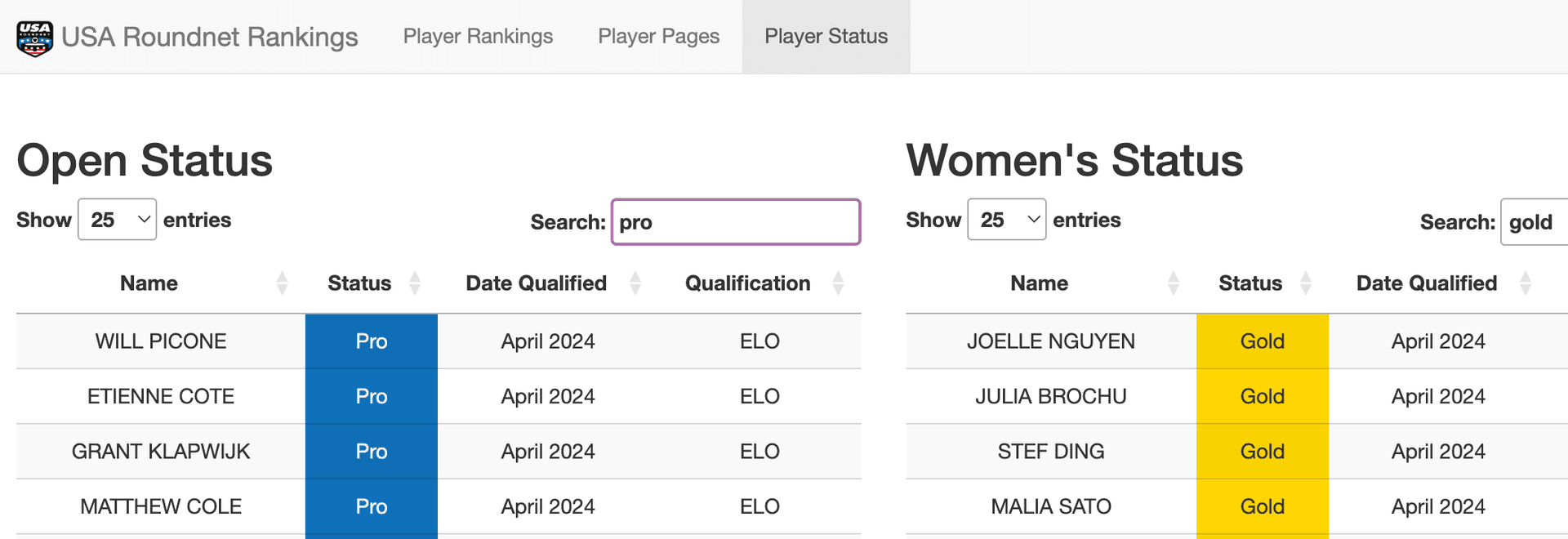
For a sport that still carries the feel of pickup creativity, this is a meaningful shift. The new status structure does not just label players, it sets expectations, shapes brackets and gives events a more transparent backbone. Every tournament that leans on those four tiers will now be working from the same map.
This article was produced by Prism’s automated news system from verified source data, official records, and press releases, then run through automated quality and moderation checks before publishing. The system is built and supervised by the people who set the standards it runs under. Read our full AI policy.
Know something we missed? Have a correction or additional information?
Submit a Tip