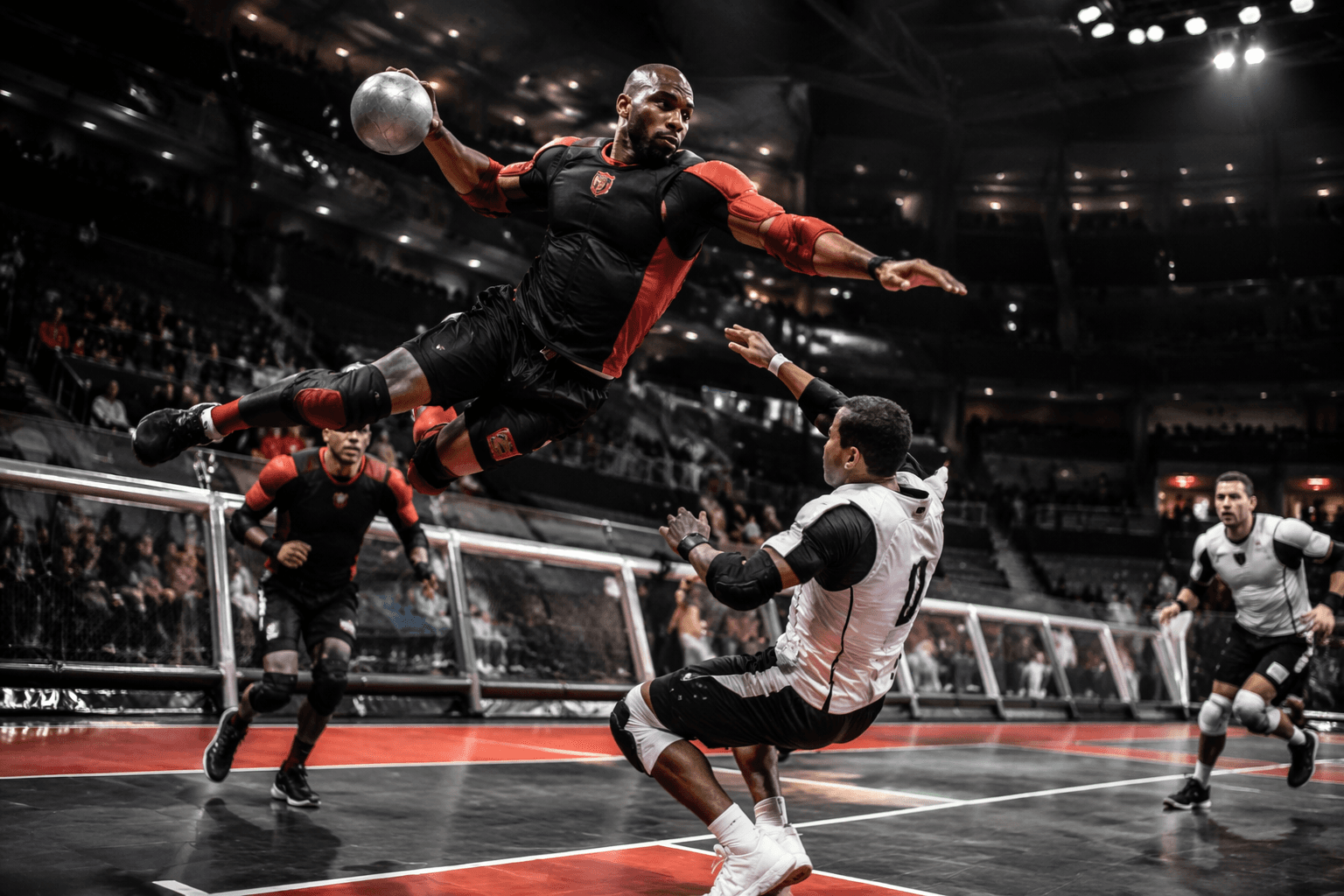
Buzzsaw’s balanced attack powers 9-7 Slamball season
Buzzsaw’s offense ran through a clear three-man chain, and opponents had to break it or get buried in a low-scoring, physical game. The 9-7 finish showed how well that balance held up.

Buzzsaw’s 9-7 season was built on a scoring chain that made the offense hard to solve: Terrell Howard started possessions, Jamaal Barnes Jr. drove at the rim, and Malik Abdul-Haqq finished the job. Add Raymond Taylor as another handler, Ralph Bellamy as another scorer, and Tyquan Scott’s work on the back end, and Buzzsaw looked less like a one-man attack than a unit with multiple pressure points.
The chain opponents had to break
The cleanest way to scout Buzzsaw is to follow the order of operations. Howard and Taylor initiated offense, Barnes Jr. forced defenses to collapse with downhill pressure, and Abdul-Haqq gave the possession a final punch. That structure mattered because SlamBall possessions are short, contact-heavy, and easy to tilt with one missed rotation, so a defense that hesitates on the first move often pays for it by the third. Buzzsaw’s roster reveal also showed enough size and balance to keep the lane occupied, which meant opponents could not simply crowd the ball and hope the play died early.
That balance was reinforced by the broader roster build. The league’s team listing included Howard, Barnes Jr., Bellamy, Abdul-Haqq, DeVonte Pratt, Taylor, Michael Kolawole, and Tyquan Scott, with Hernando Planells coaching the group. The shape of that roster matters because it gave Buzzsaw multiple ways to start a possession and multiple ways to punish a late help defender.
Why the season numbers fit the eye test
Buzzsaw finished 2023 at 9-7 with 690 points and a minus-29 point differential. In a league built around bursts, traps, and momentum swings, that is a profile of a team that stayed competitive without needing a runaway scoring identity. The standings line tells you Buzzsaw was in the mix all season, but the margin shows how often games were decided by a handful of possessions rather than a broad talent gap.
The style also matched the scoreboard. A SlamBall preview pegged contests involving Buzzsaw at 80.8 total points per game, the fewest in the league that season. That is not the footprint of a team trying to win a track meet. It is the footprint of a defense-first group that could drag opponents into a half-remembered grind, then score just enough to hold the edge.
Barnes Jr. became the center of gravity
The load distribution tells the deeper story. Jamaal Barnes Jr. led Buzzsaw with 192 points, followed by Ralph Bellamy with 145 and Malik Abdul-Haqq with 106. Terrell Howard added 94, DeVonte Pratt chipped in 46, and Raymond Taylor scored 40. Those numbers show that Buzzsaw did not need to manufacture every bucket through one creator; instead, the offense spread enough responsibility around Barnes Jr. that defenders could not key on a single release valve.
Barnes Jr. carried an added layer of intrigue. He is the son of former SlamBall gunner Jamaal Barnes Sr., giving the roster a recognizable family link and a built-in benchmark for physical, scoring guard play. He was also Buzzsaw’s third-round pick, and his route to the league was already defined by production: he led the Inland Empire Athletic Conference in scoring at 18.8 points per game at Mt. San Jacinto College in 2019-20 before transferring to Utah Tech, where he appeared in 10 games. That background explains why he fits the league’s pace so naturally. He was built for quick decisions, quick contact, and quick punishment at the rim.
Where Buzzsaw turned pressure into wins
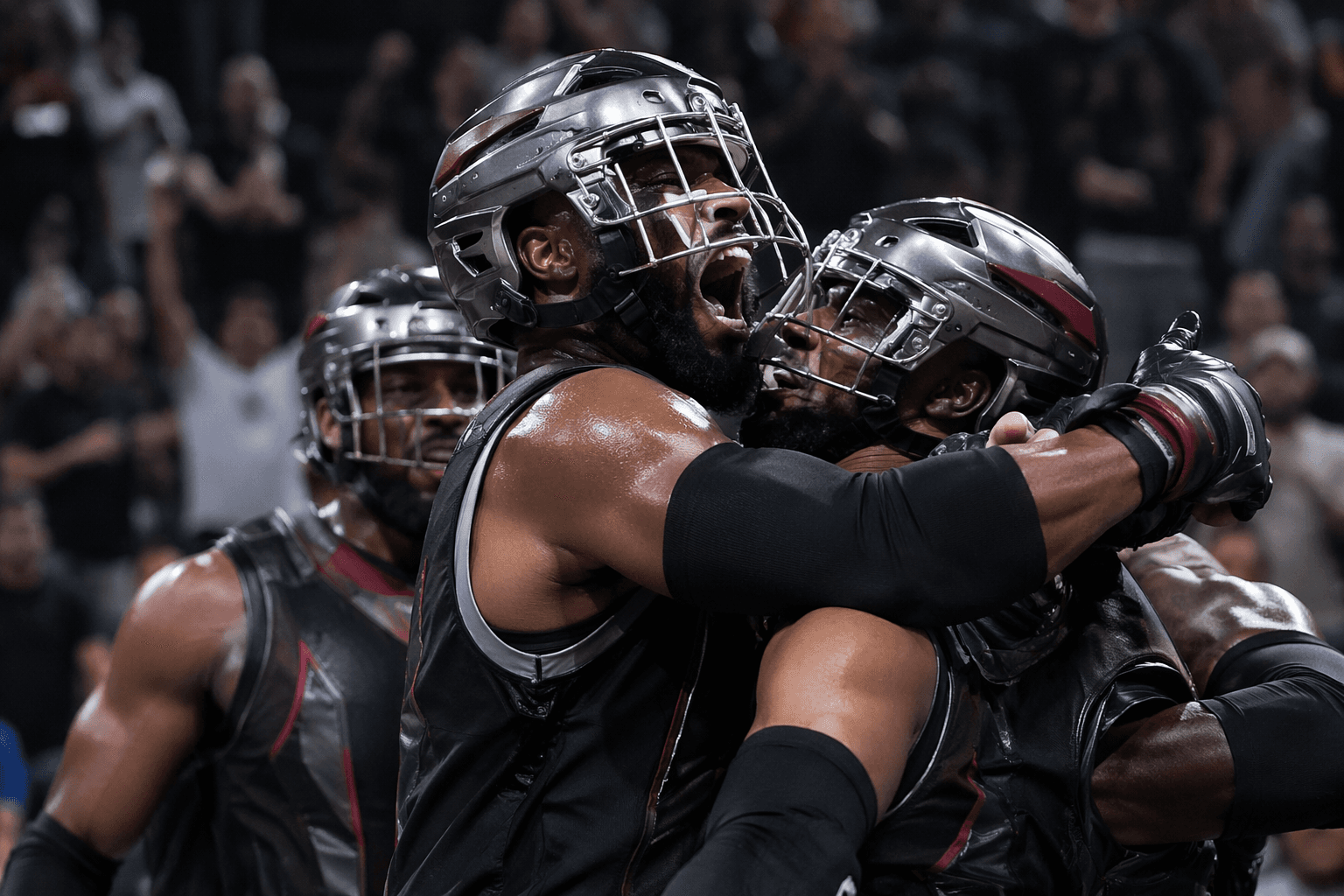
The clearest proof of concept came in late July, when Buzzsaw beat the Slashers 50-41 and the Lava 32-29. Barnes Jr. scored 38 points across those two wins, and Tyquan Scott led the defense. That combination is the exact Buzzsaw blueprint: one scorer forces the defense to react, while a stopper keeps the game from flipping on the other end.
Abdul-Haqq also showed the value of a finishing role that does more than just score. Against the Gryphons, he scored nine points and added 10 loose-ball recoveries, a line that captures how Buzzsaw extended possessions and squeezed value out of contact situations. Scott’s 134 loose-ball recoveries on the season underscore the same point. In a league where second chances often decide whether a possession becomes a highlight or a turnover, Buzzsaw’s willingness to live on the floor was part of its offense.
Why the opening mattered
Buzzsaw’s 2023 run began on July 21, 2023, at Cox Pavilion in Las Vegas, when the league opened its season with an ESPN-backed return and Buzzsaw won on opening night. That setting matters because it marked the team’s season inside a league reboot that put more eyes on every possession and every scoring chain. For Buzzsaw, the first night established the template that carried through the year: a balanced roster, a physical defense, and a scoring hierarchy that could survive the league’s compressed, high-contact format.
What makes the offense dangerous
The most dangerous part of Buzzsaw’s attack is not a single player but the sequence defenders have to survive. If Howard or Taylor gets the ball moving, Barnes Jr. attacks the paint. If the defense shades toward him, Abdul-Haqq and Bellamy are available to finish, and Scott can keep the possession alive by winning the dirty work. That leaves opponents with a familiar but difficult choice: commit early and risk giving up an open lane, or stay home and let Barnes Jr. punish the interior.
Buzzsaw’s 9-7 record shows that chain held up across a full season. The 690 points, the minus-29 margin, the 80.8-point game environment, and the late-July wins all point to the same conclusion: when Buzzsaw’s creators, finishers, and stopper all did their jobs, the offense looked built to survive the league’s most punishing stretches and win the games that turn on one broken coverage.
This article was produced by Prism’s automated news system from verified source data, official records, and press releases, then run through automated quality and moderation checks before publishing. The system is built and supervised by the people who set the standards it runs under. Read our full AI policy.
Did this article answer your question?