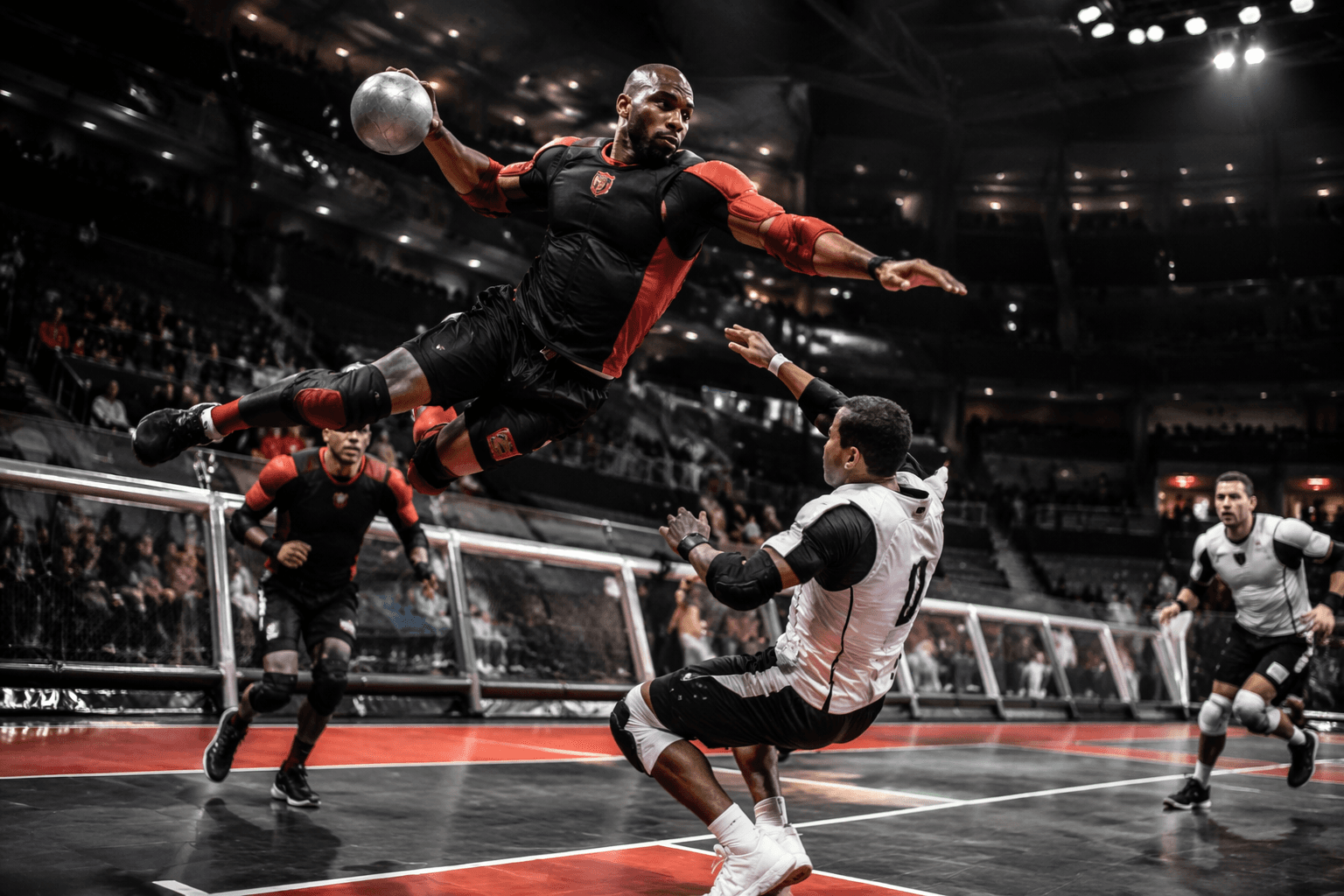
Inside SlamBall’s engineered court, walls, springs and safety gear
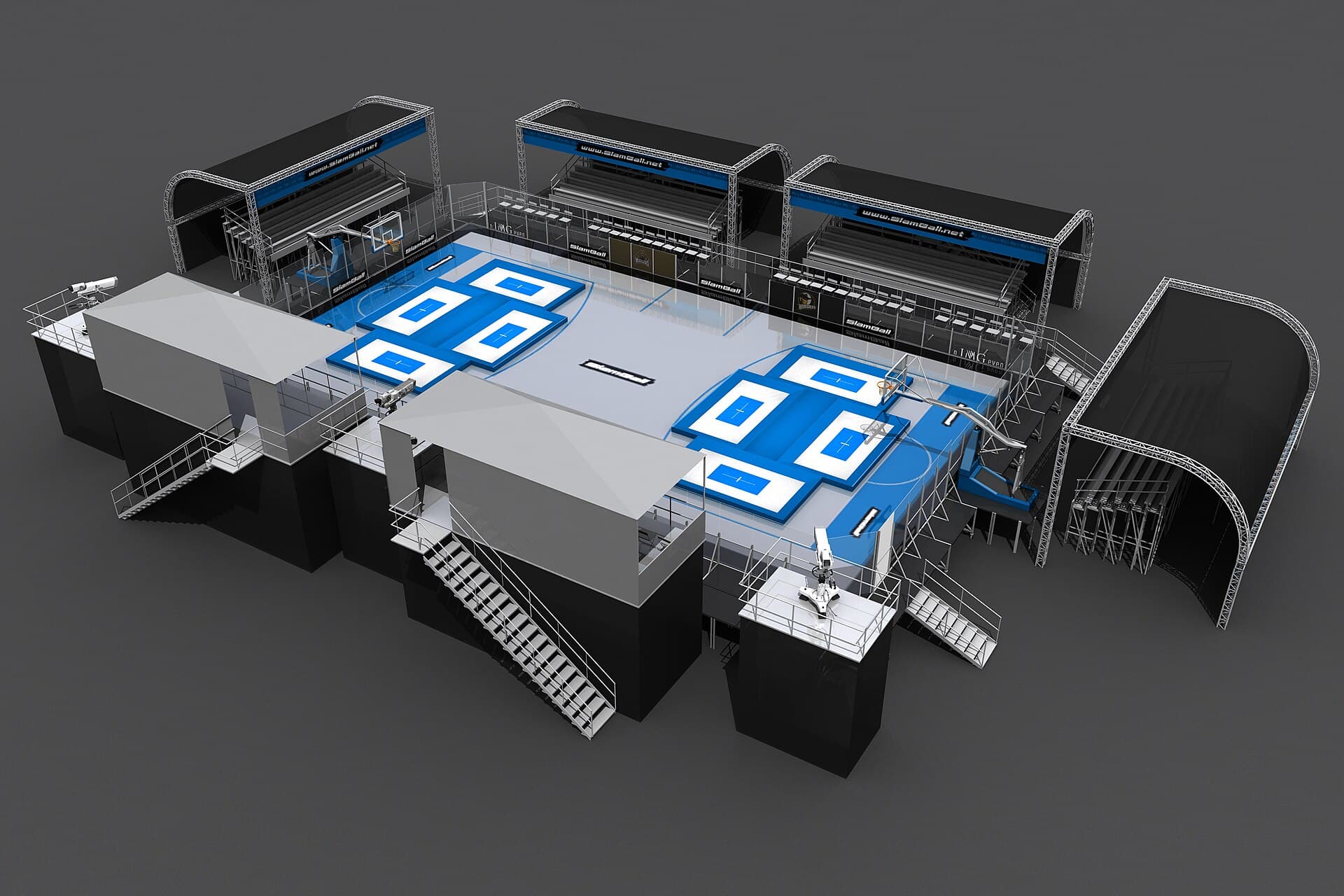
SlamBall’s court is the sport: 96 by 64 feet, springbeds that launch players 20 feet, walls and pads that turn collisions into highlights.
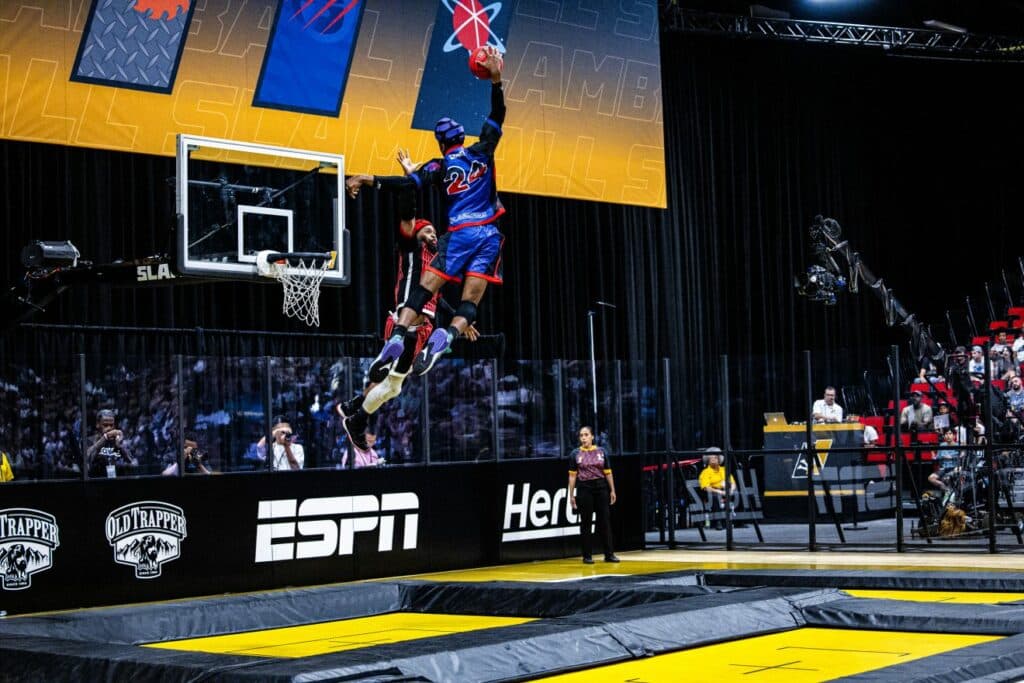
A possession can start with a body check into the plexiglass, spill into a 7-by-14 springbed, and end with a finish above a 10-foot rim. Another can die on the 10-by-14 scoring bed and come back as a second-jump dunk, which is why SlamBall feels less like basketball with gadgets and more like a court designed to manufacture chaos. The point is not novelty. The point is geometry, because every inch of the floor changes how high players rise, how hard they hit, and how quickly a highlight appears.
The court is built for angles, not just space
SlamBall’s official rules make the setup plain: the court is 96 feet long and 64 feet wide, with three identical springbeds at each end measuring 7 feet by 14 feet. Under the rim sits the larger scoring bed, a 10-by-14 launch zone that gives players a different kind of takeoff when the play reaches the basket. That layout matters because it turns the floor into a sequence of fixed decisions, not a blank basketball court where the bounce is mostly accidental.
The court is also wrapped in an 8-foot plexiglass wall, with lower sections where team boxes and sidelines require it. That wall keeps the action contained and changes every chase, miss, and deflection into part of the possession. In a normal sport, a ball heading out of bounds is a dead end; here, the structure itself keeps pressure on the defense and rewards players who understand where the next angle lives.
The springs change what a highlight even is
SlamBall’s spring system is built to propel players up to 20 feet in the air, and that number tells you almost everything about the sport’s speed. At that height, a layup becomes a timing problem, a rebound becomes a vertical battle, and a fast break can turn into a midair collision before the defense has fully reset. The league does not treat that as a sideshow. It treats it as the core of the game.
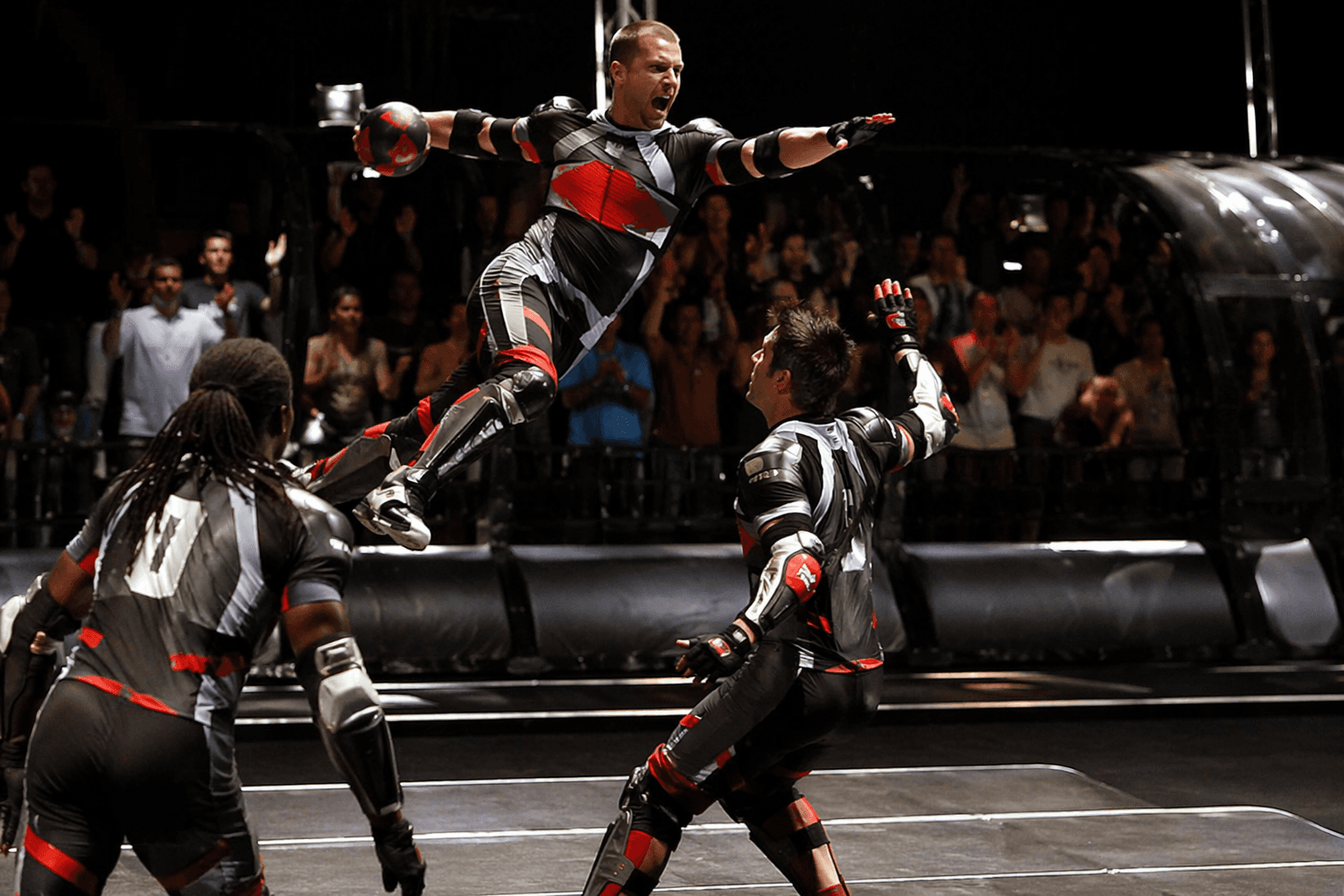
The court design includes independent panels that absorb energy, plus reinforced hoops and backboards built to withstand repeated aerial contact. That is the hidden engineering behind the fun: the surface is not just springy, it is controlled. The result is a game that borrows the feel of basketball, football, hockey, and trampolines, but refuses to behave like any of them for long. The strategy gets deeper because every jump carries a cost, every hit has a landing, and every rebound angle is created by design rather than luck.
That is why SlamBall’s most memorable plays usually come in pairs. First comes the contact, then comes the elevation. A defender can force a ballhandler off line, but the wall and springbed can turn that same disruption into a better shot attempt on the next beat. In other words, the architecture does not just allow the spectacle. It writes it.
Protective gear is part of the playing surface
The spectacle only works because the players wear the right protection. Official competition gear includes padded helmets, elbow pads, kneepads, and custom padded undergarments. That loadout is not cosmetic, and it is not optional in spirit if not in theory. It is the difference between a sport that can stage repeated full-contact airborne plays and one that collapses under its own violence.
SlamBall’s safety architecture extends beyond what players wear. Ahead of the 2023 season opener at Cox Pavilion in Las Vegas, the league formally emphasized athlete health and safety protocols, which fits the reality of the sport better than any marketing slogan ever could. When players are launching off springbeds, landing into contact, and rebounding off a wall-framed court, safety cannot sit beside the action. It has to be built into the action itself.
That is also why the protective gear does not read like an afterthought to the court specs. The helmet, pads, and custom underlayers are part of the same system as the 8-foot wall and the reinforced backboards. SlamBall is engineered so the collision is real, but the risk is managed enough that the game can keep moving at full speed.
Why the relaunch mattered
SlamBall was created by Mason Gordon and Mike Tollin, and the league says it had been dormant in the United States for 15 years before returning in 2023. That return began July 21, 2023, at Cox Pavilion in Las Vegas, with eight teams, a month-long season, and playoffs. The structure of that comeback mattered because a short format rewards burst scoring, short rotations, and the kind of instant momentum swing this sport produces better than any long grind ever could.
The relaunch also gave the league a proof point: SlamBall said the 2023 season produced a first triple-double ever and other record-setting moments. That is not just trivia for a standings page. It is evidence that the engineered court does more than create noise. It produces a game where the numbers can still surprise you, even when you know exactly how the floor is built.
That is the real answer to why SlamBall looks unlike any other sport. The court, walls, springbeds, rim height, and protective gear are not separate features layered on top of basketball. They are the sport itself, and every great SlamBall play starts with the same thing: a surface designed to make the impossible repeatable.
This article was produced by Prism’s automated news system from verified source data, official records, and press releases, then run through automated quality and moderation checks before publishing. The system is built and supervised by the people who set the standards it runs under. Read our full AI policy.
Did this article answer your question?