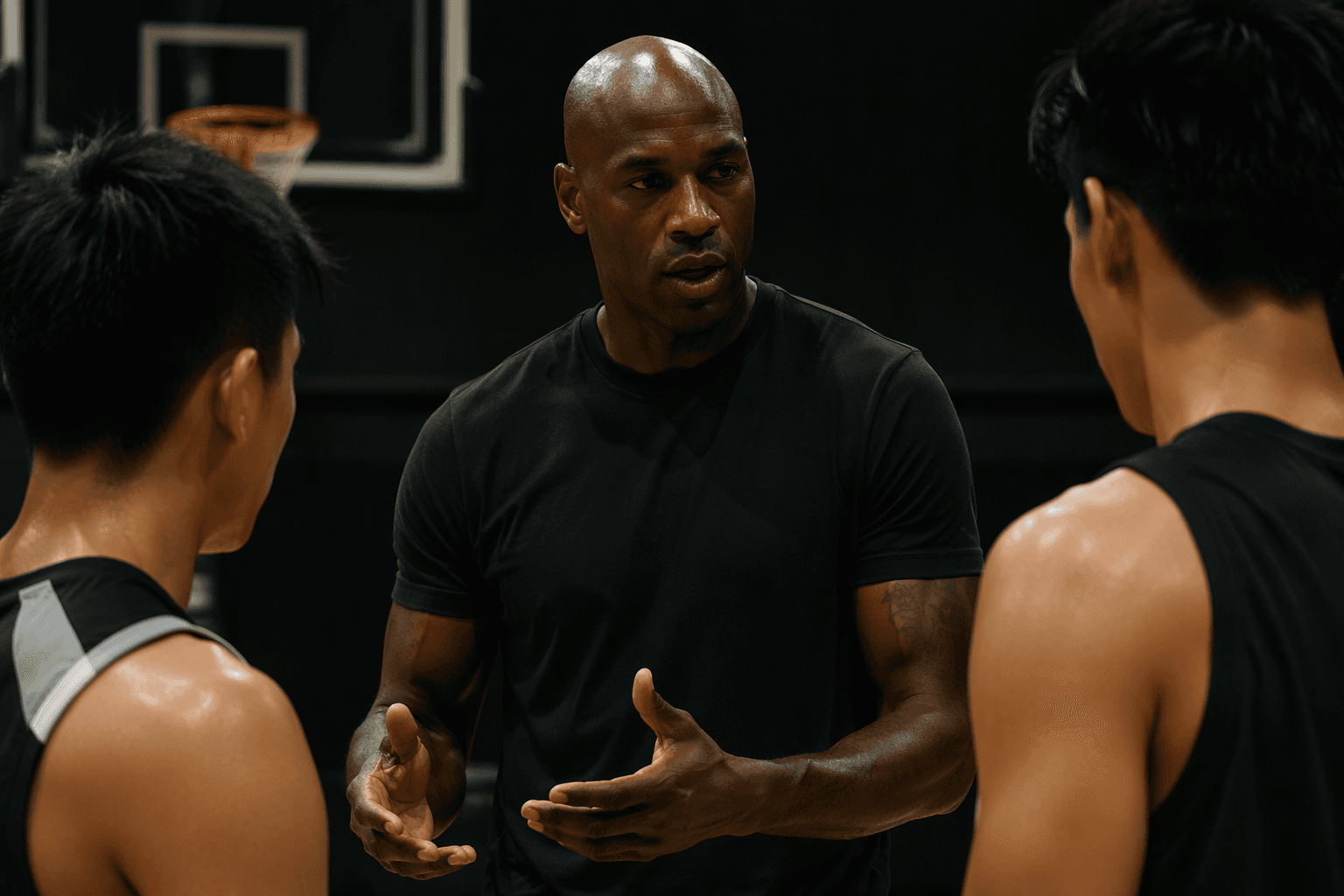
Richard Washington’s scoring edge could make Rumble dangerous
Richard Washington gives Rumble a late-clock scorer who can punish gaps, absorb contact, and tilt close possessions with proven volume scoring.
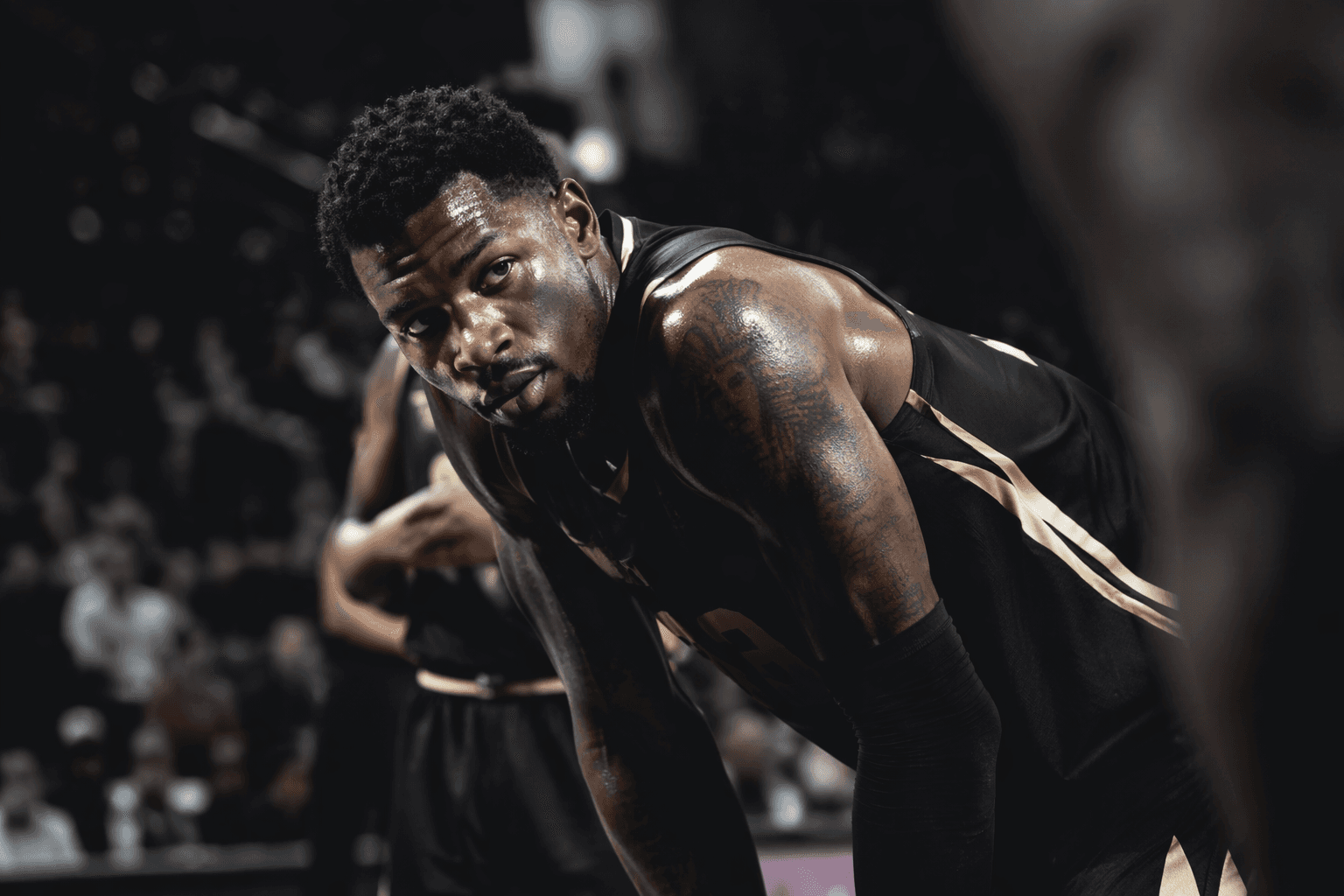
Richard Washington changes the shape of a possession the moment the ball finds his hands. Rumble did not bring him in to blend quietly into the flow, but to give the lineup a wing who can hunt a bucket when the clock is bleeding down and the defense thinks it has forced a stop. In SlamBall’s fast, physical game, that kind of scorer can turn a dead possession into a swing play.
Why Washington fits Rumble’s game plan
Rumble’s roster structure makes Washington’s role easier to define and harder to guard. The squad is built around handlers, gunners, and stoppers, and Washington is listed as a gunner wearing No. 11 with the off-court nickname “Zen Man.” That label matters because his job is not just to score in bursts, but to be the release valve when the offense needs a clean look against contact, rotation, or a late-clock scramble.
He also brings the kind of body and résumé that translate to SlamBall’s collision-heavy possessions. At 6-foot-6, Washington has the size to attack smaller defenders, and his history suggests a wing who can punish a team that sags a step too far off the arc. For Rumble, that is valuable in lineups alongside JaeTuan Williams, Kaylon Tippins-Hill, Tamyrik Fields, Victorious Dean, Bakari Copeland, and Marcus Bradley, because that group has enough size and strength to let Washington operate as the primary scoring wing instead of forcing him into a secondary role.
The scoring profile that travels
Washington’s offense has always been about volume and pressure. At Walsingham Academy in Williamsburg, Virginia, he was a consensus three-star recruit in the 2016 class, earned two all-state selections, and scored 1,432 points across his junior and senior seasons. That is not just a high school résumé, it is a pattern of repeated scoring production, which is exactly what a team wants when it needs a player who can generate points without needing the offense perfectly arranged around him.
His path also suggests a scorer who has already learned how to survive in different environments. Washington became the first player from Walsingham Academy to reach the ACC when he committed to Wake Forest, then had his time there limited by injuries. He later rebuilt his career at San Jose State, first after signing on April 19, 2019, following two seasons at Wake Forest and one season at Tallahassee Community College. That route matters in SlamBall because players who have already had to adapt to new roles, new coaches, and new expectations often handle the league’s chaos better than someone who has lived in one system.
The San Jose State stretch that explains the fit
Washington’s best evidence is on the San Jose State side of the ledger. He became a two-year starter for the Spartans and averaged 13.4 points and 4.6 rebounds per game while hitting 102 of 302 three-point attempts. Those numbers show a player who could score from the perimeter without giving up his willingness to mix it up inside, a useful combination in a league where clean windows are rare and every drive is contested in tight space.
His final season at San Jose State was the strongest indicator that he can take over a game. He led the Mountain West Conference in scoring at 19.5 points per game in 16 games, posted three 30-point outings, and opened that season with a 38-point performance against Fresno Pacific. San Jose State’s roster page says that 38-point game tied for the third-highest scoring game in program history, and it also lists him as a 2021 All-Mountain West Honorable Mention selection. That is the profile of a player who can punish defensive mistakes repeatedly, not just flash in a single hot stretch.
What Rumble gains in close games
The real value is how Washington changes the final minute of a tight game. In SlamBall, one clean takeoff, one missed rotation, or one defender losing a half-step can decide a possession. Washington’s scoring background gives Rumble a player who can hold the ball, force a matchup, and still create a shot when the defense knows exactly where the threat is coming from.
That matters most when opponents try to crowd the lane and dare Rumble’s perimeter players to win isolated exchanges. Washington’s ability to score through contact, plus his proven three-point volume, makes him useful in two ways: he can stretch a set defense far enough to open lanes for teammates, or he can take the shot himself when the possession breaks down. For a team that wants to keep pressure on opponents deep into a game, that is not just useful. It is the kind of edge that can decide standings and playoff positioning.
The backstory behind the production
Washington’s path has also been shaped by setbacks that forced him to keep finding a new lane. ESPN reported in 2021 that he led the Mountain West in scoring at 19.5 points per game while San Jose State was seeking an appeals hearing in an NCAA suspension case. SFGATE reported that the suspension stemmed from Washington hiring a non-compliant NCAA agent and playing in a three-on-three tournament where he made roughly $2,700. Those details matter because they show how much his career has demanded resilience, discipline, and a reset mindset.
That history is part of why the Rumble fit feels so deliberate. He was selected by Rumble in the 2023 SlamBall draft, and the team already knew what it was buying: a scorer with a long record of production, a player who has had to rebuild after detours, and a wing who can stay dangerous even when the game gets messy. In a league built on speed, force, and split-second advantages, Washington gives Rumble a scoring weapon that can bend the final possession of a close game in its favor.
This article was produced by Prism’s automated news system from verified source data, official records, and press releases, then run through automated quality and moderation checks before publishing. The system is built and supervised by the people who set the standards it runs under. Read our full AI policy.
Know something we missed? Have a correction or additional information?
Submit a Tip