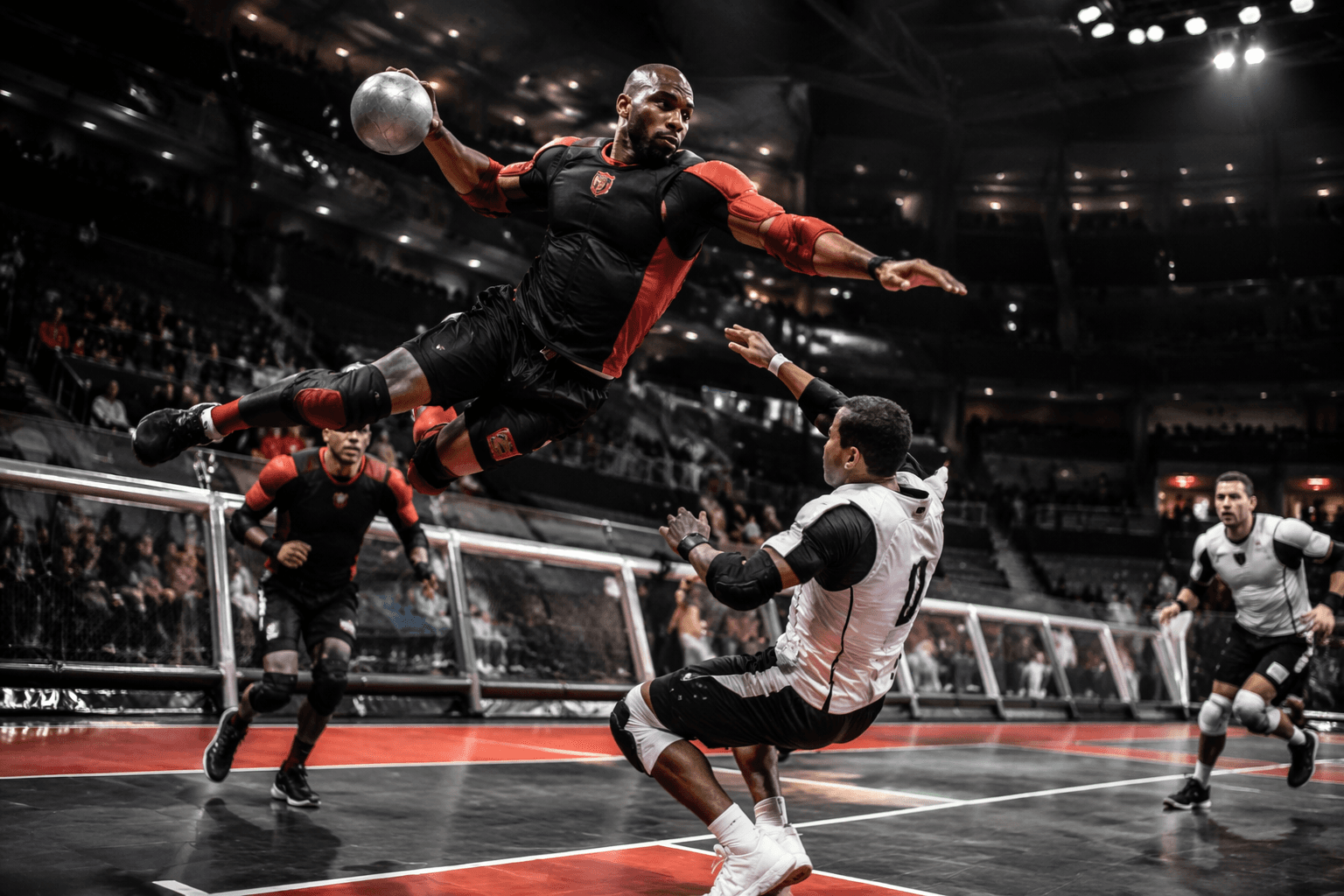
Sean Inches Jackson remains SlamBall’s defining showman and all-time legend
Sean “Inches” Jackson turned SlamBall’s aerial chaos into a signature style, and his McNasty still defines the league’s identity in the relaunch era.
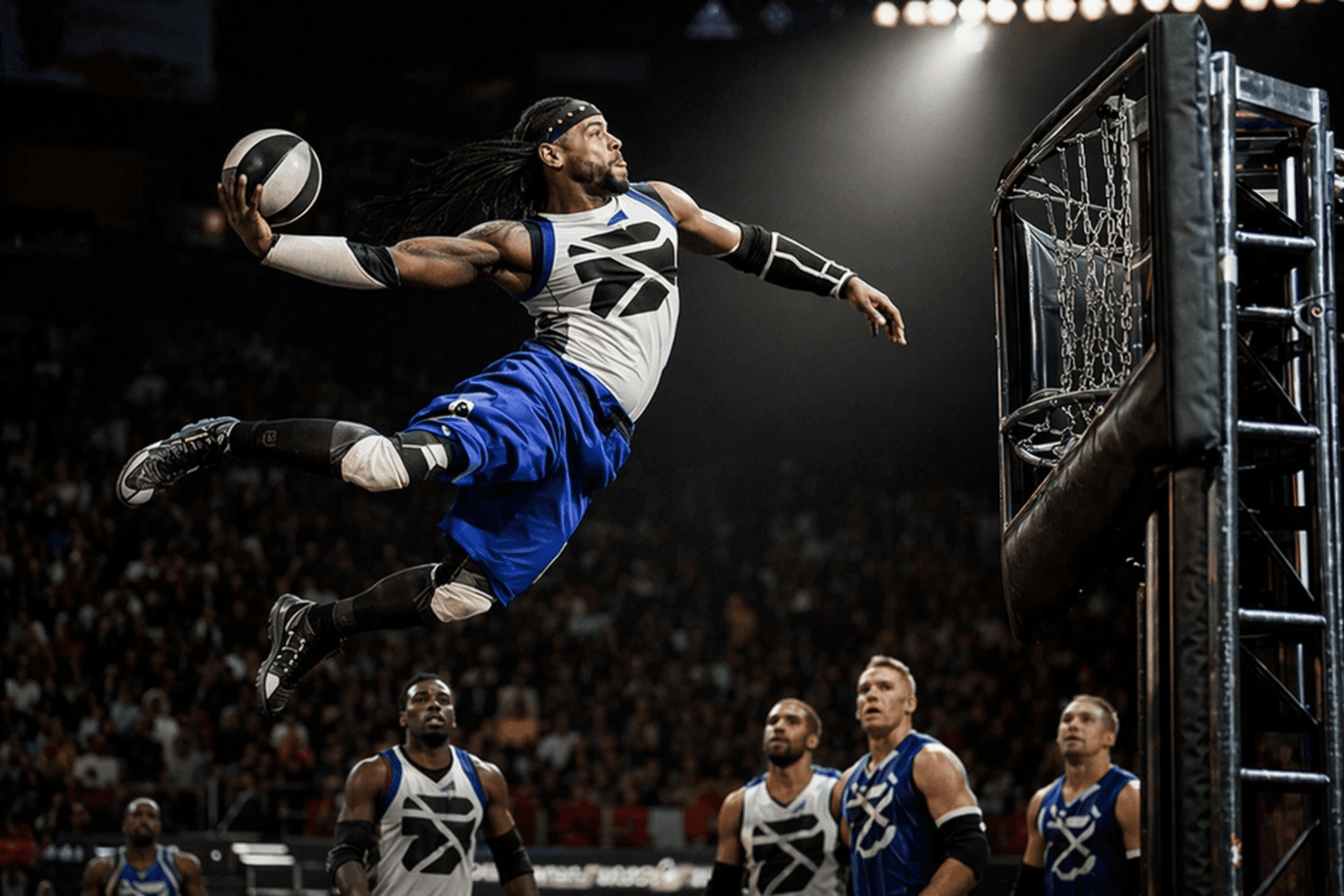
The face of SlamBall’s original appeal
Sean “Inches” Jackson is the kind of player a new fan can understand in one possession. He stands 5-foot-10, but in SlamBall that frame became part of the story, not a limitation. The league’s own bio calls him the “Allen Iverson of SlamBall,” and the comparison fits because Jackson made the sport feel inventive, fast, and almost improvisational, even when the contact around him was anything but.
That is why his name still matters every time SlamBall reasserts itself. He was not just a productive player, he was a visual identity for the sport, the kind of athlete who made a hybrid game look like a complete entertainment product. In a league built from basketball, football, and trampolines, Jackson showed how a smaller player could turn speed, timing, and body control into a competitive advantage.
Why the McNasty became the sport’s calling card
If SlamBall needed one move to explain its appeal, Jackson gave it one. His signature sequence, the McNasty, is described by the league as three dunks in one, a 360, a through-the-legs finish, and a 45-degree lean slam. That is not just an acrobatic finish, it is a shorthand for what made SlamBall distinct at its peak: the game already asked players to dunk, but Jackson made the act look choreographed.
The McNasty also explains why Jackson’s legend still travels well in the relaunch era. Fans do not need a full tactical breakdown to remember him; they remember a possession that felt impossible, then realized he had built a repeatable language for making the impossible routine. In a sport where every trip to the rim can become a highlight, Jackson was the player who consistently made the highlight the point.
The MOB and the warehouse roots of the league
Jackson’s importance is tied to more than one move. SlamBall places him on the original MOB team, one of the league’s first two franchises, and that matters because the MOB sits inside the sport’s origin story. The team began in a Los Angeles warehouse-era setting, and Jackson shared that identity with Lamonica “The Machine” Garrett and Kevin Cassidy, names that still carry weight in the league’s history.
That warehouse beginning is part of why Jackson remains a defining figure. He came up inside the environment that made SlamBall feel different from a conventional basketball league, with its trampoline lanes and full-contact collisions. The MOB was not just a team, it was one of the original containers for the sport’s style, and Jackson became one of its clearest faces.
What kind of athlete SlamBall remembers
Jackson’s legend page makes a point of emphasizing how he won. His game was never about matching bigger players physically, because the sport already tilted toward size and collision. It was about beating them with pace, creativity, and absurd body control in the air, which is exactly the kind of profile that turns a player into a lasting symbol rather than a temporary star.
The league also says Jackson captivated millions by dominating much larger players despite his smaller frame. That detail matters because it tells you what SlamBall valued at its best: not just raw force, but the ability to weaponize agility inside a sport that rewards controlled chaos. Jackson’s résumé reads like a reminder that SlamBall always had room for players who could make every jump, spin, and finish feel like a confrontation with gravity itself.
Beyond the court, and beyond the box score
Jackson’s significance was never confined to the trampoline court. SlamBall notes that he appeared in films and in Nike’s freestyle campaign commercials, which extended his presence beyond league diehards and into the wider sports culture. That crossover is part of the reason his name still resonates, because SlamBall has always needed stars who could live both as athletes and as performers.
That broader visibility also helps explain why Jackson remains useful in the sport’s relaunch era. New versions of SlamBall need recognizable figures who can translate its novelty to an audience that may not know the rules, the setup, or the history. Jackson did that naturally, because he looked like the sport’s argument for itself: a player who could make a small frame feel large, and a single possession feel like a scene.
Why Jackson still anchors the relaunch conversation
SlamBall returned to ESPN and ESPN+ on July 21, 2023, with Mob vs. Rumble streaming live that day, and that comeback only sharpened Jackson’s place in the league’s mythology. The modern version of the sport still leans on the same core proposition that made Jackson famous, a combination of basketball, football, and trampolines with familiar rhythm and deeper strategic layers. That formula works because it is competitive first, but Jackson is the clearest reminder that it is also theatrical.
For current players, the trace line back to Jackson is obvious. He represents the model for turning a possession into a performance without losing the competitive edge, and the McNasty remains the purest expression of that balance. For fans, his value is simpler: he is the face of the era when SlamBall became unmistakably itself, and the reason the league can still sell its own identity with a single name.
This article was produced by Prism’s automated news system from verified source data, official records, and press releases, then run through automated quality and moderation checks before publishing. The system is built and supervised by the people who set the standards it runs under. Read our full AI policy.
Did this article answer your question?