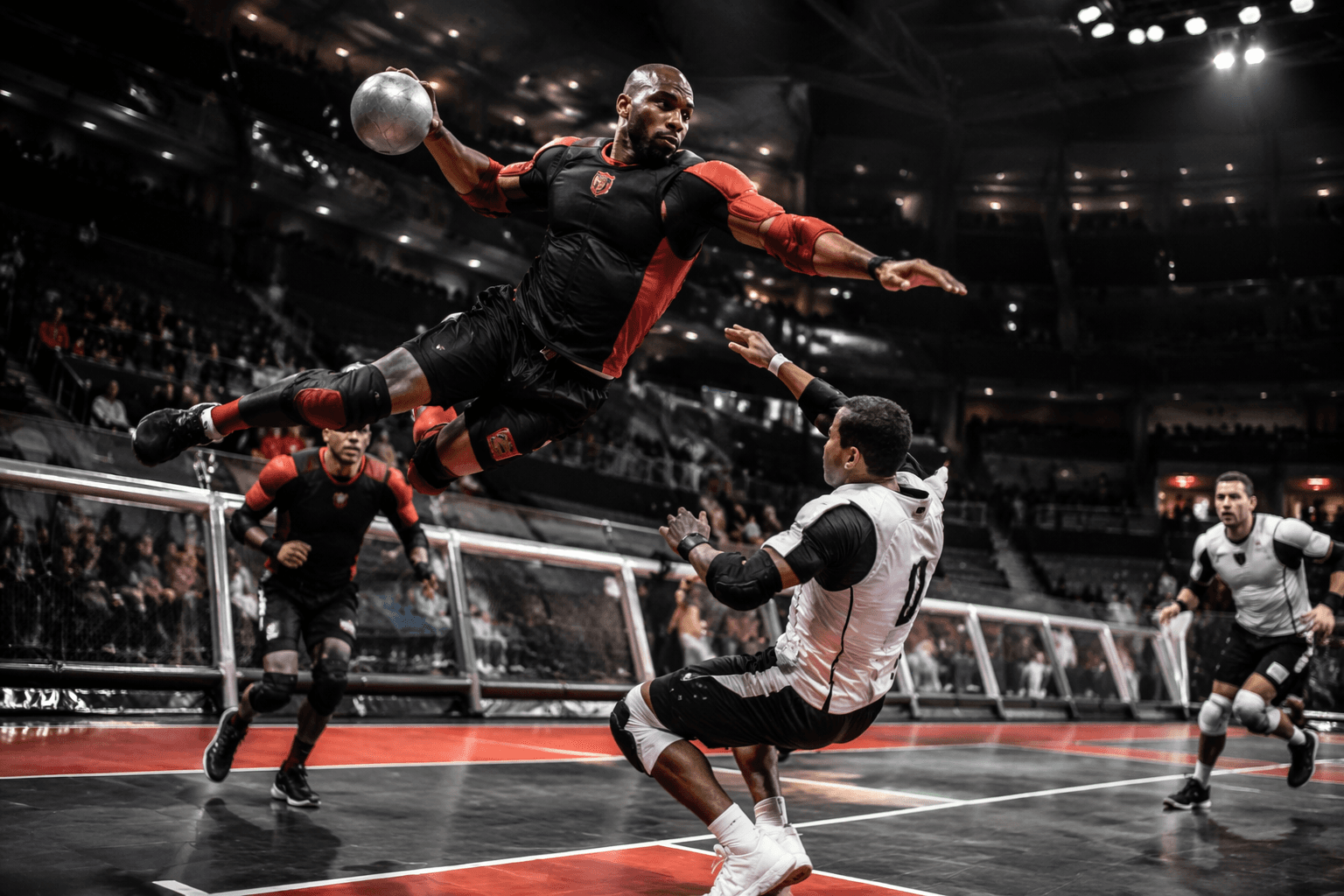
SlamBall uses motion capture and force plates to prevent injuries
SlamBall is turning injury prevention into a credibility test, using motion capture and force plates to prove its chaos can be managed without dulling it.
SlamBall’s new credibility test
SlamBall’s biggest challenge is not selling the spectacle. It is proving that the spectacle can survive repeated punishment. The league is leaning into motion capture, force plates, strength testing, and GPS-based monitoring because its athletes are not only sprinting and cutting, they are launching off springbeds, colliding in the air, and landing under forces that traditional court sports rarely create.
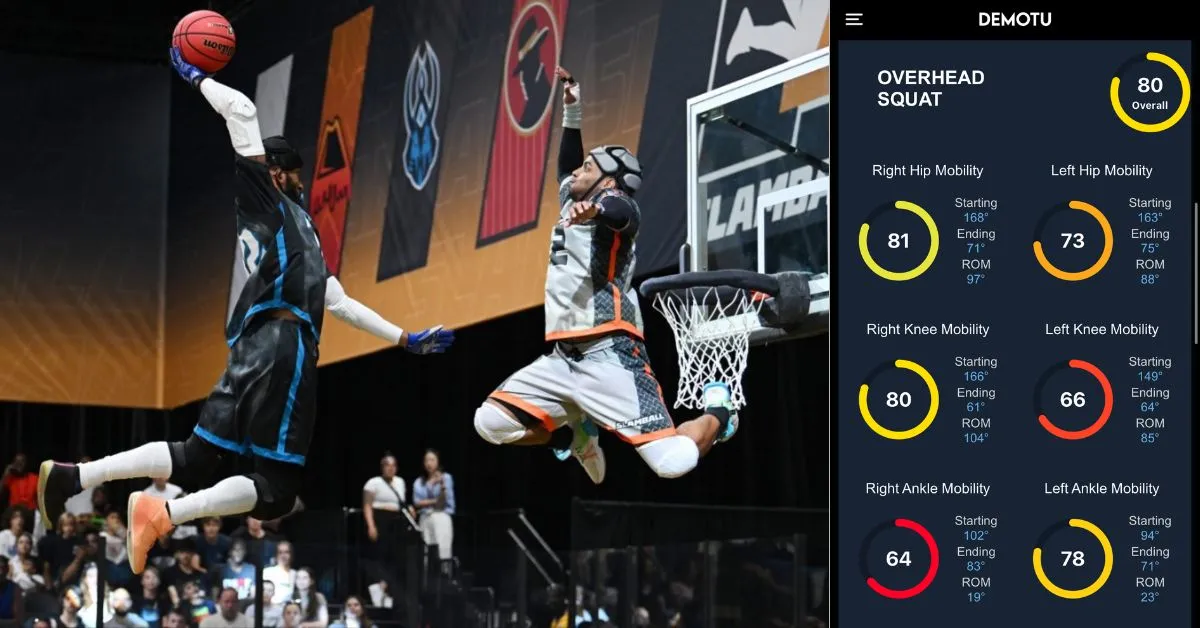
That is where Joe Resendez becomes central to the story. As the league’s head of player health and performance, he brings a résumé that spans the Sacramento Kings, the Los Angeles Clippers, and XFL/UFL San Antonio. He worked as head athletic trainer for Sacramento from 2018 to 2022, served the Clippers from 2010 to 2018 as assistant athletic trainer and assistant strength and conditioning coach, and later led athletic training in San Antonio from 2022 to 2025. He has also been listed as a Demotu biomechanical motion-capture advisor and board member since 2023, which makes him an unusually credible figure for a league trying to turn science into trust.
Why SlamBall needs a different injury model
The sport’s rules make clear why a standard basketball or football playbook is not enough. SlamBall is played on a 96-foot by 64-foot court with three springbeds at each end and a fourth scoring bed. Teams put four players on the floor at a time and can carry seven active players on the roster. Games are short, four five-minute quarters, but the action is compressed and violent enough that short duration does not mean low load. Players are also required to wear padded helmets, elbow pads, kneepads, and custom padded undergarments during official competition.
That mix changes the injury equation. The risks are not just ankle rolls or strained hamstrings. Movement analysis is designed to catch compensations, mobility issues, and biomechanical weaknesses before they become major injuries, especially when a player has to generate power, absorb contact, and recover quickly in the same sequence. The areas that matter most are the foot-ankle complex, knees, lumbar spine, hips, and shoulders, because those joints and segments absorb the cost of jumping, landing, and repeated contact all night long.
The biomechanics behind the spectacle
SlamBall’s health staff is looking for the same thing performance staffs chase in any elite sport: efficiency under stress. Force plates can show how a player loads and unloads during takeoff and landing. Motion capture can reveal asymmetries or compensations that do not show up in a box score, but can become expensive if left unchecked. Strength testing and GPS-based tools add another layer, helping staff identify whether a player is accumulating too much stress, moving poorly, or failing to recover as expected.
The point is not to make SlamBall safer by removing risk. The point is to understand where the risk lives. A player who lands badly after repeated springbed launches may be showing a knee issue, an ankle issue, or a chain reaction that starts at the hip or lumbar spine. A hard collision in the air can expose shoulder instability. Sprinting and deceleration can create soft-tissue problems, while repetitive jumping and landing can trigger tendon issues. In a sport built on controlled chaos, those patterns are not side notes, they are the game.
Demotu’s role and what it can really prove
Demotu gives SlamBall something valuable: a stronger scientific frame for player safety. The company’s motion-capture work aligns with the league’s need to show that it is not treating injury prevention as a talking point but as a system. Resendez’s connection to Demotu also matters because it ties league operations to someone who has spent years in established pro environments where medical and performance decisions carry real competitive consequences.
Still, the edge may be as much about credibility as competitive advantage. Established leagues have longer injury histories, deeper medical staffs, and more public evidence of what works. SlamBall does not yet have that kind of proof. What it does have is a sport structure so unusual that it can justify a more aggressive, data-heavy model from the outset. In that sense, Demotu may not yet be delivering a measurable superiority over the most established sports, but it is helping SlamBall build a more convincing safety narrative grounded in biomechanics rather than promises.
From player care to league business
The injury-prevention push also sits inside a broader effort to professionalize the league’s business. SlamBall and ESPN announced an exclusive two-year broadcast partnership on June 21, 2023 for the 2023 and 2024 seasons. ESPN said the 2023 season would include more than 30 hours of live programming across five weekends, with all games staged at Cox Pavilion in Las Vegas. A later ESPN release on July 5, 2023 raised that to more than 60 hours of action across five weekends, ending with the playoffs and championship game from August 17-19, 2023.
That visibility came alongside a capital raise. SlamBall said it had closed an $11 million Series A round, and it said Legends was handling e-commerce, event retail, and business intelligence support for the league. Those details matter because they show a league trying to build something durable, not just flashy. If players are healthier, lineups stay intact. If lineups stay intact, the league can keep presenting the same fast-paced product that ESPN and fans are asked to value.
The long view
SlamBall was invented in 1999 by Mason Gordon and first played in Los Angeles, with the league’s history tracing its roots to an L.A. warehouse before a national debut on Spike TV in 2002-2003. That origin story has always been about invention and spectacle. The current chapter is about whether invention can mature into infrastructure.
That is the real significance of motion capture, force plates, and the rest of the medical stack. They are not just gadgets attached to a highlight-driven sport. They are SlamBall’s attempt to prove that high-flying contact can be measured, managed, and sustained. If the league can keep athletes available without sanding off the sport’s edge, it will have solved the hardest part of growth: turning chaos into something credible enough to last.
This article was produced by Prism’s automated news system from verified source data, official records, and press releases, then run through automated quality and moderation checks before publishing. The system is built and supervised by the people who set the standards it runs under. Read our full AI policy.
Did this article answer your question?