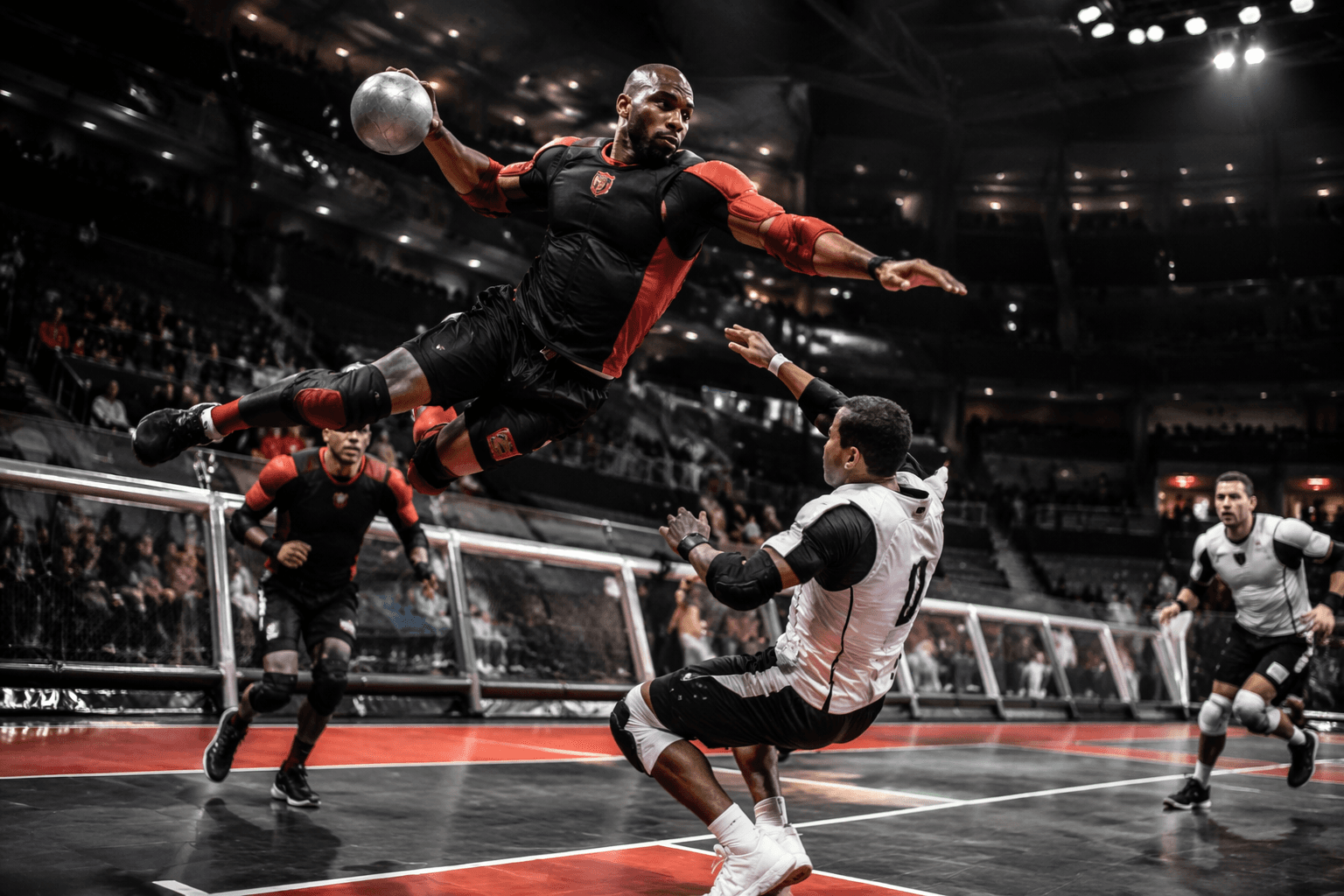
Slamball’s three key roles and the athletes built for each
Four-player Slamball lineups hinge on three jobs, and the league’s best teams build around the right mix of handler, gunner and stopper.

Only four players are on the court at a time in SlamBall, and each roster carries seven active players. Every slot has a job, and the league’s own history shows those jobs are not interchangeable. Sean "Inches" Jackson was labeled a handler, Stan "Shakes" Fletcher a gunner and Adam Hooker a stopper, and that position language shows how a coach assembles a team.
Why the roles matter
SlamBall was invented in 1999 by Mason Gordon and first played in Los Angeles, built from basketball, football, hockey and trampolines. After 15 dormant years in the United States, the sport returned in 2023 with an ESPN broadcast partnership, opening night at Cox Pavilion in Las Vegas on July 21, and a five-weekend season that finished with playoffs and the championship game on August 17-19. ESPN, ESPN2 and ESPN+ carried more than 30 hours of live programming.
In a four-man game, specialization is not a luxury. A coach does not have the roster space to hide a player who is merely “good at sports.” The league’s position labels force a more exact build: one creator to start the possession, one or more finishers to attack space, and one defender built to absorb the chaos near the rim.
The handler starts the offense
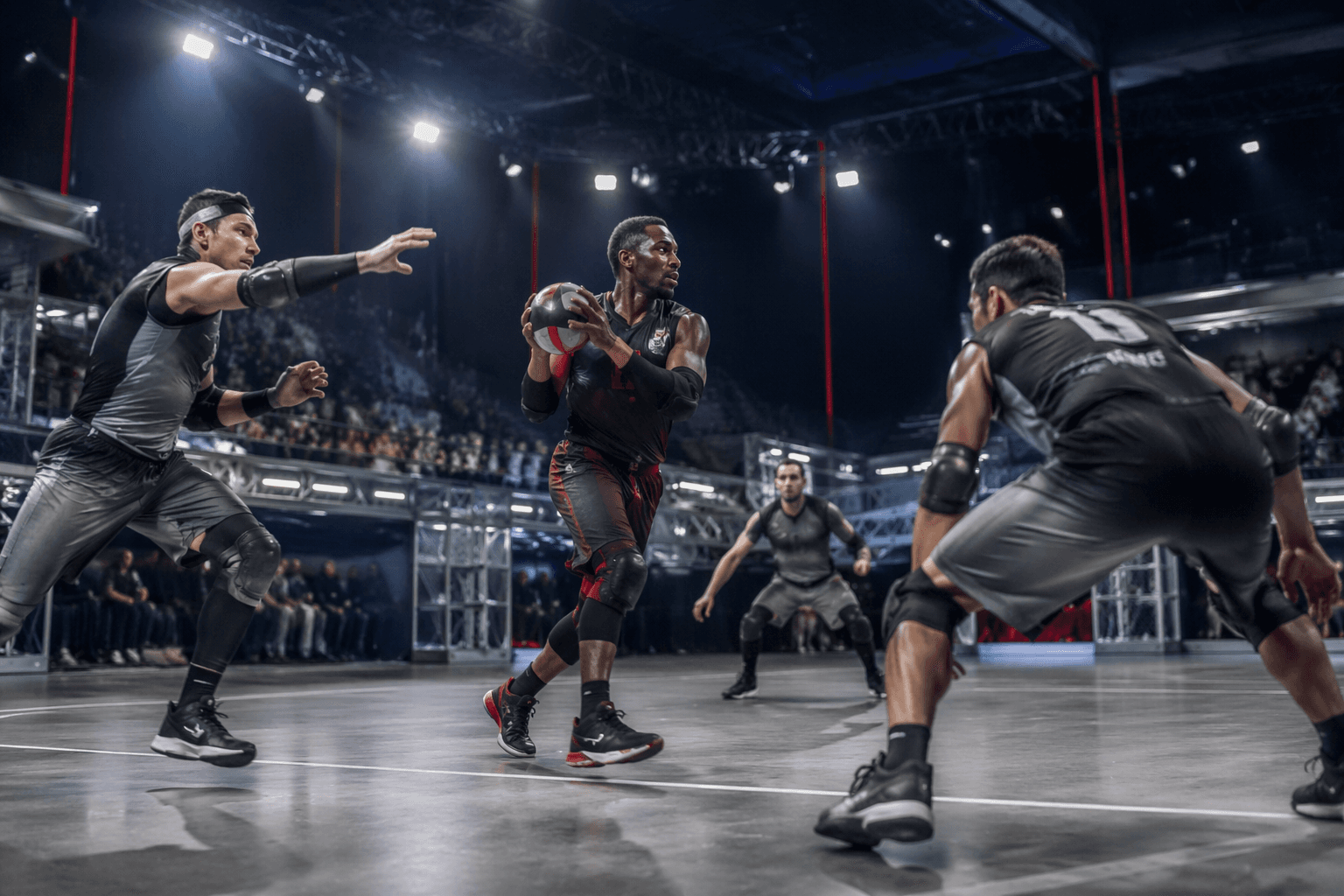
The handler is the organizer, the player who turns the throw down and the first touch into something coherent. The league lists Sean "Inches" Jackson as a handler on its legends page, and current team cards use the same tag for Adam Stanford of the Gryphons, Tony Crosby II of the Slashers and Cameron Horton of the MOB. The role prioritizes ball control, vision and the ability to deliver the first advantage before the defense can load up.
Gage Smith describes the best handlers as point-guard types who average the most assists. SlamBall still values the instincts of a traditional floor general even in a sport built around height and flight. The job is to see the next pass before the trampoline bounce, keep the ball moving under pressure and trust teammates who are about to attack from odd angles.
The gunner is the vertical threat
If the handler is the organizer, the gunner is the stress test. The league’s legends page labels Stan "Shakes" Fletcher and James "Champ" Willis as gunners, and current rosters do the same for Kyshawn Jones and Justin Holmes of the Gryphons and Bradley Laubacher and Alonzo Scott Jr. of the Slashers. The role is built for finishing: catch, rise, punish the defense.
Smith says the best gunners often come from football receiver, track or basketball backgrounds, especially players with huge verticals. On the floor, timing and explosion matter as much as raw size. The job is to convert the handler’s setup into points before the defense fully resets.
The stopper is the defensive center of gravity
SlamBall’s stopper is the most physically punishing of the three jobs, and the league’s legends page names Adam Hooker and Rodney Bond in that role. Connor Hollenbeck is listed as a stopper for the Gryphons, and Amir Smith holds that job for the Slashers. The stopper is not just a shot blocker in a sport with constant collision and rebound chaos; he is the player who keeps possessions from becoming track meets the other way.
Smith calls Kevin Cassidy the stopper GOAT, and he points to Faysal "Fessy" Shafaat as an All-American tight end turned stopper and Connor Hollenbeck as a former pro football player. He says stoppers often come from baseball or tight-end backgrounds with high basketball IQ. The role favors spatial instincts, anticipation and the willingness to play through contact, not just brute force.
What the current league looks for
The 2023 relaunch showed what the league looks for. The eight teams were the Mob, Rumble, Slashers, Buzzsaw, Gryphons, Lava, Ozone and Wrath, and the player pool mixed standout athletes from basketball, football and track backgrounds. The average age was 26.9 years, the tallest player was 6-foot-9 Vincent Boumann and the shortest was 5-foot-6 Tony Crosby II.
Mason Gordon called that mix “a cross-section of the best athletes in basketball, football, track and more.”
How winning teams are actually built
The team cards show the system at work. The Gryphons list Adam Stanford as handler, Kyshawn Jones and Justin Holmes as gunners, and Connor Hollenbeck as stopper. The Slashers list Tony Crosby II as handler, Bradley Laubacher and Alonzo Scott Jr. as gunners, and Amir Smith as stopper. Even the MOB, who finished undefeated and won the Gordon/Tollin Trophy on August 17, 2023, built around role clarity, with Gage Smith and Dionte Byrd in stopper spots and Cameron Horton handling creation.
In 2023, Smith won MVP, Defensive Player of the Year and first-team All-SlamBall stopper, and he recorded the league’s first triple-double in the main event with 22 points, 21 stops and 23 loose-ball rebounds.
This article was produced by Prism’s automated news system from verified source data, official records, and press releases, then run through automated quality and moderation checks before publishing. The system is built and supervised by the people who set the standards it runs under. Read our full AI policy.
Did this article answer your question?