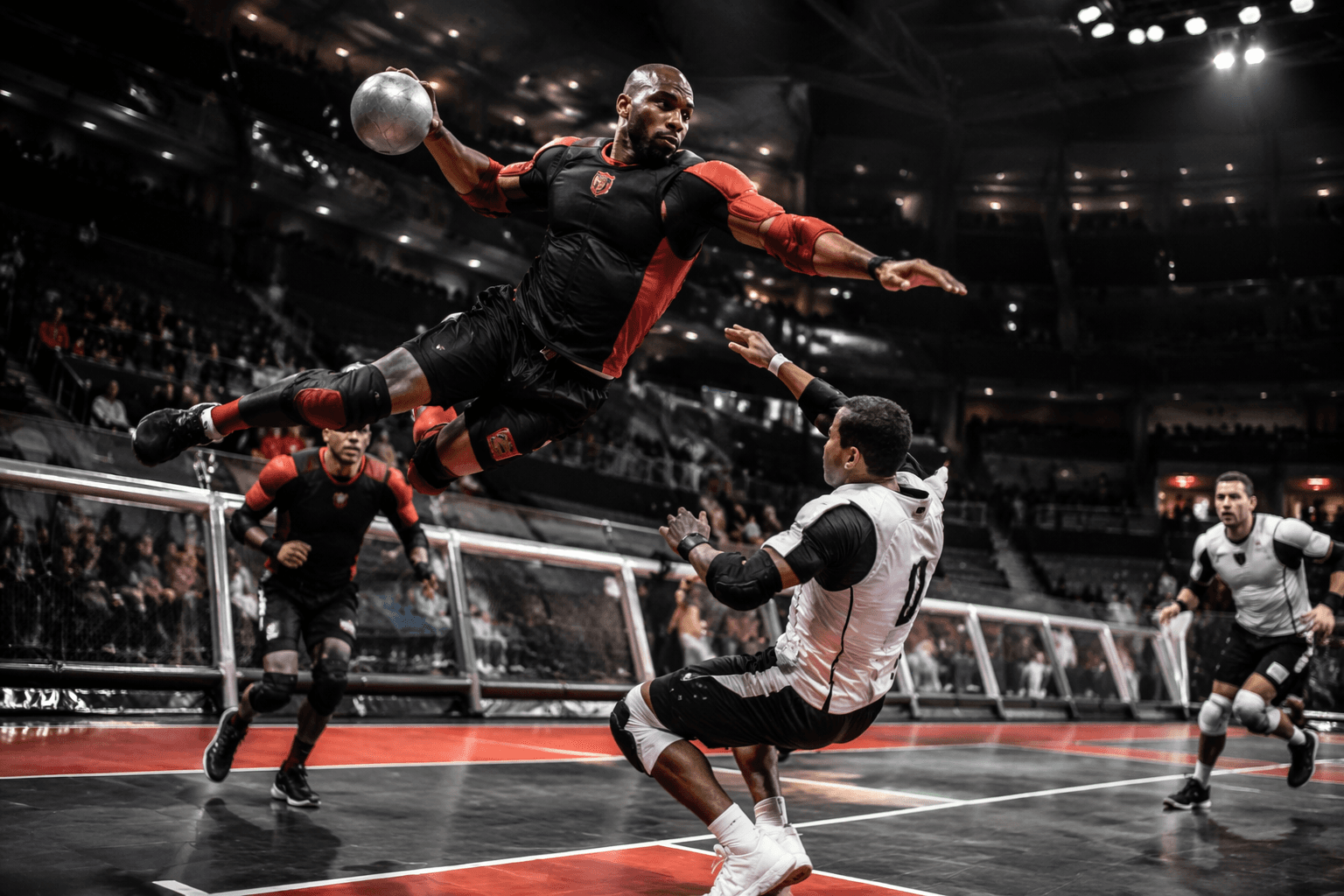
SlamBall's TV-first design shaped its rise on Spike TV
SlamBall was built for replays, not patience: four 5-minute quarters, fast resets and violent rim defense made Spike TV the ideal stage.
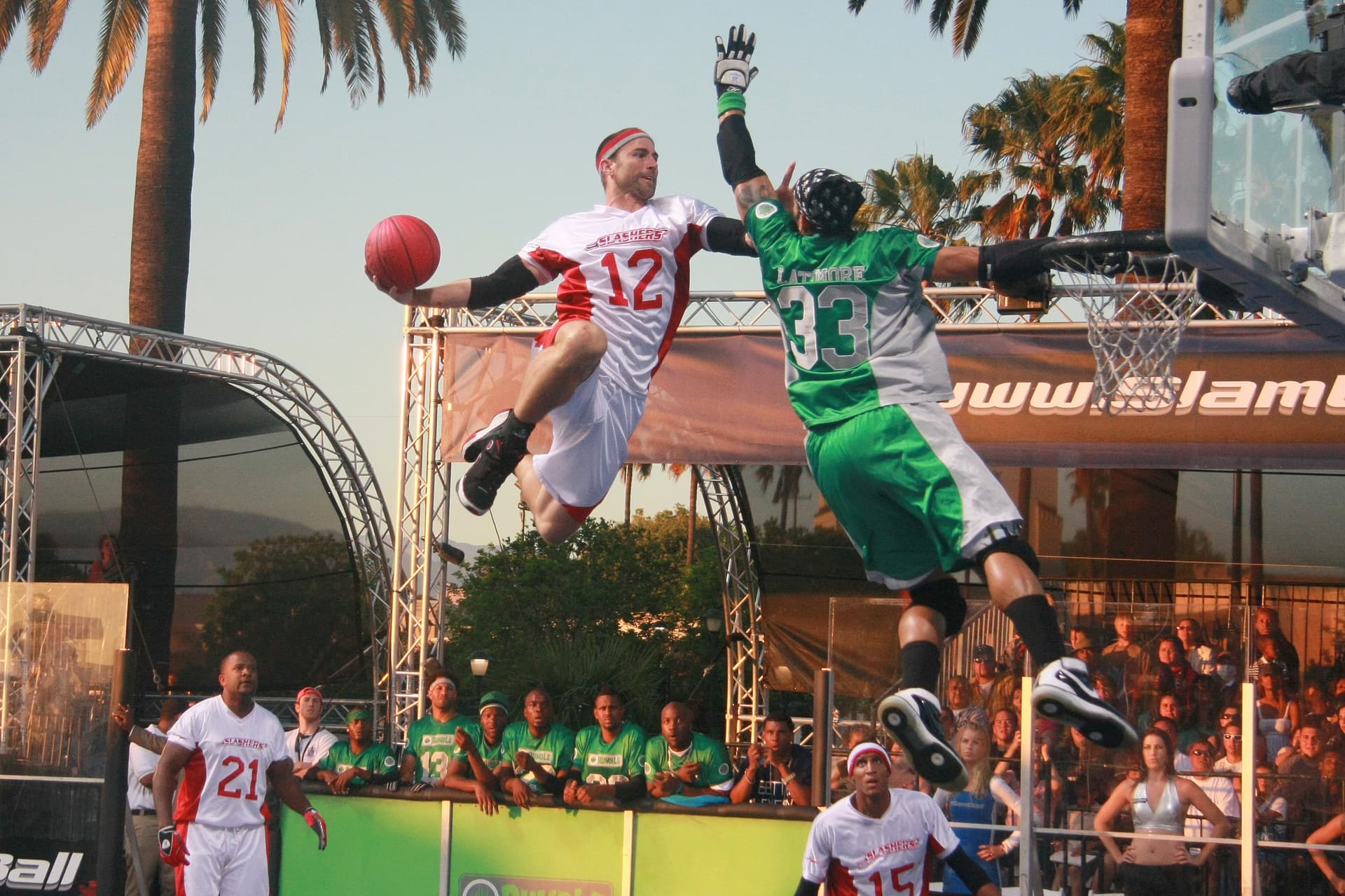
Trampoline launches, collision-heavy rim defense and a constant transition game were not accidents. From Mason Gordon’s 1999 napkin sketch at Tollin/Robbins Productions to the current four 5-minute quarters and running clock, SlamBall was engineered so every possession could turn into a replay-ready hit. Mike Tollin helped Gordon move the concept forward, and that TV-first thinking still explains why the sport lands so cleanly on screen.
Built for the replay, not the grind
SlamBall was never designed to feel like a slow basketball cousin. ESPN’s profile traced the idea to Gordon’s sketch in 1999, when the sport was taking shape around a hybrid of basketball, football, hockey and gymnastics, not around the rhythms of a long pro season. The result was a court and rule set that rewarded lift, contact and immediate momentum changes, which is exactly why the sport produces the kind of possessions that can be replayed from three angles without losing their punch.
That broadcast logic mattered from the start. The sport’s identity was tied to whether it could be packaged as a show as much as a competition, and that is why Tollin’s help mattered beyond finance or credibility. The sport needed a format that could turn a dunk, a stop at the rim or a broken transition into the whole point of the sequence, not just a single play inside a longer basketball game.
Why Spike TV fit the original product
The first national version of SlamBall on Spike TV, in 2002 and 2003, matched the sport’s rhythm perfectly. The games were pre-taped and edited into neat half-hour cable windows, which made the action feel like a highlight series with a scoreboard instead of a standard league broadcast. That format gave the league a clean, dense presentation: fewer dead stretches, more impact plays, and a product built for viewers who wanted the best moments packed tightly together.

The league’s own history shows how often the sport found its way back onto television once a network saw the packaging potential. The 2007 POWERade SlamBall Challenge aired on CSTV, and the 2008 return aired on Versus and CBS. Each comeback reinforced the same lesson: SlamBall’s value on TV came from how efficiently it could deliver contact, speed and finished plays without asking viewers to wait through long stretches of setup.
The live relaunch sharpened the same formula
The 2023 relaunch turned that TV logic into a live event. It began July 21, 2023, from Cox Pavilion in Las Vegas, Nevada, with ESPN, ESPN2 and ESPN+ slated to carry more than 30 hours of programming. ESPN later said the full season included more than 60 hours of action, spread across five weekends and ending with playoffs and a championship game in mid-August.
The live version worked because the rules kept the pace compressed. Current SlamBall games use four 5-minute quarters, a running clock in most situations and just one 45-second timeout per team, available only in the fourth quarter. That structure leaves little room for drift, which is exactly what a made-for-TV sport needs when the action has to stay dense enough to justify a live broadcast and short enough to keep the viewer locked in. Front Office Sports also noted that the 2023 return came with a rights fee from ESPN, a sign that the modern version was built as a more traditional media product than the taped era that preceded it.
Teams and players give the league a face
The current league branding helps convert that pace into identity. The lineup includes the MOB, Rumble, Ozone, Lava, Slashers, Wrath, Buzzsaw and Gryphons, names that sound like they belong to a recurring cast as much as to a standings table. That matters in a sport that depends on viewers recognizing not just the rules, but the personalities and styles that make each team feel distinct from the opening tip.
The league’s legends page reinforces that character-driven appeal with early names like Sean “Inches” Jackson, LaMonica “The Machine” Garrett and Stan “Shakes” Fletcher. Those nicknames are part of the product, too. They give SlamBall the kind of shorthand that television loves, the sort of identity that makes a fast break or a rim collision feel tied to a face, a role and a memory instead of a random possession.
Why SlamBall still works on screen
The sport’s appeal now comes from the same design choices that shaped its rise on Spike TV. Trampoline-assisted finishes create height and surprise, collision-heavy rim protection creates consequence, and constant transition keeps the camera moving. When the league compresses all of that into five-minute quarters and a short season, every game feels like it has to produce something worth replaying.
That is why the format keeps finding television relevance whenever it returns. SlamBall does not ask viewers to admire a long arc; it gives them a burst of controlled chaos, a scoreboard that moves quickly and a roster of teams built to be remembered in highlights.
This article was produced by Prism’s automated news system from verified source data, official records, and press releases, then run through automated quality and moderation checks before publishing. The system is built and supervised by the people who set the standards it runs under. Read our full AI policy.
Did this article answer your question?