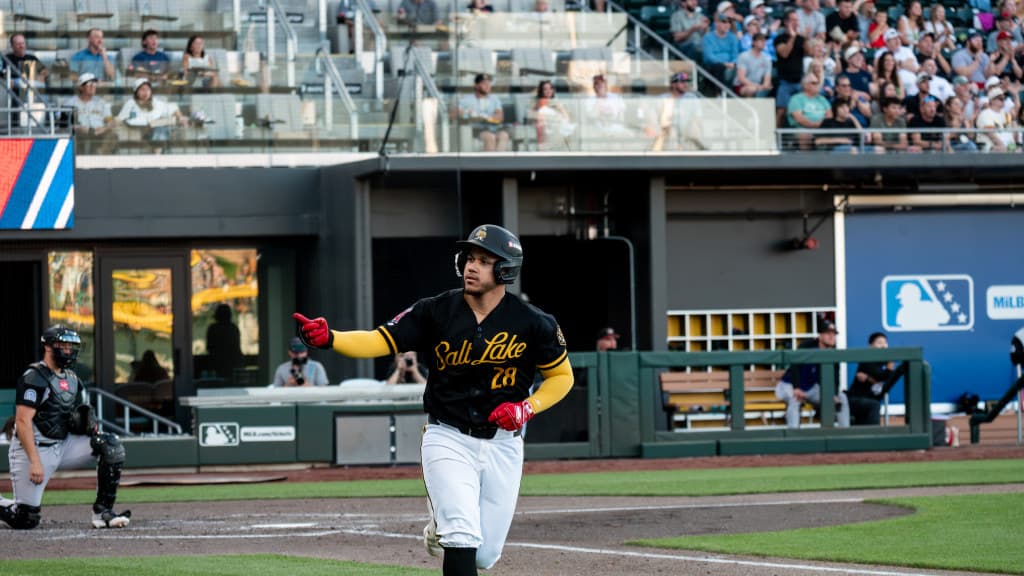
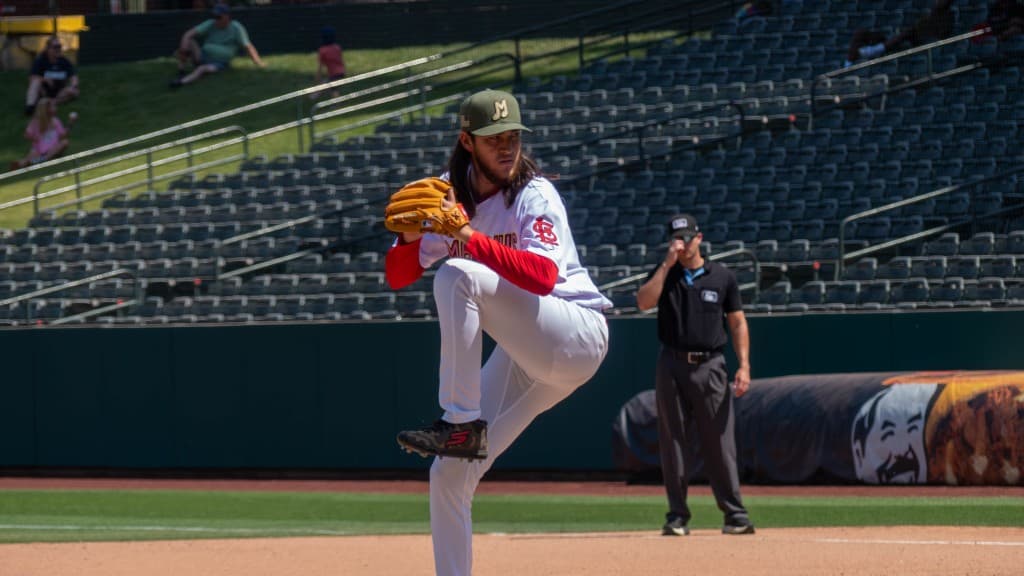
Angels Option Ureña to Triple-A Salt Lake for Rotation Development
The Angels optioned No. 19 prospect Walbert Ureña to Triple-A Salt Lake three days into the season after his 98.8-mph sinker collided with big-league command reality.
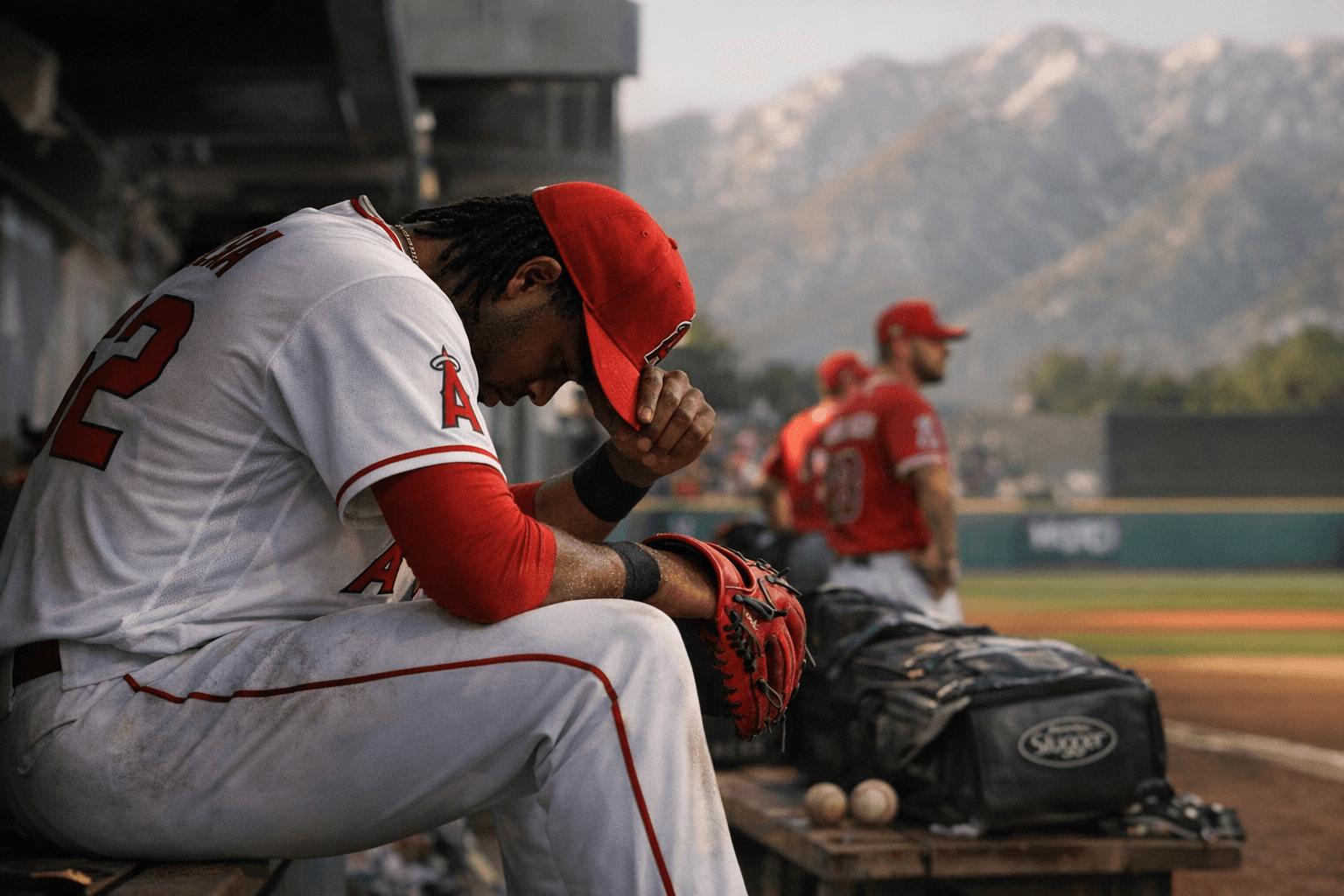
The Los Angeles Angels optioned right-hander Walbert Ureña, the organization's No. 19 prospect per MLB Pipeline, to Triple-A Salt Lake on March 29, just three days after a surprise Opening Day roster placement unraveled in a single frame against the Houston Astros.
The move came one day after Ureña's second career big-league appearance on March 28 turned into a six-run, sixth-inning collapse at Daikin Park. The 22-year-old Dominican Republic native flashed genuinely premium stuff throughout his brief stint, with his sinker averaging 98.8 mph alongside an 87 mph sweeper and a 92.5 mph changeup. Very few pitchers at any level throw those kinds of numbers at that age. The problem was he walked three of the 15 batters he faced across both appearances, and against a lineup like Houston's, that margin for error does not exist.
The March 28 outing crystallized exactly what the Angels need to fix. All six runs came with two outs, which is as much a sequencing indictment as a command one: Ureña got hitters to two strikes, then lost the zone at the worst possible moments. The defense behind him compounded the damage when he threw a throwing error on a slow roller and catcher Logan O'Hoppe added another on a tapper in front of the mound with the bases loaded. Carlos Correa picked up an RBI single on the chaos. Six runs. Bases cleared. None of it had to happen that way.
Manager Kurt Suzuki was direct about why the option made sense, and just as direct about what he sees in Ureña when things are working. "We needed to get some length in the bullpen to protect us," Suzuki said. "He's gonna go down, and we'll get him back in the rotation. We all see the stuff. But for a younger player, the game can get fast a little bit. And I love the guy, he's such a hard worker, great teammate." He then made the broader development point that frames the entire decision: "At the end of the day, in the Major Leagues and the Minor Leagues, it's not really about stuff, it's about consistency. He's obviously shown some brilliant flashes, and then some days it gets a little fast for him. So I think he's going to go down, he's going to keep working hard like he normally does, and get back in a groove."
That framing matters. This is not a verdict on whether Ureña can pitch in the majors. It is a verdict on whether he is ready to do it right now, in a bullpen role, against a lineup prepared for his fastball. The answer, after two appearances, was no.
Part of what makes Ureña's situation worth watching closely is the injury context that put him in this spot in the first place. Before the season started, the Angels lost Kirby Yates (left knee inflammation), Ben Joyce (shoulder inflammation), Alek Manoah (middle finger contusion), Grayson Rodriguez (shoulder inflammation), and Robert Stephenson (right elbow inflammation) to the injured list. That is not a bullpen attrition story; that is a bullpen collapse before a pitch was thrown. The Angels needed bodies, and Ureña, who had entered the year with only one career appearance above Double-A, found himself on an Opening Day roster largely because there was no better alternative. Putting a raw 22-year-old arm in high-leverage spots during the first week of the season against the Astros was always a gamble. The organization is now making the corrective move they should have made from the start.
To fill Ureña's spot, the Angels selected the contract of right-hander Shaun Anderson from Salt Lake and designated Victor Mederos for assignment to open a 40-man roster spot. Anderson brings big-league experience and the innings-absorbing capacity Suzuki explicitly said the roster required.
At Salt Lake, Ureña will work as a starter rather than a reliever, which changes the entire development equation. In a rotation role, he gets to sequence his three pitches across a full lineup turn, face the same hitters multiple times in one outing, and build the kind of rhythmic consistency that extended bullpen work cannot replicate. The Pacific Coast League is a hitter's environment, so PCL ERA figures will not tell the real story. The metrics to watch are walk rate, first-pitch strike percentage with the sinker, and whiff rate on the sweeper and changeup in two-strike counts. If Ureña's sinker command improves and he consistently gets ahead in counts, the sweeper and changeup become genuine weapons. If he's still falling behind in counts at Salt Lake, the sequencing problem follows regardless of the radar gun reading.
The Angels have a useful comparison already on their major league roster: Ryan Johnson, the organization's No. 2 prospect, made the Opening Day rotation and looked sharper against the same Astros lineup. The difference between No. 2 and No. 19 is partly stuff but mostly exactly what Suzuki described: consistency, count management, and the ability to slow the game down under pressure.
When Ureña figures that part out, and the pitching profile suggests he will, the Angels' depleted bullpen will get a legitimate weapon back. A 22-year-old with a 98.8-mph sinker and two functional secondaries who can throw first-pitch strikes does not stay in Triple-A for long. Salt Lake, not the Astros' lineup in the third game of the season, is where that version of Ureña gets built.
This article was produced by Prism’s automated news system from verified source data, official records, and press releases, then run through automated quality and moderation checks before publishing. The system is built and supervised by the people who set the standards it runs under. Read our full AI policy.
Did this article answer your question?