Athletics' temporary Sacramento home gets major upgrades at Sutter Health Park
Sutter Health Park has become the A’s temporary big-league base, and the 2026 upgrades made a Triple-A park work more like an MLB home.
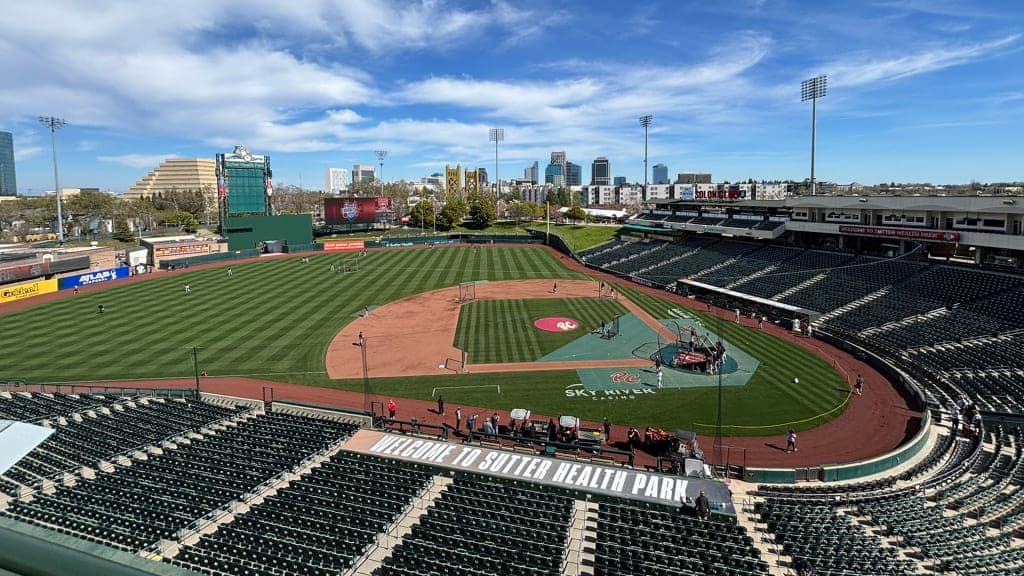
Sutter Health Park was built for Triple-A baseball, but the Athletics have spent the past two seasons turning it into a credible major-league home, and the 2026 upgrades show how serious that shift has become. The West Sacramento ballpark now has a new playing surface, better batting cages, revamped dugouts and upgraded player areas after feedback from the people using it every day. That work matters because the A’s drew 12,015 fans to their April 3, 2026 home opener against Houston, a reminder that this temporary move is being judged as an MLB experience, not just a curiosity.
A Triple-A park under major-league pressure
Sutter Health Park sits in West Sacramento and opened in 2000 as Raley Field, long before it became part of the Athletics’ relocation story. It is still the longtime home of the Sacramento River Cats, the Triple-A affiliate of the San Francisco Giants, which makes the A’s arrangement unusual: one park, two teams, two levels of the professional game, and a Major League club trying to live inside a minor-league footprint.
That setup gives the venue a different feel from the cavernous stadiums most MLB clubs call home. Its baseball capacity is about 14,000 to 14,014 fans, which creates an intimate crowd size for big-league baseball and changes the way a game breathes from first pitch to final out. It also means Sutter Health Park is one of the rare venues hosting both a Major League and Triple-A team at the same time, while still serving concerts and other large events that add to the demands on the building.
The Athletics began using the park as their temporary home in 2025, and the plan is currently set to run through 2027 before the club’s planned move to Las Vegas in 2028. In other words, this is not a one-off detour. It is a multi-year operation that forces the organization to balance immediate baseball needs, a temporary Sacramento identity and the longer runway to a future in Nevada.

The 2026 rebuild was about more than cosmetic touch-ups
The club’s biggest offseason work for 2026 came after feedback from players and coaches, and the changes went straight to the parts of the ballpark that affect daily performance. The field was completely replaced, the batting cages were improved, the dugouts were altered and new player-amenity upgrades were added. Those are the kinds of changes fans may never notice on a television broadcast, but they shape how smoothly the clubhouse to field routine runs over a six-month season.
The most important fix may have been the one nobody sees from the stands. Team officials said a central focus was solving the lack of a connected clubhouse, an issue that affected pitchers and others in 2025. For a major-league team, that is not a small annoyance; it is a daily operational problem that touches warmups, recovery, and the timing of how players move through the ballpark before and after a game.
- Full replacement of the playing surface
- Enhanced batting cages
- Dugout changes
- New player-amenity improvements
- A connected clubhouse solution after last year’s problems
That list is what separates a temporary arrangement from a workable home. A Triple-A park can sell tickets, but an MLB club still has to treat it like a professional base of operations, and the 2026 changes show the A’s are trying to close that gap.

The fan experience is now part of the identity project
The smaller scale is not just a baseball-operations issue. It is also the point of the place. With a capacity around 14,000, Sutter Health Park gives Athletics games a closer, more compressed feel than the Oakland Coliseum did, and that intimacy changes the crowd noise, the sightlines and the sense of immediacy inside the ballpark.
The club has also leaned into that identity shift. In 2026, the A’s added “Sacramento” to alternate jerseys worn for home games, a visible sign that the organization is trying to connect the team to the city that is hosting it. Local reaction has been encouraging, with Sacramento-themed merchandise and giveaways proving popular as fans respond to the short-term stay with more enthusiasm than skepticism.
The home opener made that response easy to measure. A crowd of 12,015 showed up for the April 3 game, a strong number for a team still trying to define a temporary base. It also underscored the practical advantage of playing in a smaller park: even when the ballpark is not full, it can still feel crowded, active and relevant in a way that a much larger building sometimes cannot.

Why the setup matters for players, opponents and everyone in the building
For the Athletics, Sutter Health Park is more than a placeholder between Oakland and Las Vegas. It is where the club is trying to build a home identity, teach players a routine, and present a major-league product in a setting that still carries Triple-A bones. The upgrades are designed to reduce friction for players and coaches, while the Sacramento branding is designed to give fans something that feels anchored to the moment.
For opponents, the ballpark changes the texture of a road series. They are not walking into an anonymous spring-training style stopgap, but into a park that has been adjusted for MLB traffic and then layered with the reality of a shared home. The River Cats still play there, concerts still come through, and the A’s still have to make the whole setup work as a big-league stage.
That collision between Triple-A scale and Major League ambition is what makes Sutter Health Park worth watching. The park is supposed to be temporary, but the challenge inside it is very real, and how the A’s manage that balance in Sacramento will shape the final chapter before Las Vegas in 2028.
This article was produced by Prism’s automated news system from verified source data, official records, and press releases, then run through automated quality and moderation checks before publishing. The system is built and supervised by the people who set the standards it runs under. Read our full AI policy.
Did this article answer your question?