Five Players Starting 2026 Season in Triple-A and Why It Matters
Konnor Griffin, Dean Kremer, Dylan Crews, Bryce Eldridge, and Robert Hassell III all open 2026 at Triple-A — five very different stories with one common thread: their big-league moments are coming.
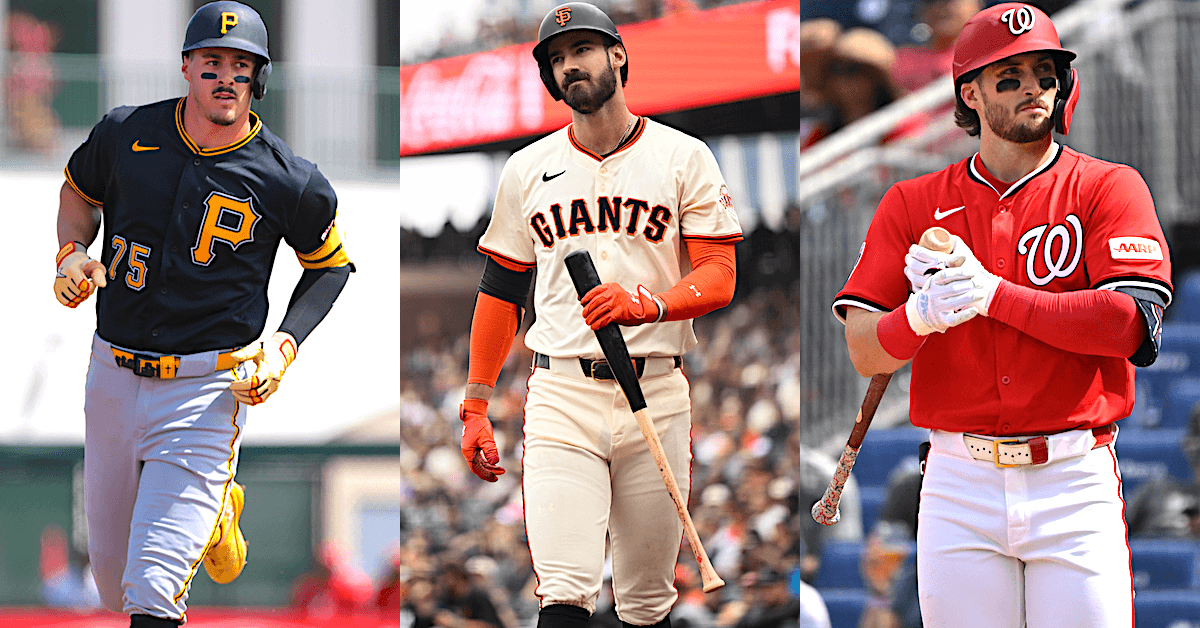
Opening Day is full of fanfare and so often freighted with meaning, but it's still just one day on the baseball calendar. That said, the roster decisions made in these final days of spring training carry real consequence, and FanGraphs' Jay Jaffe zeroed in on five players whose Triple-A assignments tell us something meaningful about both the players themselves and the teams holding their options. The group spans a wide range: a 30-year-old proven major league starter, a former second-overall draft pick still searching for his footing, a generational shortstop prospect who isn't even on the 40-man roster yet, a 6-foot-7 first base masher coming off surgery, and an outfielder who couldn't shed his strikeout demons fast enough to stick. Here's what each assignment actually means.
Dean Kremer, RHP, Baltimore Orioles (Triple-A Norfolk)
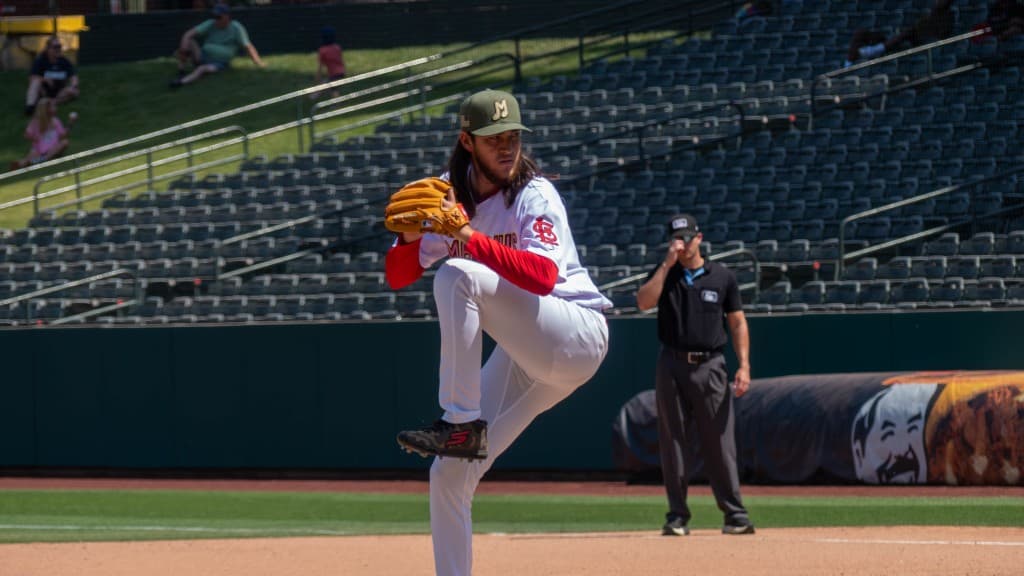
Dean Kremer has been a staple of the Orioles rotation in recent years. Even while missing significant time due to injuries in a couple of seasons, he's made more starts than any other Baltimore pitcher since the beginning of 2022, a span that encompasses both the division-winning Orioles from '23 and last year's basement dwellers. That context makes his demotion genuinely jarring. The 6-foot-2, 210-pound right-hander has been a durable, steady arm in Baltimore's rotation, posting a 4.26 ERA in 126 games and 123 starts. He made 31 appearances in 2025 with a 4.19 ERA, numbers that typically secure a rotation spot.
Kremer is coming off a 2025 season in which he led the Orioles in wins with 11 and innings with 171 2/3. He had a 5.00 ERA in nine innings over three Grapefruit League starts. The trigger for the demotion wasn't poor performance; it was good health. The decision wasn't because of anything Kremer had done, but because Zach Eflin showed he was ready to join a starting rotation that also includes Trevor Rogers, Kyle Bradish, Shane Baz, and Chris Bassitt. The acquisitions of Baz, who came over in a trade with the Rays on December 19, and Bassitt, who signed a one-year, $18.5 million deal, bolstered the rotation. It led to Kremer, left-hander Cade Povich, and righty Brandon Young all getting optioned this spring.
"It is always tough when you're sending somebody down," Elias said, "especially a veteran that has spent a lot of time with this team and had a good season last year." The earliest Kremer can be recalled is April 9, unless he's part of a corresponding move for a pitcher going on the injured list. This is a depth story masquerading as a demotion, and Baltimore's rotation is stronger for it.
Dylan Crews, OF, Washington Nationals (Triple-A Rochester)
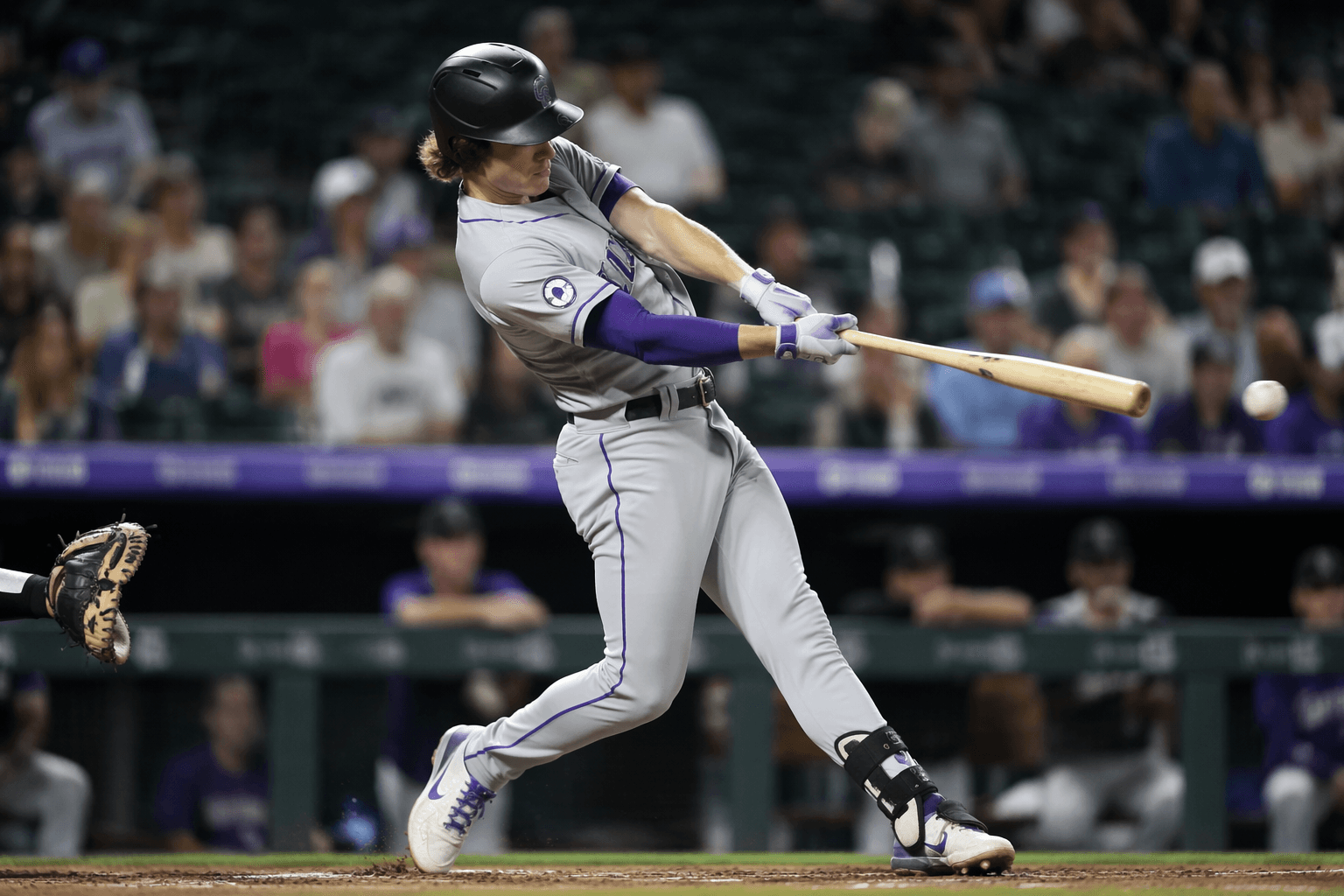
Dylan Crews debuted with the Nationals less than 14 months after being picked second in the 2023 draft, but he hasn't exactly been an overnight success. He hit just .208/.280/.352 (77 wRC+) in 85 games last season while losing 12 weeks to an oblique strain, and failed to reach a 100 wRC+ in any calendar month. The mechanical problems run deeper than the slash line suggests. He was nearly helpless against breaking balls, hitting just .180 and slugging .220 against them while whiffing on 36.5% of swings; meanwhile, he slugged .303 with a 40.6% whiff rate against offspeed stuff.
The Nationals' new regime has tweaked Crews' swing, and he doesn't seem to have found a comfort level yet. Crews put up an awful .103/.206/.103 line in spring training this year, striking out in 11 of his 34 plate appearances, a 32.4% clip. The Nationals optioned Crews to Triple-A Rochester with the expectation that he can continue working on some adjustments while under less pressure and scrutiny than he'd face while in the majors. Manager Blake Butera wasn't willing to elaborate on the nature of those adjustments, but observed that Crews had been falling behind in counts, said that his swing did not need an overhaul, and added, "We expect him up here hopefully soon."
The Nationals plan to start the season with 23-year-old lefty Daylen Lile in right field. A second-round pick from 2021, Lile is a contact-oriented platoon type who made the most of the opportunity afforded by Crews' injury last summer, hitting .299/.347/.498 (132 wRC+) with 11 triples and nine homers in 91 games, though he undid some of that value with his brutal defense (-14 DRS, -10 FRV). With both Robert Hassell III and Christian Franklin also optioned, the Nationals appear as though they'll start the season with just four outfielders on their 26-man roster.
Bryce Eldridge, 1B/DH, San Francisco Giants (Triple-A Sacramento)
Bryce Eldridge, a 6-foot-7, 251-pound behemoth who placed 16th on FanGraphs' Top 100 Prospects list, was limited to 100 combined games between Double- and Triple-A last year by a bone spur in his left wrist, removed via surgery in October, and a right hamstring strain. In 66 games at Triple-A Sacramento, he hit .249/.322/.514 (105 wRC+) with 18 homers, but also struck out 30.8% of the time.
He brought his contact woes to San Francisco, going 3-for-28 with seven walks and 13 strikeouts in his 10-game cup of coffee, and this spring hit .225/.380/.450 with a 38% strikeout rate in 50 plate appearances. While the 21-year-old's elite power can offset his tendency to swing and miss, his defense has looked suspect this spring. The case for keeping Eldridge down is straightforward: he's too good to not be a Giant eventually, but he has unfinished business at the plate and in the field that Sacramento can address more quietly than Oracle Park.
The expectation is that once he arrives, he'll share first base and DH duties with Rafael Devers, himself relatively new to the position. With Eldridge back at Sacramento, the Giants can find playing time for Jerar Encarnacion, Luis Arraez, and others in the DH spot, opening up more playing time for Casey Schmitt in the infield. Eldridge is the type of prospect where you wait for the defense and the strikeout rate to align, and then you add one of the most physically imposing bats in a generation to your lineup.
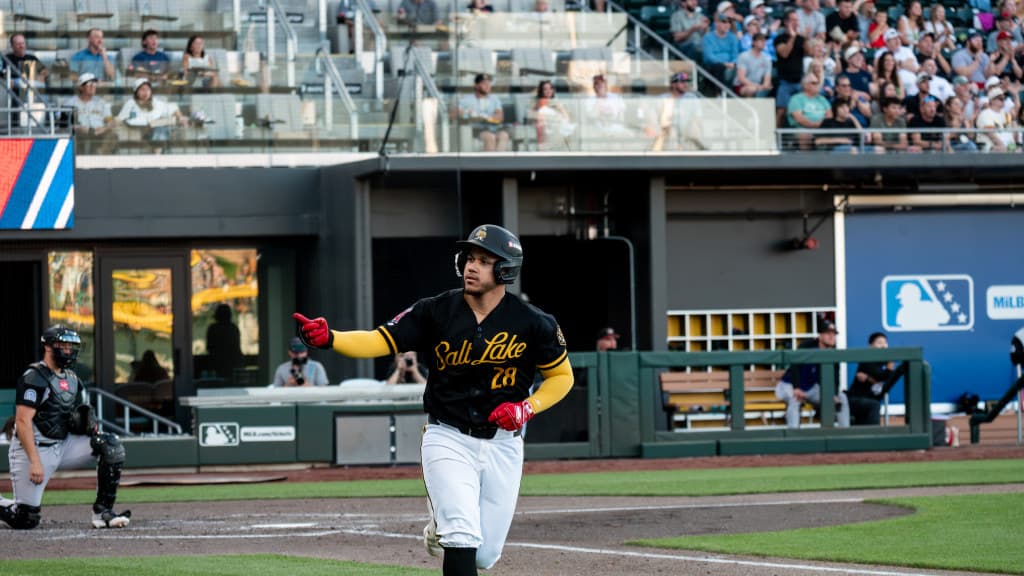
Konnor Griffin, SS, Pittsburgh Pirates (Triple-A Indianapolis)
The most anticipated Triple-A assignment of the spring doesn't even technically involve an option. This one isn't an option-based decision, because Konnor Griffin, the ninth pick of the 2024 draft out of a Mississippi high school, hasn't been added to the 40-man roster yet. He's the game's top prospect, described by FanGraphs' prospect team as "a franchise-altering entity whose talent rivals that of Bobby Witt Jr., a young, level-headed Hanley Ramirez, or a faster Carlos Correa."
While he won't turn 20 until April 24, he entered the spring with a shot at becoming the first teenager to debut in an Opening Day lineup since Ken Griffey Jr. The spring didn't cooperate. After homering three times in his first six Grapefruit League games, he added just one more, and finished at .171/.261/.488 with two walks and 13 strikeouts in 46 plate appearances. His chase rate against sliders was around 50%.
The Pirates officially reassigned Griffin to minor league camp on March 21. He will not appear on Pittsburgh's Opening Day roster when the Pirates head to Citi Field to face the New York Mets. With Griffin headed to Indianapolis, Jared Triolo is expected to be the primary shortstop option for Pittsburgh to open the 2026 season. The service-time calculus is transparent, but the spring numbers gave Pittsburgh legitimate cover. Griffin will be back, and soon; the only question is whether it happens in April or May.
Robert Hassell III, OF, Washington Nationals (Triple-A)
The 24-year-old Hassell, a former first-rounder acquired from the Padres in the Juan Soto trade, hasn't lived up to his billing and lacks a plus offensive trait. He managed just a 58 wRC+ with a 30.1% strikeout rate while playing mostly center field. Those are numbers that make keeping him in the majors very difficult to justify, especially on a rebuilding club that needs its young outfielders developing rather than drowning.
With both Hassell and Christian Franklin optioned, the Nationals appear as though they'll start the season with just four outfielders on their 26-man roster. The Nationals took Hassell as part of the Juan Soto haul, which means expectations have always been high, but the strikeout rate and the absence of a standout tool make him a harder project than his draft pedigree suggested. The path back to Washington runs through consistent at-bats and refinement against breaking balls, the same weakness the Nationals are simultaneously trying to cure in Crews over at Triple-A Rochester.
Unless recalled to replace injured players, optioned position players need to remain in the minors for 10 days and pitchers for 15 days, counting from March 25. In other words, they'll be eligible to return on April 4 or April 9. Kremer stands out because he's fully established himself in the majors, while the other high-profile decisions involve players who are or were recently considered top prospects. They're all headed to Triple-A, and they're notable because they're still expected to play substantial roles in 2026. These assignments aren't verdicts. They're opening arguments.
This article was produced by Prism’s automated news system from verified source data, official records, and press releases, then run through automated quality and moderation checks before publishing. The system is built and supervised by the people who set the standards it runs under. Read our full AI policy.
Did this article answer your question?