Mets Prospect Jack Wenninger Impresses in Triple-A Debut With Scoreless Outing
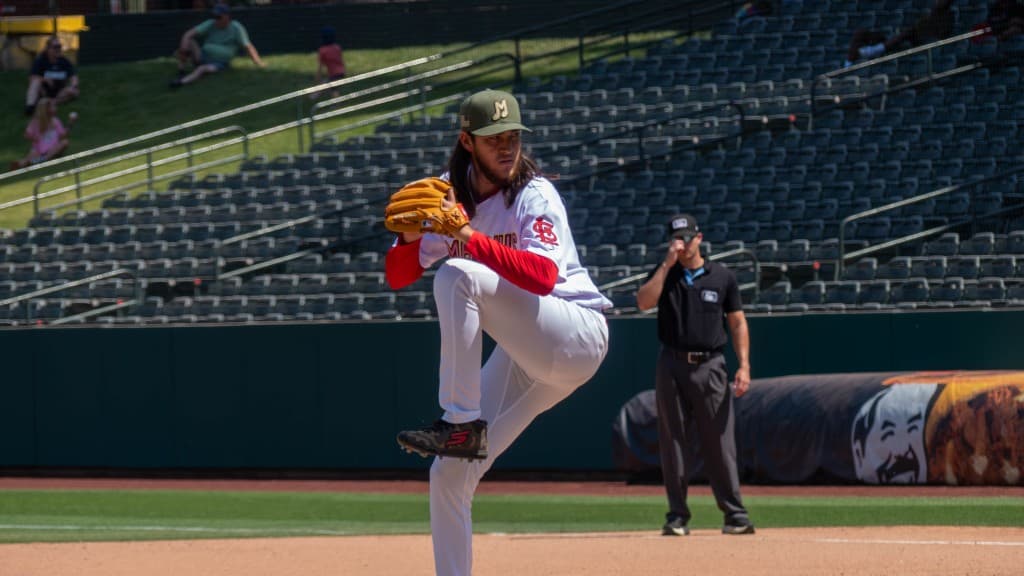
Jack Wenninger, the Mets' No. 6 prospect, generated nine whiffs in 4.2 scoreless innings in his Triple-A debut, with his diving splitter doing most of the damage.

Jack Wenninger, the Mets' No. 6 prospect, announced his Triple-A arrival Wednesday with 4.2 scoreless innings for the Syracuse Mets, striking out five, walking one, and generating nine swinging strikes in his first outing above Double-A. The surface-level numbers are clean. The pitch-by-pitch details are what scouts will want to see again.
The nine whiffs were almost entirely a product of two pitches working in concert: a four-seam fastball that averages 94 mph out of a high arm slot and regularly touches 98, and a mid-80s split-change that operates at the opposite end of the spin spectrum. The fastball gets genuine ride up in the zone thanks to Wenninger's 6-foot-4 frame and extension; the splitter then tunnels off that same release point before dropping sharply, leaving hitters committed to a swing plane that no longer exists. That combination drove a swinging-strike rate north of 14 percent during his breakout 2025 campaign at Double-A Binghamton, where he posted a 2.92 ERA and ranked third in the level with 142 strikeouts across 135.2 innings. The same mechanism was clearly functioning Wednesday. Chase zones low and away to both sides of the plate, where the splitter finishes, are where most of those nine whiffs lived.
The 4.2-inning line, though, warrants honest evaluation. Five hits in fewer than five frames is a moderate contact rate that suggests Triple-A hitters made real contact when they put the ball in play. Wenninger was not blown through the lineup; he worked around traffic. More pointedly, 4.2 innings almost certainly means he faced the order no more than twice, which leaves the most pressing developmental question for the next level unanswered. Third-time-through exposure, when hitters have logged two looks at the fastball-splitter tunnel, is the ceiling test for any prospect with rotation ambitions. He did not reach that test Wednesday, and evaluators will want to see him get there.
The organizational context makes that urgency real. The Mets opened the 2026 season already depleted: Tylor Megill is out for the year, and Reed Garrett and Dedniel Núñez are both on the injured list. Robert Stock had already been lost to thoracic outlet syndrome before the season began, and Justin Hagenman followed with a rib fracture. That is five arms removed from a depth chart where Tobias Myers, Christian Scott, and Jonah Tong are the current call-up options ahead of Wenninger. Sean Manaea is being stretched out from the bullpen into a potential mid-April rotation spot, which could further reshuffle the queue. The opening is not imminent, but it is visible.
For Wenninger to force the conversation by June, two benchmarks from his next starts in Syracuse would move the needle with the front office: pitch into the sixth inning at least once, demonstrating the efficiency and durability that a 4.2-inning debut cannot confirm, and post a whiff rate that holds or improves when facing lineups for a third time. If the splitter keeps hitters off balance through 90-plus pitches, the argument for a promotion writes itself. If contact spikes when the order turns over, he profiles more realistically as a high-leverage bullpen arm, a role where that fastball-splitter combination could thrive in shorter bursts. Wednesday was a promising opening statement. What comes next determines which version of Wenninger the Mets eventually call on.
This article was produced by Prism’s automated news system from verified source data, official records, and press releases, then run through automated quality and moderation checks before publishing. The system is built and supervised by the people who set the standards it runs under. Read our full AI policy.
Did this article answer your question?