Omaha Storm Chasers Blend Veterans and Prospects for 2026 Season
Omaha's 2026 roster pairs seasoned Triple-A veterans with high-ceiling Royals prospects, making Werner Park one of the most intriguing developmental stages in the Pacific Coast League.
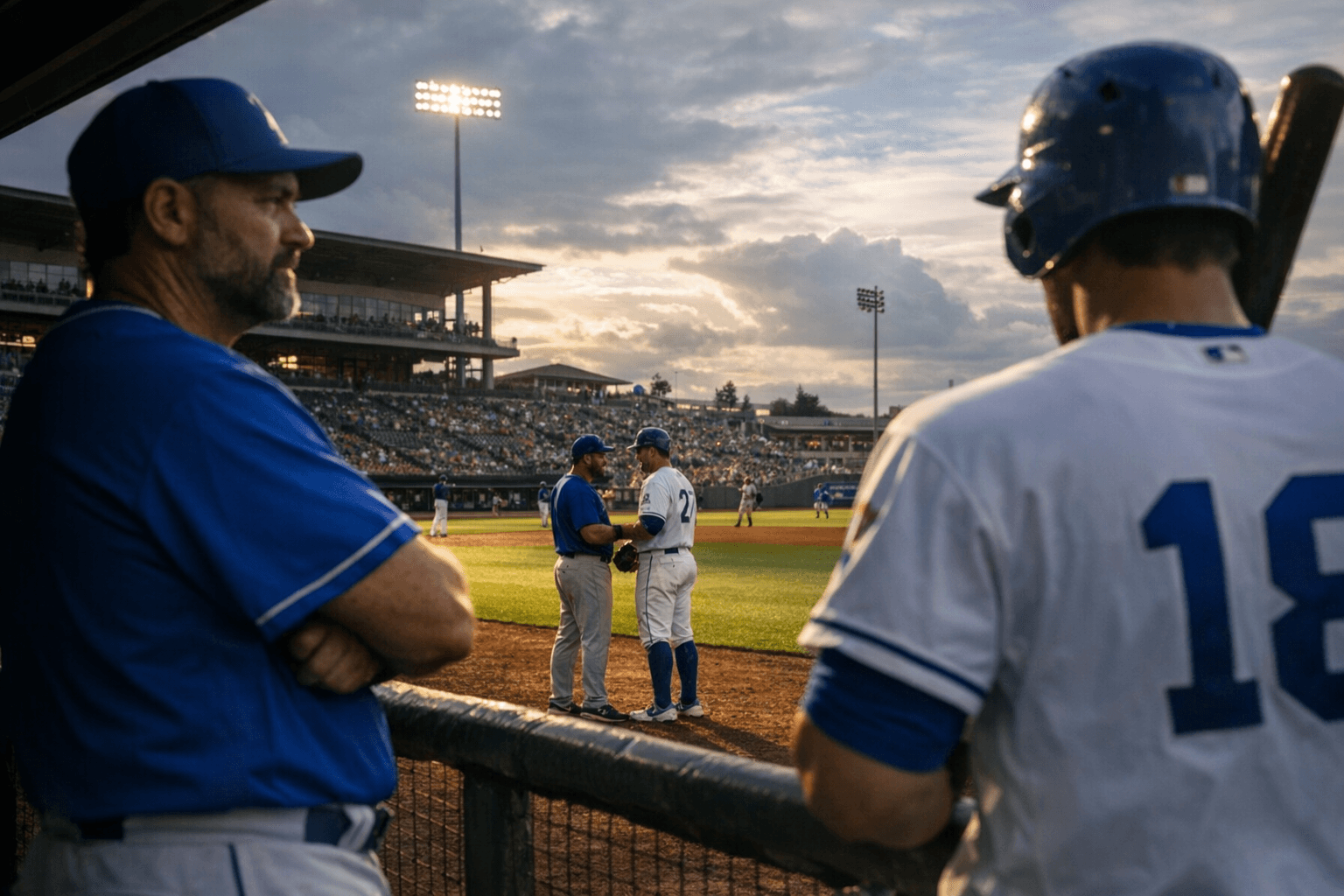
The Omaha Storm Chasers have quietly built one of the more compelling roster constructions in Triple-A baseball heading into 2026, threading the needle between win-now veterans and the kind of blue-chip prospects that make Royals fans set calendar reminders for Werner Park games.
As Kansas City's top affiliate, Omaha carries real organizational weight. Every lineup card, every pitching decision, and every hot streak at Werner Park feeds directly into how the Royals think about their big-league depth. That dual mandate, developing talent while fielding a competitive Triple-A club, shapes everything about how the Storm Chasers are built this season.
A Roster Built on Two Pillars
The foundational logic behind Omaha's 2026 construction is straightforward but difficult to execute: surround high-ceiling prospects with veterans who can absorb at-bats, eat innings, and model professional habits. Triple-A is the last developmental stop before the major leagues, and the transition is frequently where promising careers stall or accelerate. Placing a 22-year-old outfielder next to a player who has spent four or five years navigating Pacific Coast League ballparks creates an environment where the learning curve compresses.
Experienced Triple-A veterans bring something prospect rankings cannot quantify: the ability to manage a 150-game grind, perform in front of big-league scouts without tightening up, and stay productive through the dog days of a Midwestern summer. For the Royals, those veterans also serve as genuine organizational insurance. If an injury opens a roster spot in Kansas City, a known quantity with Triple-A consistency is a safer short-term call-up than a prospect who hasn't yet faced the league's best relievers.
Werner Park as a Development Engine
Werner Park in Papillion, Nebraska sits at the center of this operation. The facility has been home to the Storm Chasers throughout their identity as a Royals affiliate, and the organizational continuity heading into 2026 reflects how seriously Kansas City takes the pipeline running through Omaha. Continuity matters in player development: coaches who know a prospect's mechanics, coordinators who have tracked his progress across multiple levels, and a stable instruction environment all accelerate development in ways that roster shuffling tends to undercut.
The Storm Chasers enter 2026 with that continuity intact. For prospects making the jump from Double-A Northwest Arkansas, the familiarity of the organizational system carries over. The vocabulary is the same, the expectations are calibrated the same way, and the coaching staff has context on each player's developmental arc that a first-year staff simply wouldn't have.
High-Ceiling Prospects and What to Watch For
The high-ceiling prospects on Omaha's 2026 roster represent the part of the equation Royals fans care most about. Triple-A performance, especially in the Pacific Coast League with its hitter-friendly parks and thin air, requires careful reading. A prospect posting a .310 average at Werner Park means something different than the raw number suggests, which is why the underlying metrics, plate discipline, strikeout rates, exit velocity trends, and pitch recognition against breaking balls, tell the more complete story.
What to monitor as the 2026 season develops:
- Plate discipline progression: Does a prospect's walk rate hold up against Triple-A pitchers who attack with premium secondary stuff? The jump from Double-A to Triple-A is as much a mental adjustment as a physical one.
- Velocity and spin rate trends for pitching prospects: A starter logging consistent mid-90s velocity into the sixth inning at this level is ready for a major-league audition. A prospect who fades in the fifth is still a work in progress.
- Defensive positioning and reads: Position prospects at this level are often asked to handle new positions or expand their defensive versatility, a critical evaluation point for a Royals organization that values multi-positional players.
- Response to adversity: The best indicator of major-league readiness at Triple-A is not the hot streak; it's how a prospect responds to a 2-for-20 skid. Veterans model that adjustment, and it filters through the clubhouse.
The Veterans' Role: More Than Roster Filler
It would be a mistake to view the experienced Triple-A veterans on Omaha's roster as simply placeholder bodies waiting for prospects to arrive. Many of them have big-league experience, or came tantalizingly close, and bring competitive intensity that sharpens everyone around them. A veteran catcher who has learned to manage a pitching staff, call games against hitters he's seen three or four times, and communicate with a pitching coach under pressure is an invaluable developmental asset for young arms.
That veteran presence also creates internal competition, the kind that separates development environments that actually produce major leaguers from those that become comfortable landing spots. When a 26-year-old prospect knows the veteran in front of him is fighting for the same call-up, the urgency of every at-bat sharpens accordingly.
Organizational Continuity as a Competitive Advantage
The Royals have made sustained organizational continuity a priority throughout their system, and it shows at the Triple-A level in measurable ways. Affiliates that churn through coaching staffs and player development philosophies tend to produce inconsistent results; affiliates with stable infrastructure tend to develop players faster. Omaha's continuity heading into 2026 is not a minor administrative detail; it's a structural advantage that affects how quickly prospects close the gap to the major leagues.
For a Royals organization working to consolidate the momentum built over recent seasons, getting the Triple-A environment right is not optional. Omaha is where the next wave of Kansas City contributors will spend their final developmental months, and the Storm Chasers' blend of veterans and prospects reflects an organization that understands exactly what Triple-A baseball is supposed to accomplish.
The 2026 season at Werner Park promises to be worth following closely, not just for the standings, but for the individual arcs that will define the Royals' roster for years to come.
This article was produced by Prism’s automated news system from verified source data, official records, and press releases, then run through automated quality and moderation checks before publishing. The system is built and supervised by the people who set the standards it runs under. Read our full AI policy.
Did this article answer your question?