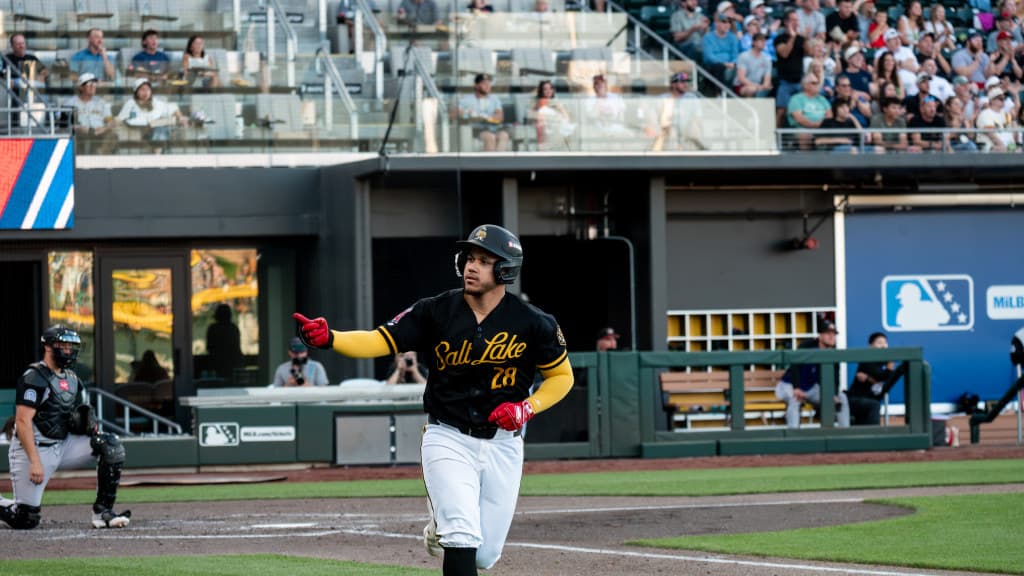
Salt Lake Bees Inspire Look at Nine Wackiest Minor League Team Names
In honor of the Salt Lake Bees’ new alternate identity, a look at nine of Triple‑A and nearby minor‑league clubs whose names doubled as marketing hits and local storytelling devices.

In honor of the Salt Lake Bees’ new alternate identity, here are nine of the quirkiest minor‑league team names and the local stories behind them. This trend isn’t accidental: “minor league baseball names are supposed to be weird and fun,” and “this trend of alternate identities has been growing over the last decade, creating connections to local culture by showcasing regional flavor.”
1. Fayetteville Woodpeckers
The Fayetteville Woodpeckers are the Single‑A Advanced affiliate of the Houston Astros and play in the Carolina League; the team “rebranded as the Woodpeckers after it moved from Buies Creek prior to the start of the 2019 season.” The moniker came out of a “Name a Team” contest and, as the Fayetteville Observer reported via Foxnews, was selected “to pay tribute to the red‑cockaded bird that was once abundant in the area, but is now listed as an endangered species.” The Woodpeckers were noted as defending Carolina League champions in the source material and the snippet preserved the schedule line that “The Woodpeckers… start their season against the Potomac Nationals on April 4.” The original copy even repeats, “The Woodpeckers will begin their first season in Fayetteville in 2019,” underscoring how the move and rebrand were positioned as a fresh start.
2. Binghamton Rumble Ponies
The Binghamton Rumble Ponies are the Double‑A affiliate of the New York Mets and play in the Eastern League; they “changed [their] name and unveiled a new logo prior to the start of the 2017 season.” The identity sprang from a fan submission and a contest: in the team’s own naming language, “‘A tribute to the Triple Cities' carousel heritage, the ‘Binghamton Rumble Ponies’ is a herd of fierce horses that no carousel center pole can contain.’” Deseret’s summary adds that the name “was submitted by a local resident in 2016, after 24 years as the Williamsport Bills,” and quotes owner John Hughes calling the Rumble Ponies a “a ‘fierce horse that no carousel can contain.’” The sources also preserved the schedule blurb that “Binghamton’s season begins April 4 when the Rumble Ponies takes on the New Hampshire Fisher Cats” and even a celebratory tweet text: “The Binghamton Rumble Ponies have won the 2025 Eastern League Championship! pic.twitter.com/ubRnzKtrX3.”
3. Rocket City Trash Pandas
The Rocket City Trash Pandas, the Angels’ Double‑A affiliate, adopted their name back in 2020 and immediately became a viral case study in quirky branding; FTW summed up the national reaction bluntly: “I have a hard time seeing any team topping that one. The mascot is iconic.” Deseret cited the Trash Pandas as an example of how regular team names can be “unusual or downright funny,” showing how an offbeat identity can anchor an alternate‑identity strategy and create a marketable mascot and merchandise engine almost overnight.
4. Amarillo Sod Poodles
The Amarillo Sod Poodles, listed by FTW as one of the all‑time oddities, are the Diamondbacks’ Double‑A affiliate and “have only had this name since 2019.” FTW captured the early reaction: “And it apparently wasn't well received at first because it's so goofy. But minor league baseball names are supposed to be weird and fun. There's no denying they succeeded with that.” The Sod Poodles demonstrate the playbook: pick a locally resonant, deliberately goofy name and let the community and social channels do the rest.
5. Akron RubberDucks (and Akron Cream Stick Donuts)
Akron’s Double‑A Guardians affiliate changed their name to the RubberDucks in 2014 and, according to FTW, “basically started the recent trend of wild minor‑league names.” Deseret traces the local logic: “Akron’s nickname nods to the city’s history in the rubber industry, as the birthplace of tire and rubber companies such as Goodyear and Firestone.” The RubberDucks have leaned into promotional alternate identities too, Deseret preserved the team’s tweet announcing a two‑night switch: “On July 24 and 25 we are becoming the Akron Cream Stick Donuts presented by @acmefreshmarket for two nights only to honor the unique to Akron name for Northeast Ohio’s signature donut!! ℹ️: pic.twitter.com/FRbPO2Wrfe.” Deseret also noted that “While the treat goes by different names across the country, in Northeast Ohio it is known as a Cream Stick,” showing how an alternate identity ties a team to a specific regional tradition.
6. Montgomery Biscuits
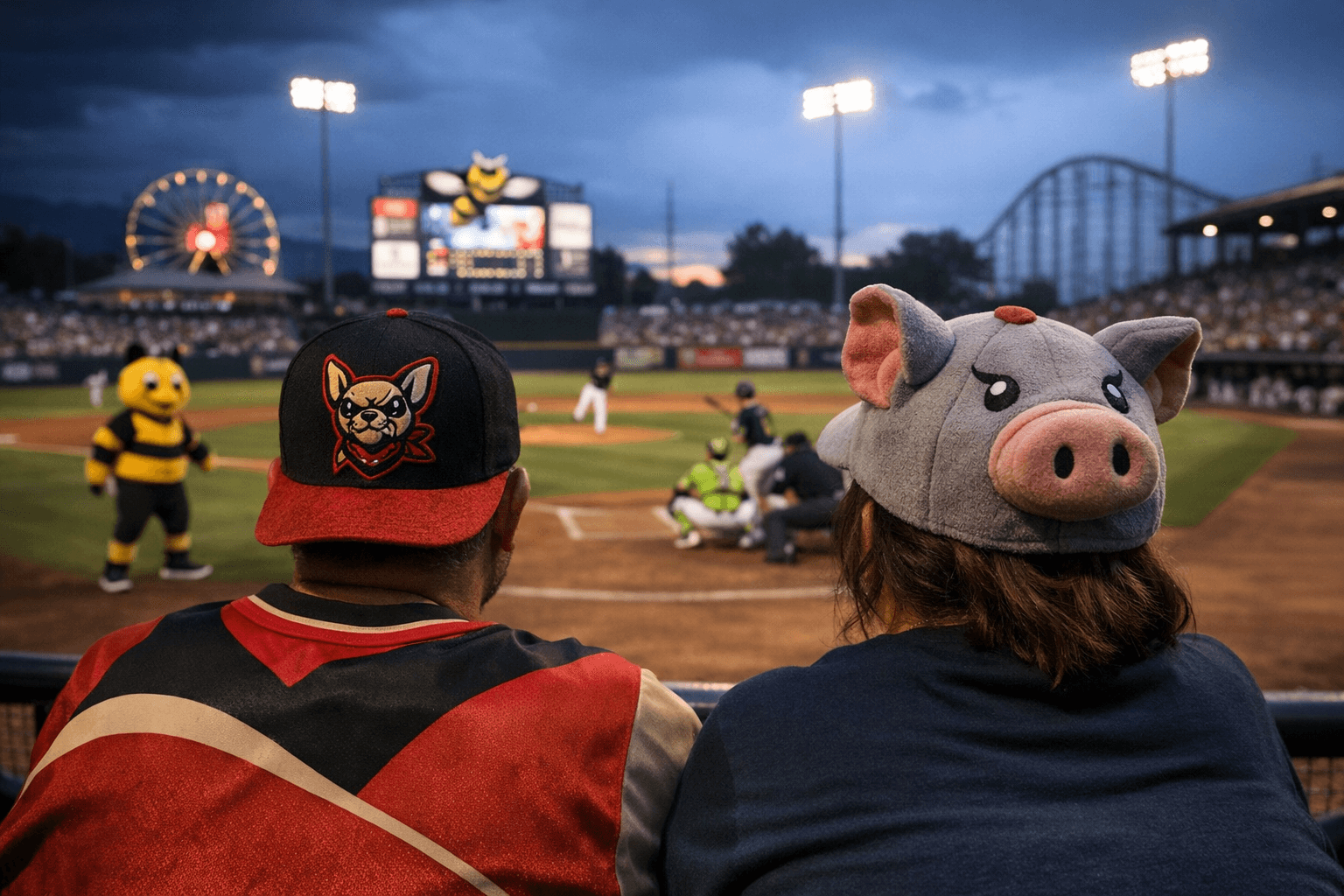
The Montgomery Biscuits, the Rays’ Double‑A affiliate, are a textbook example of a food‑based identity that doubled as a brand play; FTW observed “Food‑based team names are never intimidating, but biscuit somehow works perfectly. Their official hashtag is #ButterUp. I mean, that's just awesome for the Rays' Double‑A affiliate.” That official hashtag and the lighthearted food motif turned a harmlessly goofy name into a sustained social campaign and allowed the club to own family‑friendly promotions and themed nights year after year.
7. Modesto Nuts
As FTW detailed, the Modesto Nuts, the Single‑A affiliate of the Seattle Mariners, “adopted the name after their affiliation with the Athletics ended in 2005,” a nod to the region’s agricultural output. FTW didn’t mince words on the on‑field mascot: “Their mascot is serious nightmare fuel.” The Nuts illustrate how a locally sourced name can be both genuine and intentionally eccentric, giving small‑market clubs a memorable identity that generates national lists and local attendance boosts alike.
8. Kannapolis Cannon Ballers
The Kannapolis Cannon Ballers, identified by Graspingatawes as a Low‑A East team and the Low‑A affiliate of the Chicago White Sox, bring racing and manufacturing history into the clubhouse. The franchise’s identity has evolved: “From 1996 to 2000, they were known as the Piedmont Boll Weevils” and “From 2001 to 2019, they were known as the Kannapolis Intimidators” honoring NASCAR legend Dale Earnhardt. On October 23, 2019, the team “unveiled its new identity as the Kannapolis Cannon Ballers.” Team leadership said they sought a name reflecting the city’s heritage and its auto‑racing ties; “‘Cannons’ was among the most popular suggestions, which was refined into ‘Cannon Ballers’ for a broader appeal.” The Cannon Ballers case shows how rebrands can balance nostalgia, civic history and a push for broader merchandising appeal.
9. Gastonia Honey Hunters
The Gastonia Honey Hunters exemplify the crowdsourced naming model and the layered meanings teams can create. Graspingatawes lays out the timeline: “On August 15, 2020, a ‘Name the Team’ contest was launched. On October 8, 2020, the names were narrowed down to Fire Ants, Hogzillas, Honey Hunters, Hotshots, and Uppercuts. On January 13, 2021, the Honey Hunters name, logo and colors were announced.” They play at CaroMont Health Park in Gastonia as members of the Atlantic League of Professional Baseball, a “partner league” of Major League Baseball. The chosen moniker links multiple local and symbolic threads: “‘Honey Hunters’ refers to the toughness of a honey badger (Mellivora capensis) and the ability to seek out positive things in hard times,” and it “also alludes to Ransom Hunter, the first freed slave to own property in Gaston County,” tying the brand to local history as well as a punchy, marketable mascot concept.
Closing The Salt Lake Bees’ new alternate identity is the latest example in a decade‑long wave of creative naming, where franchises trade blandness for specificity and virality. From carousel‑inspired Rumble Ponies to cream‑stick‑selling RubberDucks and mascot‑icon Trash Pandas, these names are less about intimidation than they are about identity, merchandise and a clear connection to a place, “creating connections to local culture by showcasing regional flavor.”
This article was produced by Prism’s automated news system from verified source data, official records, and press releases, then run through automated quality and moderation checks before publishing. The system is built and supervised by the people who set the standards it runs under. Read our full AI policy.
Did this article answer your question?