Syracuse Mets booth keeps producing top MLB announcers
Syracuse’s booth has become a launchpad for MLB voices, and the wall of familiar names shows how Triple-A keeps building broadcasters as well as ballplayers.
The fastest path out of Syracuse is not always a fastball. Sometimes it is a microphone, and the Syracuse Mets have turned their Triple-A booth into a legitimate launchpad for the kind of voices fans already know from big-league broadcasts.
That is the real story here: this is not a coincidence, and it is not just nostalgia. Syracuse has produced major-league broadcasters for more than 70 years, and the current setup keeps pushing people up the ladder because the market demands more than someone who can call a game. It demands people who can run one.
A booth with a major-league track record
Awful Announcing counted 17 notable Syracuse broadcast alumni, and eight of them moved on to regional play-by-play jobs with major pro franchises. That is an unusually deep pipeline for any Triple-A stop, which is why names like Sean McDonough, Marv Albert, Matt Vasgersian, Jason Benetti and Kevin Brown keep getting attached to the Syracuse story. Their photos are part of the wall display at NBT Bank Stadium, a reminder that this booth is treated like a proving ground, not a placeholder.
The point of that lineage is bigger than bragging rights. When a booth keeps turning out recognizable voices at that rate, it changes how the rest of baseball thinks about Triple-A. Syracuse is not just sending players to the majors. It is sending broadcasters, and in a media business where opportunity is scarce, that matters as much as any player development win.
Why Syracuse became a broadcasting factory
The city’s baseball roots go back to 1877, and professional baseball has been a near-constant presence since the Syracuse Chiefs were established in 1934. The radio side runs just as deep. Syracuse baseball broadcasts on 1260 AM date back to the 1947 season, when Leo Bolley and Herb Carneal were on the call, and that station later carried Syracuse baseball in 1952, 1953, 1989, 1990, 1991, 2002, 2003, 2006, 2007, 2011, 2012, and from 2014 to the present.
That kind of continuity is rare, and it helps explain why the booth’s culture has lasted across affiliations, ownership changes and ballpark eras. NBT Bank Stadium opened on April 3, 1997, on the site of the old MacArthur Stadium. It seats 10,815, with an upper deck that holds roughly 3,000 fans. The building is publicly owned, which matters because Syracuse has always felt more like a civic institution than a temporary tenant.
The franchise’s modern identity has changed, but the machinery around it has stayed geared toward development. The team became the Syracuse Mets in 2019 after the New York Mets bought the club following the 2017 season and the Nationals affiliation ended. Diamond Baseball Holdings later acquired the Triple-A club at the end of 2024. Even with those shifts, Syracuse has kept its place as one of the most important hidden development systems in baseball.
What the job in Syracuse really asks of a broadcaster
Jason Smorol, the longtime general manager, says the booth is built to make people into broadcasters, not just performers. That distinction is the whole game here. A Syracuse announcer is not only expected to sound good on air, but also to do the work that separates a polished prospect from a real pro: writing pregame and postgame copy, coordinating interviews and handling credential requests.
That workload matters because the learning curve is practical, not theoretical. In Syracuse, the microphone is only part of the job. The future MLB voice has to know how a broadcast is assembled, how a clubhouse is navigated and how to keep the whole operation moving when the night gets messy. That is why the Syracuse booth keeps producing people who are ready faster than most.
The current voices carrying the standard
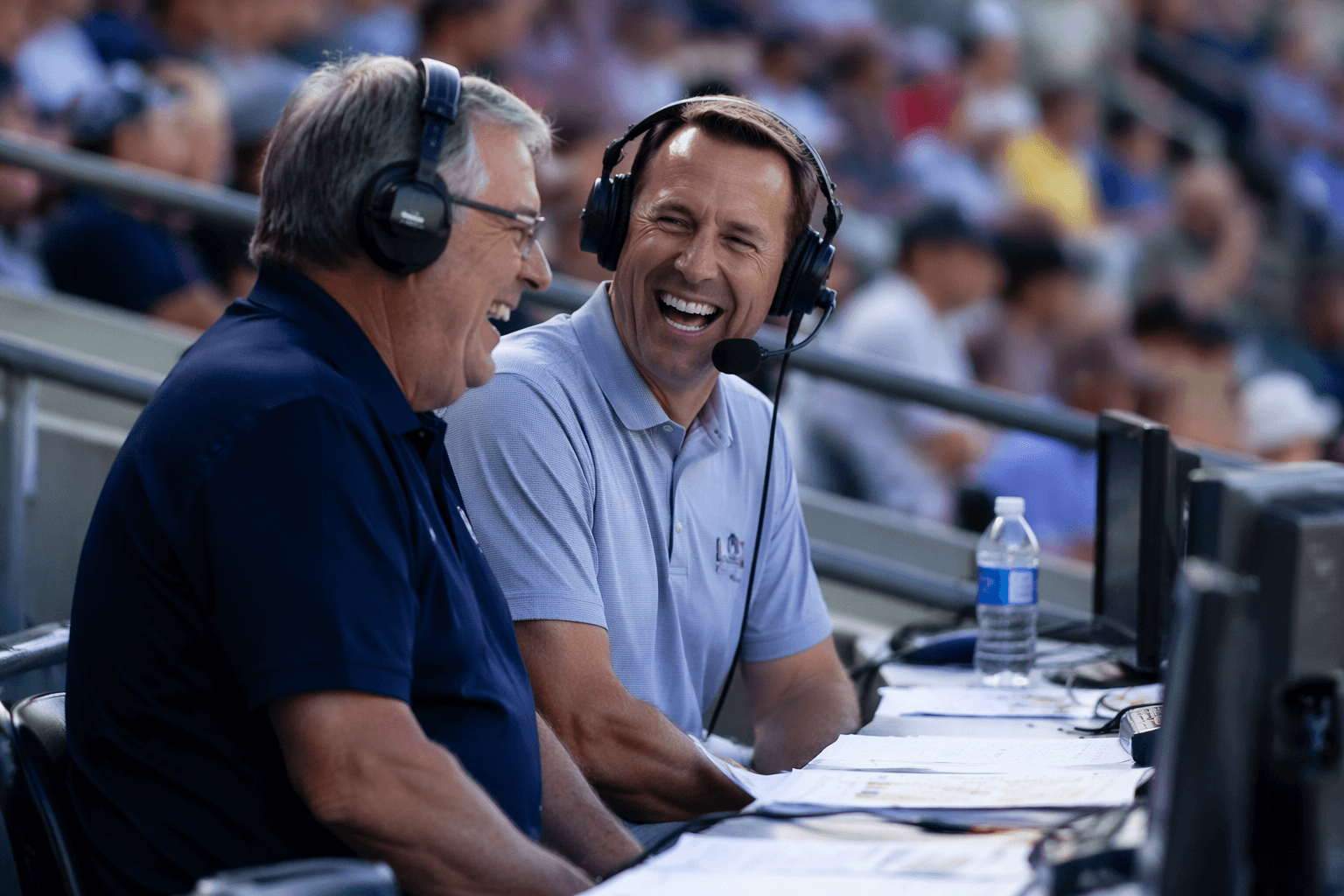
Joe Puccio and Jack Gordon are the latest proof that the pipeline is still active. Both are 24 and both are Newhouse graduates, which reinforces how tightly Syracuse is tied to the communications program at Syracuse University. Puccio is in his first season as a Syracuse Mets co-announcer, and he says the advice he keeps hearing from Syracuse broadcasting forebears is simple: "keep doing the work, keep improving, and stay humble."
That is not the language of a vanity program. It is the language of a place where the bar is high and the next step is always visible. Gordon, who is also from Central New York, works in the same old chair once occupied by predecessors who climbed to bigger jobs. In Syracuse, even the seat has a résumé.
The modern pipeline is still producing fast movers
The most recent broadcast setup shows that this is still an active factory, not a museum. In 2024, Michael Tricarico and Evan Stockton teamed up for their third straight season and called all 150 Syracuse games on The Score 1260 AM, TheScore1260.com, TuneIn and MiLB.tv for 75 home games. That is a grind, and it is exactly the kind of grind that prepares announcers for more.
Tricarico, a North Syracuse native and Syracuse University graduate, started in 2014 as a broadcast intern with the Syracuse Chiefs, working under Jason Benetti and Kevin Brown. That detail is the whole thesis in miniature: an intern learns from future major-league names, then becomes part of the next wave. Stockton came in with his own résumé, having broadcast at multiple levels, including as the voice of the Triple-A Memphis Redbirds in 2021. He also won an Emmy in 2023 for his television play-by-play work, which tells you just how quickly Syracuse can absorb experienced talent and put it in motion.
Why the business side still matters
The infrastructure around the booth has been built to support that pipeline. A 2020 deal with Cumulus kept The Score 1260 AM as the flagship radio station and included coverage of the Triple-A All-Star Game and the Triple-A National Championship. That kind of visibility gives Syracuse announcers more than local games. It gives them a stage that looks and sounds like the next level.
That is why Syracuse remains one of baseball’s most important development systems beyond the field. The scoreboard matters, but so does the booth. The roster churn will always get the headlines in Triple-A, yet Syracuse keeps proving that the people behind the mic can become just as valuable to the sport as the players on the field.
This article was produced by Prism’s automated news system from verified source data, official records, and press releases, then run through automated quality and moderation checks before publishing. The system is built and supervised by the people who set the standards it runs under. Read our full AI policy.
Did this article answer your question?