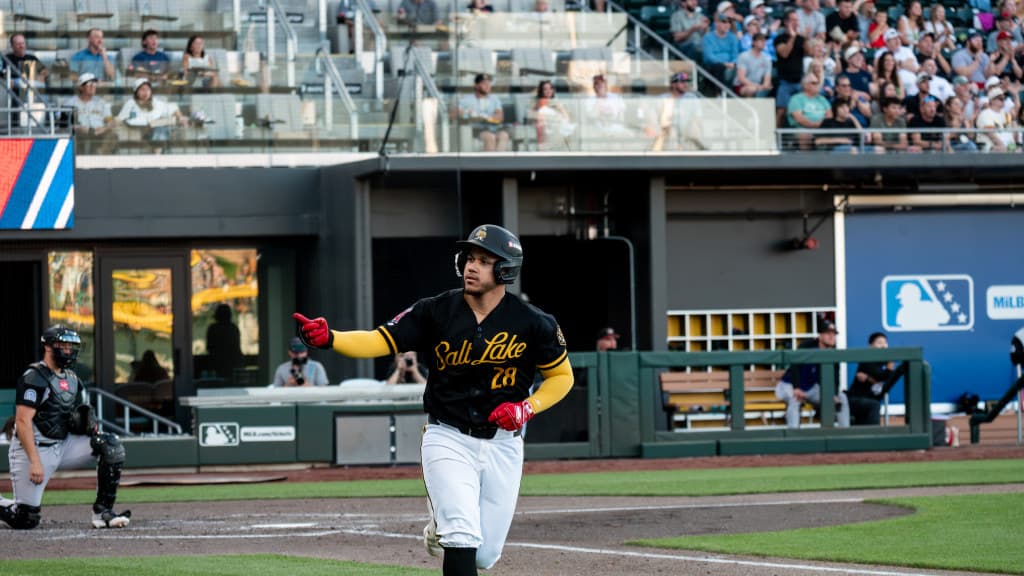
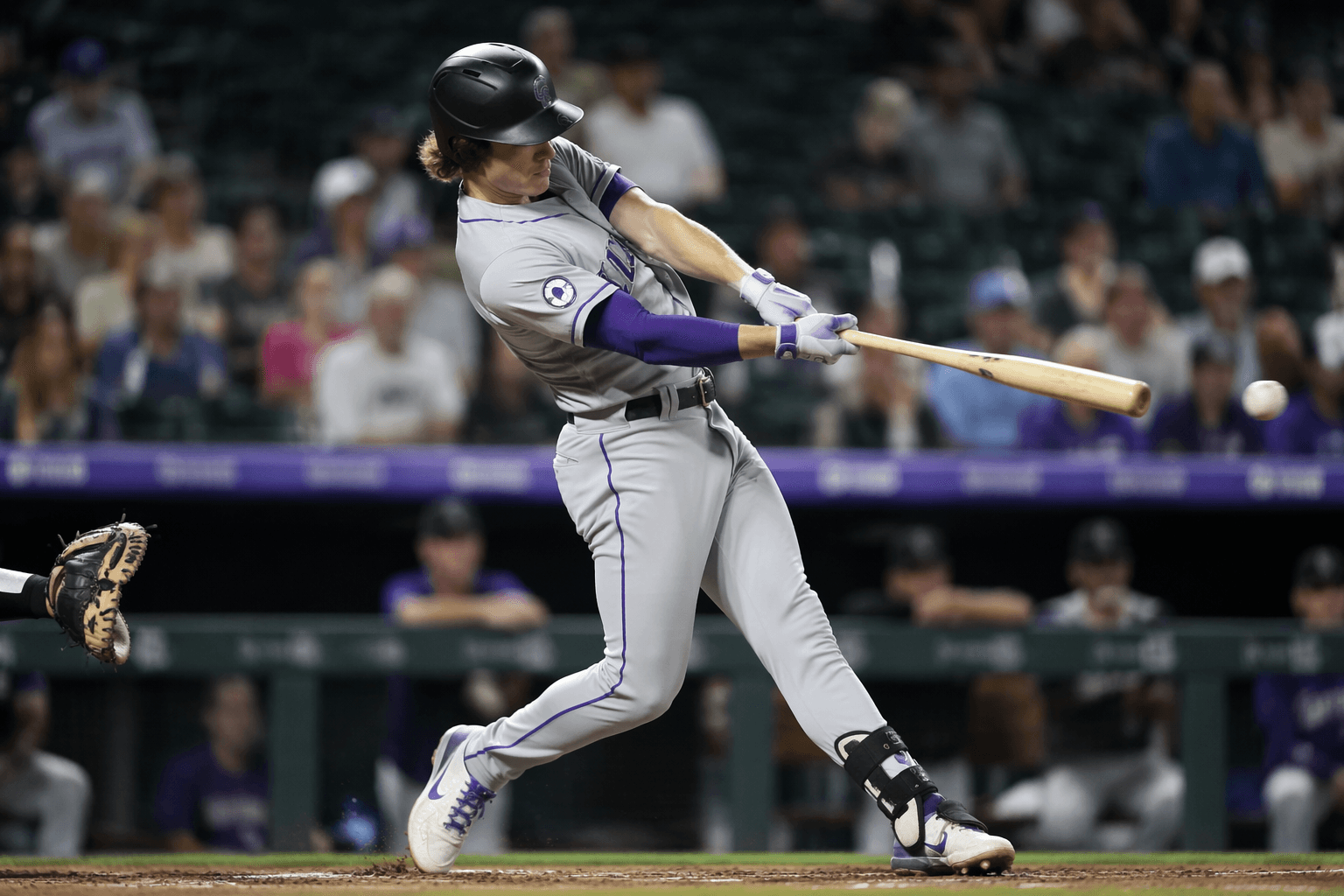
Tibbs Collects Four Hits, Nearly Cycles in Oklahoma City Debut
Three 99+ mph exit velos, four hits, and a near-cycle: Tibbs' Oklahoma City debut showed exactly why the Dodgers gave up Dustin May to get him.
Three times in one game, James Tibbs III made the kind of contact that gets scouting reports revised. The 23-year-old outfielder collected four hits and drove in three runs for the Oklahoma City Comets on March 29, finishing just shy of the cycle against Triple-A arms. But the exit velocity data told the more important story: three separate batted balls at 99 mph or better, the unmistakable fingerprint of a left-handed hitter who is not merely surviving the step up in competition but imposing his will on it.
For Dodgers evaluators, the Comets debut confirmed what spring training had previewed. One week before the regular season opened, Tibbs drove a 92.7 mph four-seamer 407 feet with a 109.6 mph exit velocity in a Cactus League game. The four-hit, three-RBI night in Oklahoma City extended that evidence across a full nine innings, three separate times. Producing multiple 99-plus exit velocities in a single Triple-A outing is not a coincidence of good timing; it reflects bat speed and contact quality that separates prospects who profile as genuine offensive threats from those who post flattering numbers against thinner competition.
The road to Oklahoma City has been anything but linear for Tibbs (born October 1, 2002, in Atlanta). The San Francisco Giants drafted the Florida State product 13th overall in 2024 and signed him for $4.75 million, then shipped him to the Boston Red Sox that June as part of the Rafael Devers deal alongside Kyle Harrison, Jordan Hicks, and Jose Bello. Boston assigned him to Double-A Portland, where he batted .207 in 30 games. The Dodgers looked past that number, acquiring Tibbs and outfielder Zach Ehrhard from the Red Sox in exchange for Dustin May. Combined across all of 2025, Tibbs finished with 20 home runs and a 127 wRC+, a production line that suggests the Portland stumble reflected organizational turbulence rather than a ceiling reveal.
At the major-league level, the roster math works against any near-term timeline. The Dodgers' outfield is anchored by Kyle Tucker, Teoscar Hernández, and Andy Pages, leaving no clear path to a starting role in the short term. What Tibbs is actually competing for is the first call when that group absorbs an injury, or eventually a trade deadline vacancy the Dodgers have historically been aggressive in filling from within. At Triple-A, his most immediate competition is Ehrhard, who arrived in the same trade and earned strong spring reviews. Together at OKC they represent the nearest-to-ready outfield options in the organization, but the system depth behind them, including higher-ranked prospects like Josue De Paula and Zyhir Hope working through lower levels, means the Dodgers can afford patience in any promotion decision.
The single metric worth monitoring across his next 10 games is not batting average. It is walk rate. At Eugene in 2025, Tibbs posted a .379 on-base percentage against a .246 batting average, a 133-point gap that indicates he was drawing walks at a consistent clip from High-A pitchers despite not posting a headline hit number. Whether that plate discipline travels to Triple-A, where pitching staffs will locate breaking balls on the outer edge and exploit two-strike counts with more conviction, will determine whether the raw power in his exit velocity chart becomes scalable production. Four hits and three 99-plus exit velocities in an Oklahoma City debut is an emphatic first sentence. The next two weeks will tell us whether it is the start of a paragraph.
This article was produced by Prism’s automated news system from verified source data, official records, and press releases, then run through automated quality and moderation checks before publishing. The system is built and supervised by the people who set the standards it runs under. Read our full AI policy.
Did this article answer your question?