Triple-A All-Star Game spotlights baseball’s last stop before the majors
Buffalo’s 1988 sellout launched an All-Star game that now mirrors Triple-A itself: a proving ground for prospects, veterans and big-league call-ups.
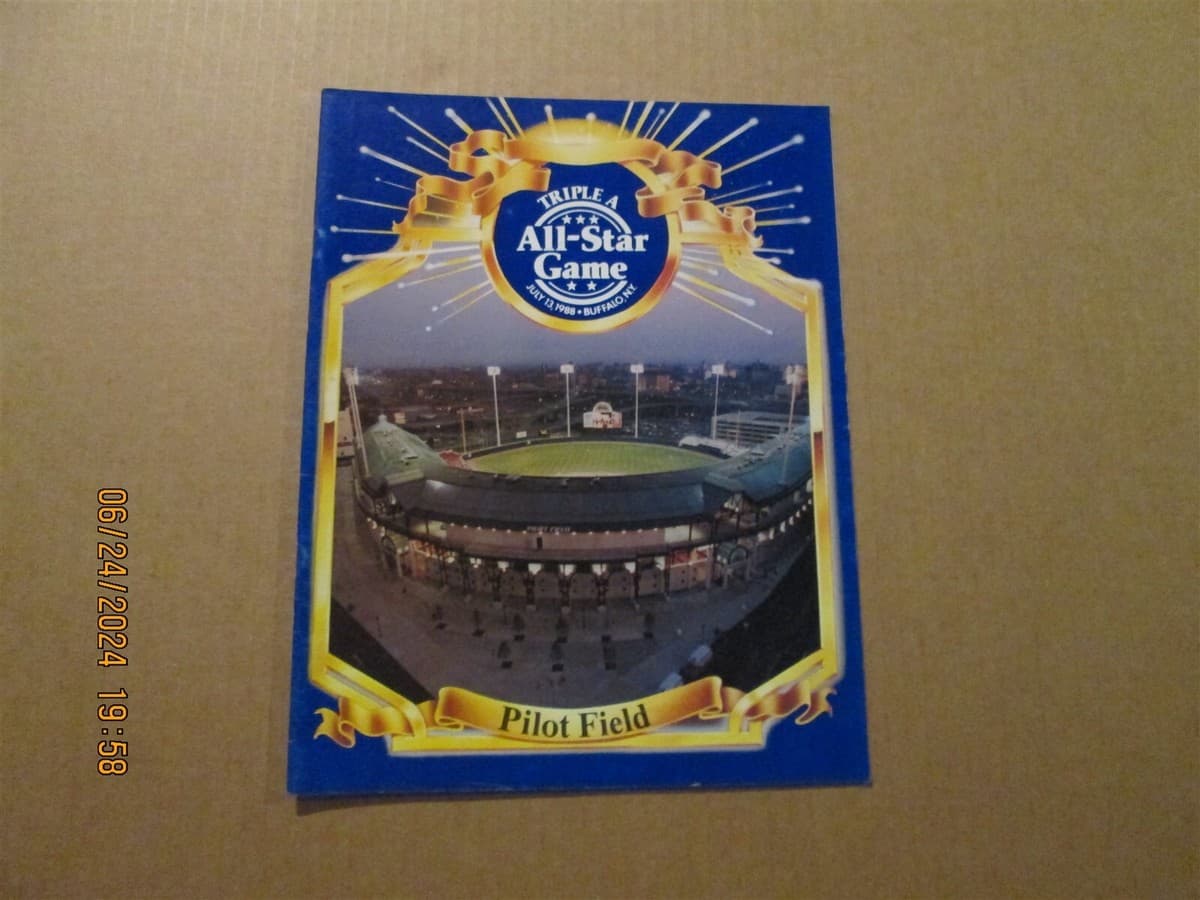
The Triple-A All-Star Game is baseball’s cleanest snapshot of the level just below the majors. It began in Buffalo in 1988 with 48 of the best players at the highest level of the minor leagues, and it still works because Triple-A itself has become the sport’s true finishing school.
How Buffalo set the template
The first game at Pilot Field in Buffalo arrived the day after Major League Baseball’s All-Star Game in Cincinnati, giving the minors a big-stage moment of their own. The Buffalo Bisons pushed hard to host it in their new 19,500-seat ballpark, and the turnout matched the ambition: the AL All-Stars won 2-1 before a sellout crowd of 19,500.
That origin still matters because it explains what the event was built to do. It was never just a novelty exhibition; it was designed to put the best of Triple-A in one place, in front of a full house, at a time when baseball attention was already high.
Why Triple-A is the sport’s final proving ground
Minor League Baseball describes Triple-A as the top rung of the minor leagues, the last stop on a prospect’s journey to the majors, and a place where veterans with big league experience work on adjustments while trying to get back. That mix is what makes the level different from every other stop in the system. A prospect can arrive one week and a former major leaguer can be making mechanical changes the next, all while the roster turns over with call-ups, option moves and rehab assignments.
That churn gives Triple-A its edge. The level is less about long-term stability than immediate readiness, and the All-Star Game puts that reality on display. When the best players from the International League and the Pacific Coast League share one field, fans get a direct look at who is closest to helping a big-league club right now.
The leagues that define modern Triple-A
Triple-A is organized around the International League and the Pacific Coast League, and those two circuits carry the weight of the modern game. The Pacific Coast League has a particularly deep identity: the Baseball Hall of Fame notes that it was once classified as an Open League, a rung above Triple-A, and some observers treated it as baseball’s “third major league.”
That history explains why the old league names still mean something. The International League and Pacific Coast League are not just scheduling labels; they are the backbone of the highest minor-league level, where a player’s performance can quickly turn into a major-league promotion, a rehab assignment, or a second chance.
How the All-Star Game became a national appointment
By 2015, the Triple-A All-Star Game had reached its 28th annual edition, and by 2017 it had reached No. 30. That longevity turned it into an established date on the baseball calendar, not a one-off showcase. The 2015 game was set for July 15 at 7 p.m. CST and aired on MLB Network, with a telecast that also extended through streaming and app access. A video of that broadcast shows MLB Network setting up from Werner Park in Papillion, Nebraska.
Two years later, the 30th annual game was again on MLB Network, this time with a 9 p.m. EDT start and an announcing team of Paul Severino, Bill Ripken, Jim Callis and Michelle McMahon. Those details matter because they show how far the event moved beyond a local ballpark curiosity. Triple-A’s best players were no longer just playing for in-house evaluation; they were playing in a nationally televised spotlight.
What the fan guide got right about Buffalo
Minor League Baseball’s fan guide for the 25th annual game at Coca-Cola Field called it a “silver anniversary” and said the event was “born” in Buffalo. That wording fits the sport’s memory of the game because the city is still central to its identity. Buffalo was there at the start, and the event’s early success gave it the kind of lineage that most minor-league showcases never build.
The setting also reinforces why the game keeps working. Triple-A All-Star Week is intimate enough for fans to see the level up close, but serious enough to feel consequential. You are watching players who may be in the majors soon, players trying to get back there, and organizations measuring who can handle the next step.
The modern championship path gives Triple-A a finish line
Triple-A is not only defined by its All-Star stage. The modern postseason now leads to the Triple-A National Championship Game, which matches the winners of the International League and Pacific Coast League. Minor League Baseball launched the first Triple Championship Weekend from Sept. 30-Oct. 2, 2022, at Las Vegas Ballpark with the Las Vegas Aviators hosting, giving the level a single postseason destination with clear stakes.
That Las Vegas setting has become part of the identity too. Minor League Baseball set the 2025 Triple-A National Championship Game for Saturday, September 27, 2025, in Las Vegas, and Las Vegas Ballpark has hosted the title game for a fifth straight season. The result is a postseason structure that gives Triple-A its own finish line, separate from the majors but directly connected to them.
Why this all matters now
Triple-A matters because it is where baseball’s current and future meet in public. A hitter who has been sitting on the edge of a promotion can use a strong week to force a call-up. A pitcher on a rehab assignment can use a few sharp innings to show he is ready. A veteran trying to get back to the majors can use Triple-A to prove the adjustment is real, not theoretical.
The All-Star Game distills that reality into one event. Buffalo gave it the blueprint, the International League and Pacific Coast League give it structure, and the modern championship path gives it a clear end point. That is why Triple-A is more than the last stop before the majors now: it is the place where baseball decides who is ready to move forward.
This article was produced by Prism’s automated news system from verified source data, official records, and press releases, then run through automated quality and moderation checks before publishing. The system is built and supervised by the people who set the standards it runs under. Read our full AI policy.
Did this article answer your question?