Triple-A Teams Boost Revenue With Premium Spaces and Group Hospitality
Triple-A franchises are turning ballparks into revenue engines by building premium hospitality spaces that attract high-spending fans and corporate groups year-round.
Minor league baseball has always lived on the margins, financially speaking. Ticket prices stay modest, rosters turn over constantly, and the weather never cooperates for a full 144-game slate. What's changing in 2026 is how Triple-A franchises are attacking that problem: not by raising bleacher prices, but by building entirely new revenue layers inside their stadiums through premium hospitality spaces and structured group experiences.
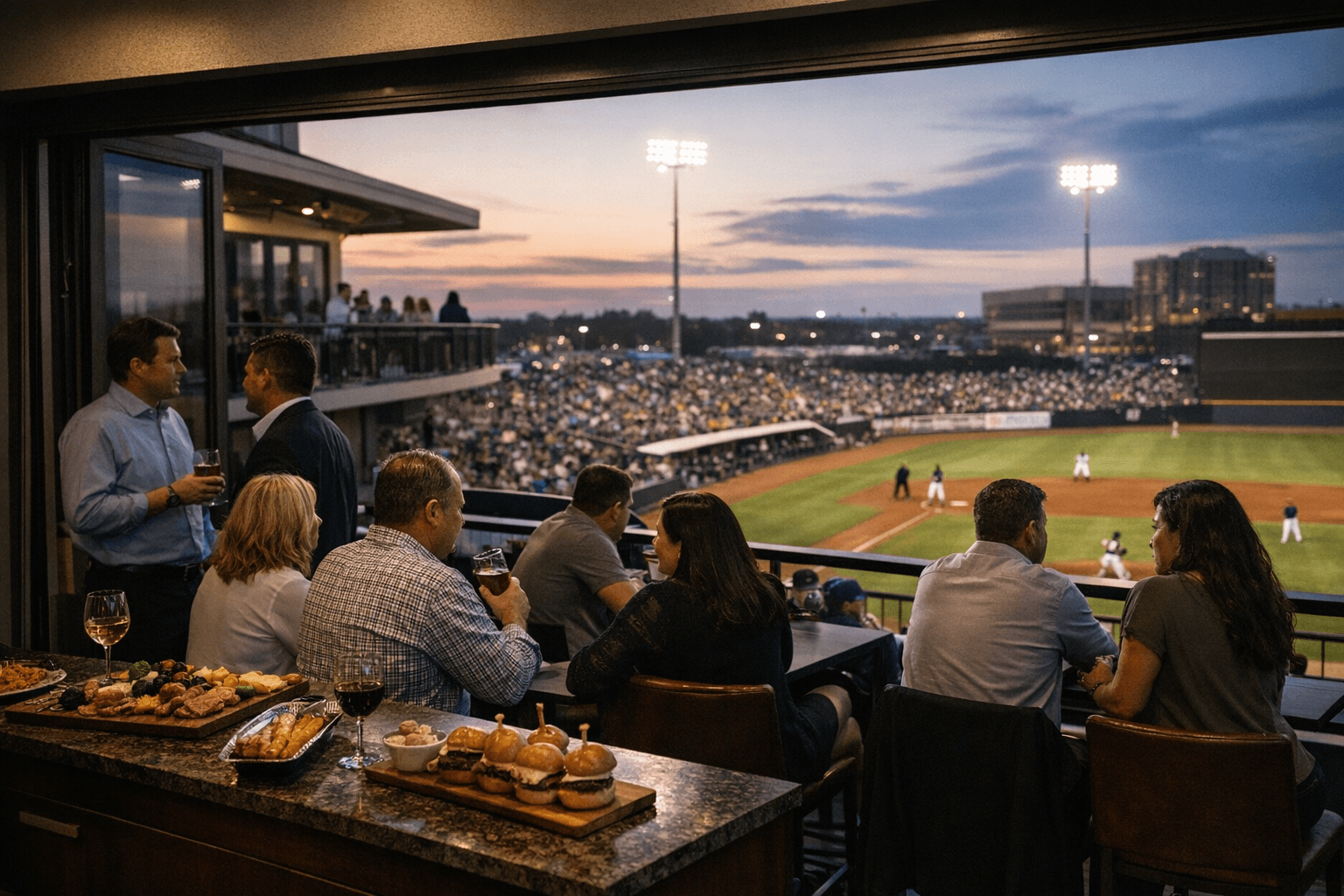
The strategy is straightforward in concept but genuinely complex in execution. Franchises are investing in club-level suites, all-inclusive party decks, covered pavilions, and private event spaces that generate income whether or not a game is being played. A corporate buyout on a Tuesday in February, a wedding reception in an outfield terrace in November, a company holiday party in a climate-controlled suite in December: none of those require a single pitch being thrown. That flexibility is precisely the point.
Why Premium Hospitality Makes Sense in Triple-A
The economic logic behind this push is rooted in the specific financial structure of Triple-A baseball. Unlike MLB franchises, which collect massive national television contracts, Triple-A teams depend heavily on local attendance and ancillary spending. When a rainy week in June wipes out four home dates, the revenue gap is immediate and painful. Non-game-day revenue from premium spaces directly counters that vulnerability by decoupling income from the schedule.
Higher-spending customers also represent a disproportionate share of per-capita ballpark revenue. A fan in an all-inclusive suite or premium hospitality area typically spends several times more per visit than a general admission ticket holder, even accounting for the bundled nature of many premium packages. Franchises that can consistently fill those spaces with corporate accounts, milestone celebrations, and group outings are building a financial floor that general admission sales alone cannot provide.
The Group Experience as a Revenue Engine
Group hospitality has become one of the most aggressively developed segments in minor league stadium strategy. The pitch to local businesses and organizations is compelling: Triple-A games offer a genuinely enjoyable, accessible, and relatively affordable venue for team-building events, client entertainment, and employee appreciation nights, at a fraction of the cost of comparable MLB experiences. The stadium becomes a hospitality venue first and a baseball venue second, at least from a sales perspective.
Franchises are structuring these offerings with increasing sophistication. Rather than simply selling a block of tickets, teams are packaging food-and-beverage minimums, dedicated event staff, pregame field access, and branding opportunities into tiered group experiences. A small business bringing 20 employees gets a different package than a regional corporation bringing 200, but both are engaged through a sales process that looks more like convention center hospitality than traditional sports ticketing.
The result is a more predictable revenue calendar. Group sales teams can book corporate outings months in advance, creating committed revenue that offsets the inherent unpredictability of walk-up ticket sales and weather-dependent attendance.
Building the Infrastructure
The physical investments required to execute this strategy are substantial. Covered pavilions, climate-controlled club spaces, and dedicated catering kitchens require capital expenditures that smaller markets have historically been reluctant to make. What's driving the current wave of investment is a clearer understanding of the return timeline: premium spaces, once built and integrated into a robust group sales program, tend to generate consistent returns that justify the upfront cost within a few seasons.
Stadium design has evolved accordingly. New construction and renovation projects at Triple-A facilities increasingly prioritize flexible spaces that can serve multiple functions across a calendar year. A suite that hosts a group of 30 during a Saturday afternoon game in July needs to reconfigure for a corporate dinner in October and a product launch in February. That flexibility is now a design requirement, not an afterthought.
The operational side of premium hospitality also demands investment in staffing, catering partnerships, and event management capabilities that go well beyond what a traditional minor league front office historically maintained. Franchises are hiring dedicated event coordinators, building relationships with local catering companies, and in some cases developing in-house food-and-beverage programs specifically calibrated to non-game-day events.
Smoothing Seasonality: The Broader Strategic Goal
The deeper ambition behind all of this investment is revenue diversification that genuinely smooths the financial calendar. Minor league baseball's season runs from April through September, leaving six months of the year during which a stadium sits largely idle. Premium spaces with year-round booking capability transform that idle period into a revenue opportunity.
A ballpark that hosts 72 home games per season might, with a fully developed premium hospitality program, generate 150 or more total event-days annually. Corporate retreats, holiday parties, youth sports banquets, nonprofit fundraisers, wedding receptions, and community events all become potential revenue sources when the infrastructure and sales capability exist to accommodate them. Each of those events also builds relationships with local organizations that can convert into group ticket buyers during the baseball season.
This dual function, revenue generation in the off-season plus relationship building that feeds back into game-day attendance, is what makes the strategy particularly attractive. It compounds over time as the franchise becomes more embedded in its community's event landscape.
What This Means for the Triple-A Landscape
The franchises moving most aggressively in this direction are positioning themselves for a competitive advantage that extends well beyond the field. In a landscape where player development is controlled entirely by MLB affiliates, front offices have limited ability to influence what happens between the lines. What they can control is the stadium experience, the hospitality product, and the depth of community relationships. Premium spaces and group hospitality are the clearest expression of that control.
As more Triple-A teams build out these capabilities through 2026 and beyond, the gap between franchises with sophisticated hospitality infrastructure and those still relying on traditional gate revenue will widen. The teams investing now are not just chasing short-term revenue; they are building stadium ecosystems that generate income in every season, strengthen corporate and community ties, and make the ballpark itself a destination worth visiting regardless of what the standings say.
Know something we missed? Have a correction or additional information?
Submit a Tip