Triple-A tests MLB’s next rules, from ABS to pitch timer
Triple-A has already mapped MLB’s next rules: ABS is heading to the majors in 2026, while pitch-timer changes and bigger bases are already reshaping stolen bases and game pace.
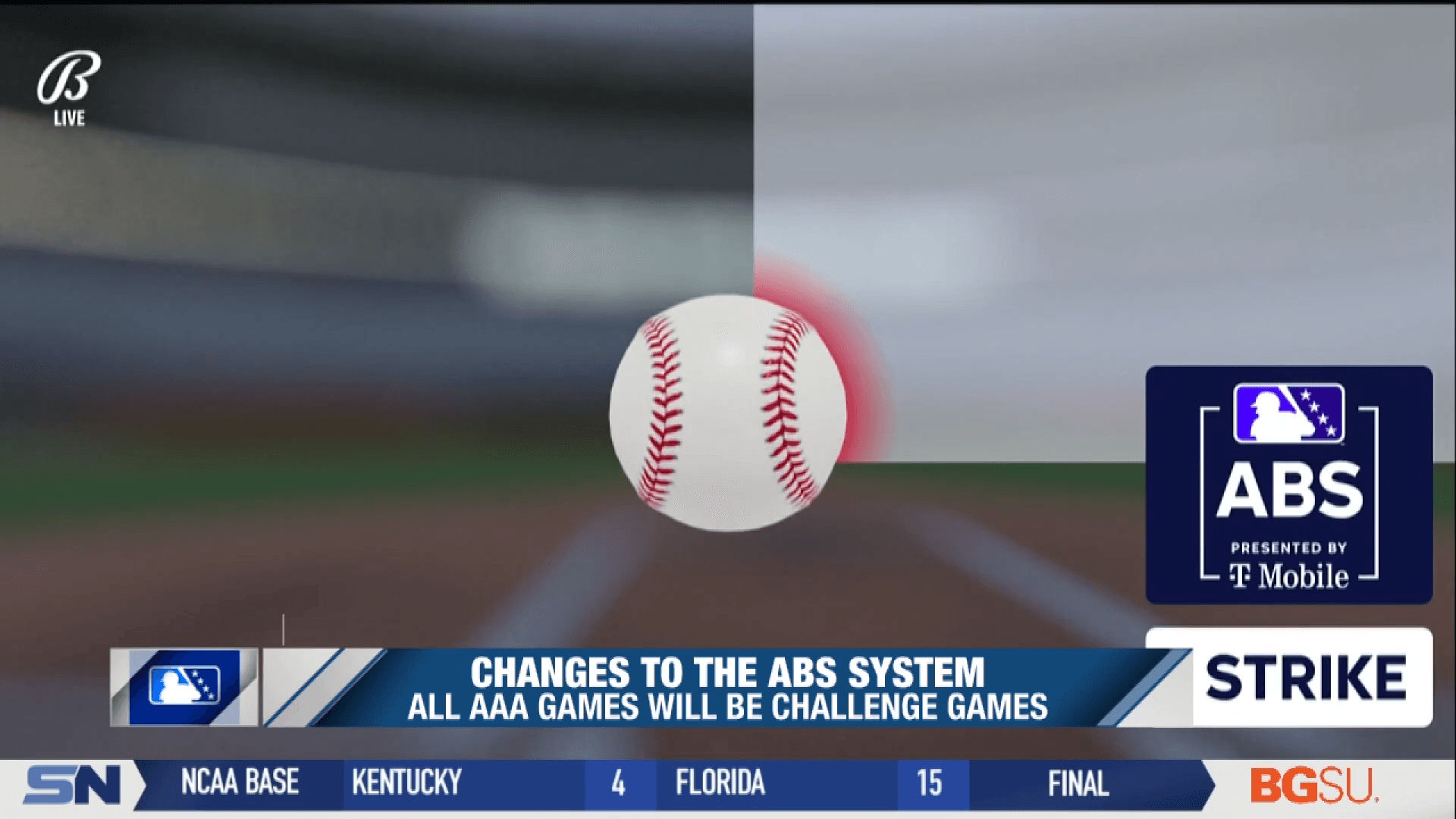
The clearest preview of baseball’s next rulebook came when MLB put every Triple-A game on the ABS challenge system on June 25, 2024. In that format, the batter, catcher, or pitcher can challenge the home-plate umpire’s balls-and-strikes call immediately, and Hawk-Eye settles it. MLB is now carrying that design to the majors in 2026, which makes Triple-A the sport’s most important rehearsal room.
ABS is the rule most likely to change big-league games next
MLB has tested ABS technology in Triple-A since 2022, and it did not stop there. During the 2023 and 2024 Triple-A seasons, the league tried both full ABS and the challenge version, then pushed full automation aside by the end of 2024 in favor of the challenge system. That choice matters: MLB is not importing a machine that replaces the umpire entirely. It is importing a system that leaves the first call on the field and then hands a narrow set of corrections to the players.
That is why the 2026 major-league version looks so much more practical than the old idea of full automated balls and strikes. MLB said the final design reflects feedback from players, coaches, front office staff, umpires, and fans, and it will run on T-Mobile for Business’ private 5G network. In other words, the league has spent years trimming the rule until it can survive real games, not just neat theory.
The challenge limit is where the real experiment lives
The most revealing part of the 2024 Triple-A rollout was not just that ABS arrived, but that MLB kept adjusting the number of chances teams got to use it. The International League also tested a two-challenge setup instead of three, a sign that the league is still fine-tuning the competitive balance of the rule itself. MLB’s memo, as summarized in reporting on the rollout, pointed to fan research showing 89% of fans thought the ideal number of challenges per game was six or fewer, while nearly 40% of Triple-A games went past six.
That is the hidden pressure point. A challenge system only works if it stays sharp enough to feel fair without turning every close pitch into a bureaucratic loop. Cutting the number of chances changes how a battery handles the game, because every challenge now has a cost and the wrong early decision can leave a club empty-handed late.
Pitch timer, bigger bases, and the stolen-base ripple
ABS is only one piece of MLB’s Triple-A laboratory. The pitch timer, bigger bases, and shift restrictions all made the jump to the majors after minor-league testing, and MLB framed those changes as a way to improve pace, action, and safety. The clearest on-field consequence has been on the bases: MLB said stolen-base attempts in MiLB rose from 2.23 per game in 2019 to 2.81 in the test year it cited after bigger bases and pickoff limits were introduced.
That is not a cosmetic change. Bigger bases and tighter pickoff limits reward speed, jumps, and aggression, which alters how teams build benches, how managers deploy pinch-runners, and how pitchers and catchers have to control the running game. A rule that was sold as a pace-and-safety tweak ended up putting more pressure on defenses to hold runners and more value on players who can manufacture an extra 90 feet.
The pace data suggests the challenge system did not bog games down
The biggest fear around ABS was that every close pitch would slow the sport to a crawl. Triple-A’s timing data does not back that up. Baseball America reported average Triple-A game times of 2:43 in 2022, 2:42 in 2023, and 2:44 in 2025, a range that suggests the challenge system did not meaningfully change game length.
That is the kind of number MLB needed. If the league is going to sell a new strike-zone process to a skeptical public, it has to show that review does not turn a game into an argument. The Triple-A clock suggests the sport can add a layer of accuracy without losing the tempo MLB spent years trying to reclaim.

Triple-A is still the place where MLB tunes the rulebook
This whole pipeline did not begin with ABS. MLB’s broader experimental minor-league rules package for 2023 included the pitch clock, larger bases, and shift limits, which shows Triple-A is part of an ongoing development system rather than a one-off test site. Baseball America later reported that the experimental minor-league rules would not change dramatically from 2023, but would receive tweaks, which is exactly how a live laboratory behaves when the league is still deciding what survives.
That is why Triple-A matters so much to the near future of the sport. The next big-league changes are not arriving as guesses anymore. They are arriving with years of minor-league data behind them, and Triple-A has already told MLB which ideas speed the game up, which ones change the running game, and which ones can handle the pressure of a real season.
This article was produced by Prism’s automated news system from verified source data, official records, and press releases, then run through automated quality and moderation checks before publishing. The system is built and supervised by the people who set the standards it runs under. Read our full AI policy.
Did this article answer your question?