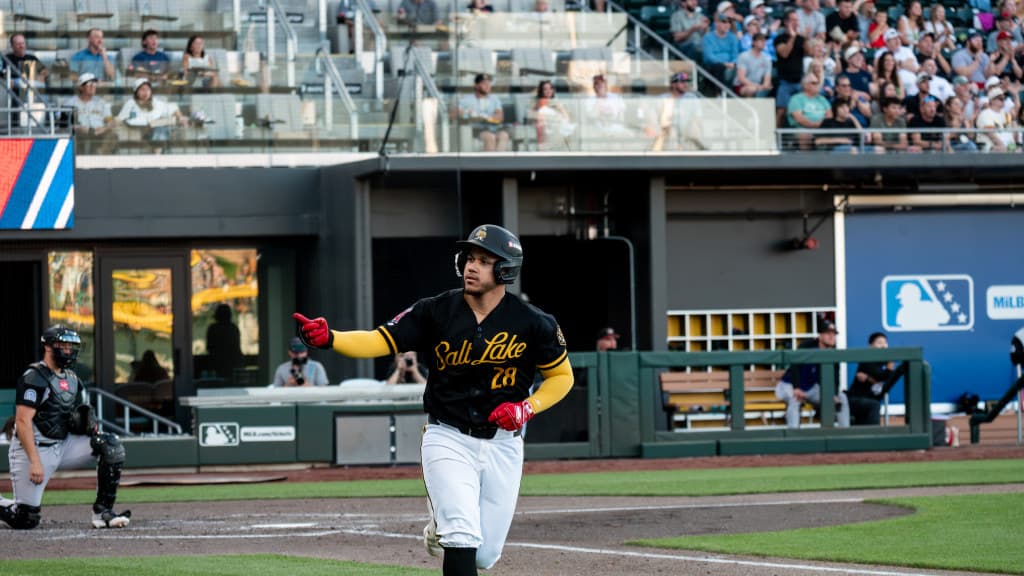
Why Triple-A Still Matters as Prospects Skip Levels
Leo De Vries' spot among the A's 31 non‑roster spring invites crystallizes a Triple-A crossroads as organizations speed up promotions and rethink depth.
Leo De Vries headlining the Oakland A's 31 non‑roster invites to 2026 spring training has become a turning point for Triple‑A roster planning, forcing a decision about who will live in Triple‑A and who will be fast‑tracked to MLB. That cluster of 31 invites gives the A's a wide evaluation pool to refill or bypass their Triple‑A depth, and it matters to affiliates that count on everyday stars to sell tickets and stabilize bullpens.
The trend toward skipping levels is real and selective: teams increasingly accelerate promotion timelines when a player like De Vries projects as an immediate MLB option, while veteran moves such as Jonathan Loáisiga signing a minor‑league deal with the Arizona Diamondbacks generated less Triple‑A ripple. Loáisiga's deal produced a spring training invite but, unlike De Vries' invite, did not signal a deeper, system‑shaping investment for a Triple‑A roster that needs to feed Opening Day option lists.

Performance evaluation remains the core reason Triple‑A endures. Facing major‑league veterans on rehab stints and working through service‑time, roster‑option and workload questions are concrete tasks that Triple‑A innings still perform. Organizations that send 31 non‑roster players to spring training are implicitly using that roster to sort who will occupy 40‑man fringe roles, who will start the season in Triple‑A as depth, and who might skip the level entirely based on spring outcomes and immediate MLB needs.
Business forces push the change: teams shorten timelines to address payroll and competitive windows, and spring invitation lists like the A's 31 reflect that calculus. Media engagement numbers amplify the stakes for coverage: 98.8 percent of readers only view content while 1.2 percent share, making named, consequential moves — a De Vries headline versus a Loáisiga signing — crucial for turning passive attention into measurable buzz that influences sponsorship value and local ticket demand.
Culturally, the split between prospects who pass through Triple‑A and those who jump to MLB alters who shows up in Triple‑A ballparks and who becomes a summer attraction. If more organizations follow the A's pattern of broad spring invites and targeted promotions, Triple‑A towns risk losing marquee draws but retain an intensified role as a deadline and injury‑replacement reservoir where names and numbers are finalized.
Triple‑A still matters because it performs an operational job that no other level does: it is the final lab for roster decisions, the staging area for 40‑man calculations, and the hometown showcase when prospects like Leo De Vries are parsed for readiness. As promotion timelines accelerate in 2026, the scoreboard that matters will be the one tracking who reports to Triple‑A affiliates, who fills the A's 31 invite list, and who bypasses the level altogether.
This article was produced by Prism’s automated news system from verified source data, official records, and press releases, then run through automated quality and moderation checks before publishing. The system is built and supervised by the people who set the standards it runs under. Read our full AI policy.
Did this article answer your question?