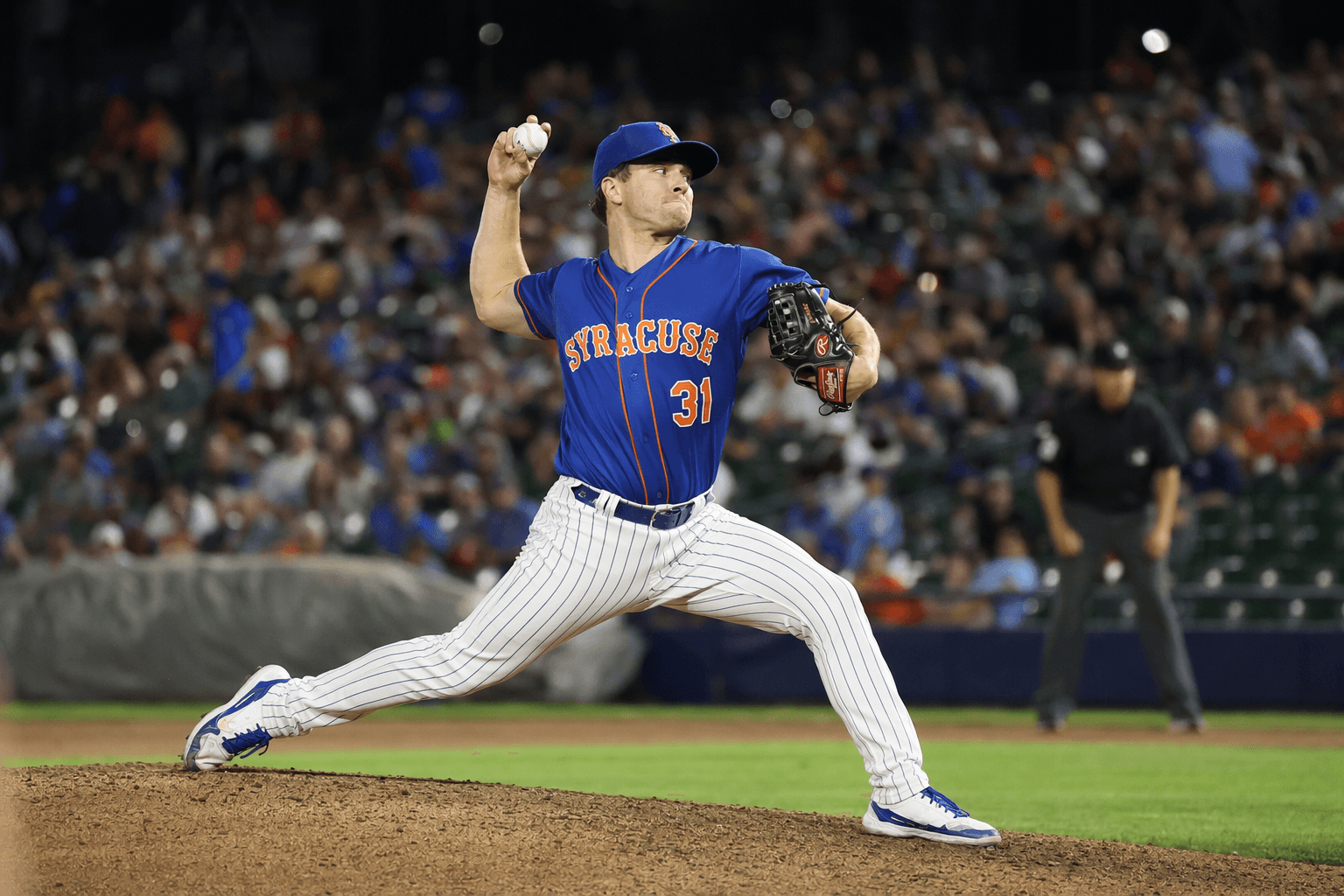
Yankees prospect Ben Grable’s fastball command and bat-missing stuff impress scouts
Ben Grable’s high-octane fastball, sharp slider and quick ascent have him knocking on Triple-A, but his command will decide whether the next stop is the Bronx.
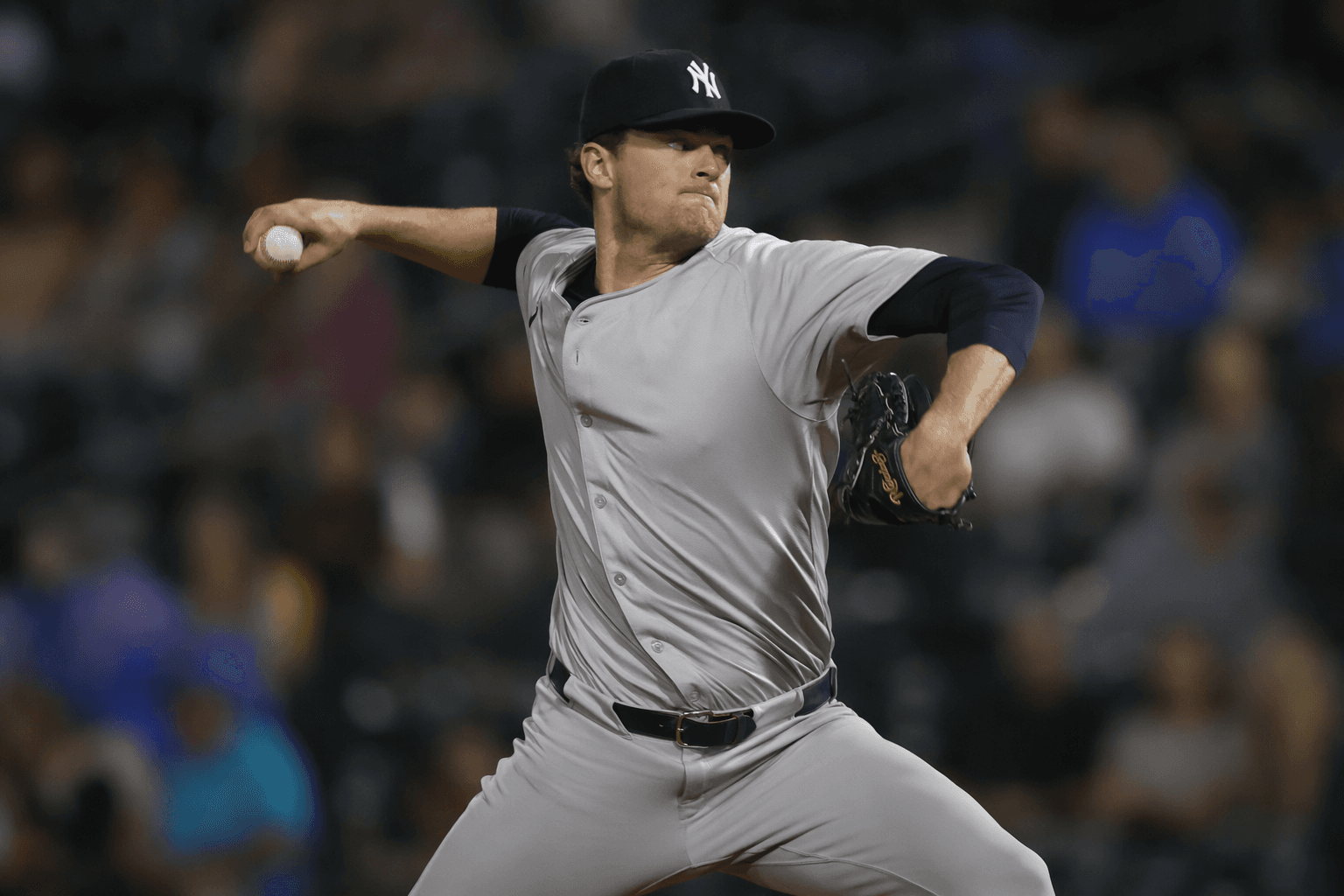
A fastball-first arm climbing fast
Ben Grable has already moved like a reliever with urgency. The Yankees drafted the right-hander in the 11th round of the 2025 MLB Draft, 344th overall, and he has spent little time settling in. By May 10, he was already on the Somerset Patriots roster after opening 2026 with the Hudson Valley Renegades, a jump that fits the kind of bat-missing profile scouts tend to push aggressively.
The raw frame helps explain why the stuff shows up so loudly. Grable, listed at 6-foot-4 and 215 pounds, was born Bennett Joseph Grable on May 3, 2002, in Pasadena, California. He is a right-handed pitcher who has built his professional identity on missing bats, and the early returns have been loud enough that Triple-A feels less like a wall than the next exam.
Why the strikeouts travel
The reason Grable has drawn attention is not subtle. Baseball America describes his fastball as sitting 93-95 mph and touching 100, with a low-80s slider as his main secondary pitch and only occasional use of a changeup. He works off the heater about 75% of the time, which is exactly the sort of usage pattern that can punish younger hitters when the ball explodes through the zone with conviction.
The strikeout track record backs up the eye test. Baseball America reports that Grable struck out more than 25% of hitters in both of his Northwestern seasons, then kept missing bats in summer stops in the Northwoods League and Cape Cod League. That kind of bat-missing history matters because it suggests the swing-and-miss is not a one-week hot streak, but part of the profile that has followed him for years.
Yankeesource’s April 10 teaser reinforced that point in vivid terms: seven strikeouts in 2.2 innings, plus seven whiffs on 19 swings. Those are the kinds of numbers that travel through clubhouses fast, especially for a reliever whose next challenge is less about proving he can get outs and more about proving the strike zone will come with him.
What actually gets tested at Triple-A
Triple-A is where reliever prospects often lose the edge that made them stand out in Double-A. Hitters track patterns faster, punish predictable fastball usage, and force pitchers to prove they can land the second and third pitch in the count instead of just overpowering their way out of trouble. For Grable, that means the real test is not whether the fastball gets swings and misses. It is whether the command sharpens enough to keep the heater and slider from becoming a two-lane road.
There are real warning signs in his report. Baseball America notes below-average control and a delivery with length in the back of his arm stroke. Those details matter because they are the kinds of traits that can show up as scattered counts, deep counts, and traffic on the bases once hitters get less willing to chase.
Still, the fastball-slider combination gives him a margin that many relievers do not have. If the fastball can live in the 93-95 range and spike higher when needed, and if the low-80s slider continues to tunnel well enough off that velocity, Triple-A may not break him so much as reveal how quickly he can refine the edges. The changeup is only a rarely used pitch, so the question is less about a deep arsenal and more about whether two pitches are enough when the command lands.
The numbers behind the rise
The move from Hudson Valley to Somerset came quickly. Baseball Savant shows Grable was assigned to the Somerset Patriots from the Hudson Valley Renegades on April 27, 2026, after opening the year in High-A. Through his first 10.0 professional innings, MiLB data lists 20 strikeouts, a 0.50 WHIP, one save and an opponent average of .094.
Those are not ordinary relief lines, even in a small sample. Baseball Savant’s High-A split shows a 1.17 ERA with 17 strikeouts in 7.2 innings for Hudson Valley, and the 10-inning total across levels gives the Yankees a pitcher who has overwhelmed hitters from the jump. The performance is even more striking when set beside the way scouts typically judge relievers moving through the upper minors: can they miss bats without walking the park, and can they do it when the opposition adjusts?
Grable’s college background adds another layer to the evaluation. Baseball-Reference identifies him as a former Northwestern and Indiana pitcher, while Indiana’s roster lists him as a graduate student in 2025. A college statistical summary shows he went 4-3 with a 4.31 ERA and 65 strikeouts in 56.1 innings for Indiana in 2025, a season that helped bridge the gap between the raw stuff and the pro leap that followed.
Why Triple-A may be a checkpoint, not a barrier
The phrase that stands out in the scouting chatter is the idea that Triple-A should not be a major obstacle soon. That is not a throwaway line. It is rooted in the combination of a fast-moving strikeout profile, a fastball that already plays at the top of a bullpen, and a recent promotion path that has barely slowed down.
Grable is not being pushed because he is polished in the traditional sense. He is being pushed because the bat-missing is real, the velocity is real, and the strikeout numbers at every stop have backed it up. The risk is obvious too: below-average control and a delivery with arm-stroke length can become sharper liabilities as lineups improve. But if he keeps landing enough strikes to let the fastball and slider do the heavy lifting, the climb may continue in a hurry.
That is what makes him worth watching now. Triple-A should tell the Yankees whether Grable is a reliever with a ceiling or a reliever with arrival speed. The early evidence says the stuff is already ahead of the schedule, and the command is the piece that will decide how soon the next stop becomes the Bronx.
Know something we missed? Have a correction or additional information?
Submit a Tip