BlueGlass scales SEO operations with AI automation and reporting
BlueGlass’s growth case shows the breaking point clearly: manual SEO operations stop scaling, while centralized AI workflows lifted efficiency 30% and ROI 10%.
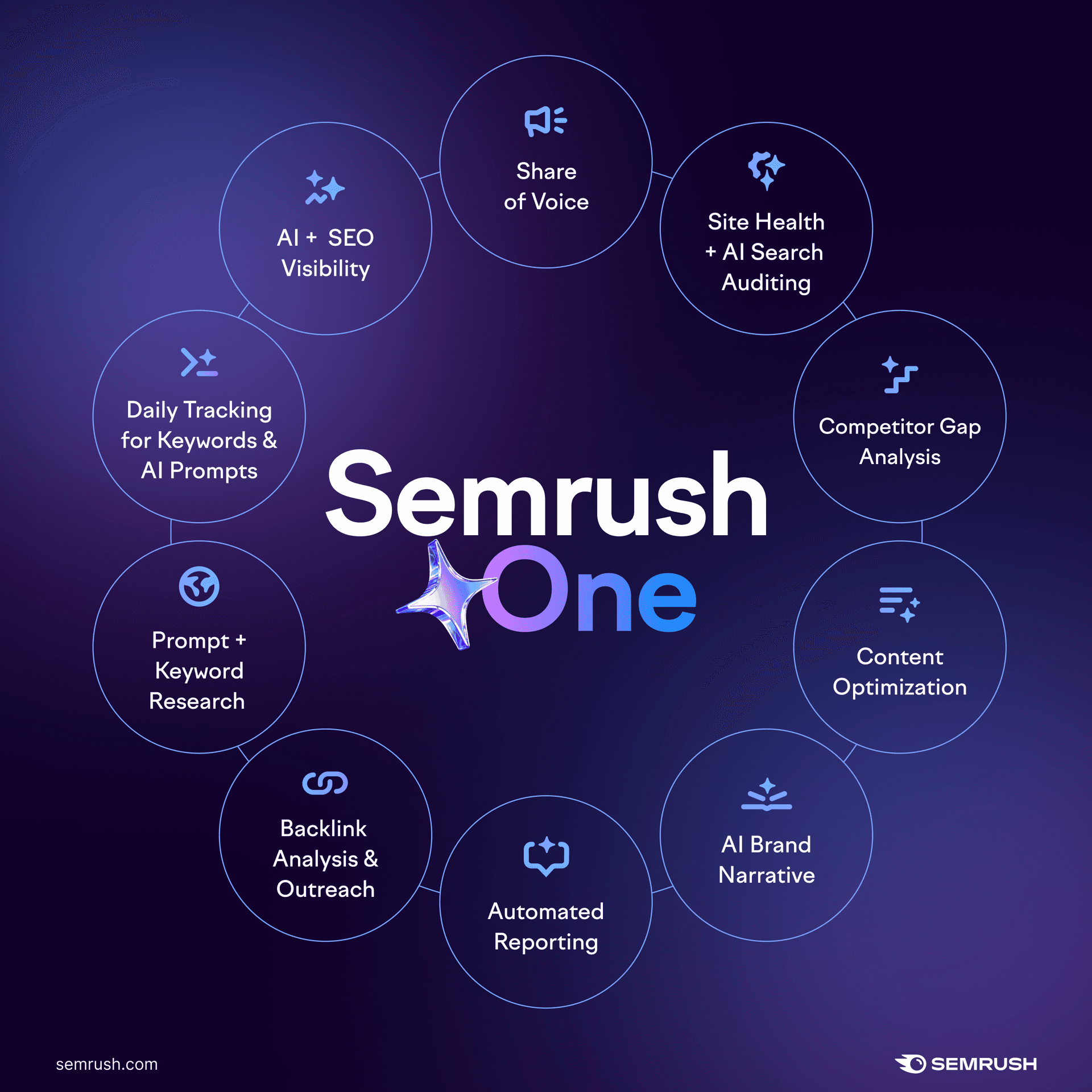
BlueGlass bought Semrush for Enterprise to fix a familiar agency failure mode: when client count rises and service lines widen, the real bottleneck becomes coordination, not demand generation. Manual workflows, disconnected reporting, and ad hoc account management start leaking margin long before the sales pipeline slows.
When growth turns into coordination cost
BlueGlass needed real-time insights, AI-powered automation, clearer role management, smoother collaboration between SEO managers, content writers, and tracking specialists, plus flexible reporting. The more diverse the client base, the more the agency has to balance standardized delivery against client-specific strategy, and the more every handoff can become a delay.
This is where founder heroics stop working. A senior lead can save one messy account. They cannot personally reconcile every dashboard, update every stakeholder, and police every deliverable once the book of business spans different industries, competitors, and search strategies.
The operating model BlueGlass needed
BlueGlass reports a 30% increase in efficiency, a 10% improvement in average SEO project ROI, and a 100% historical data transition after moving to the platform. Efficiency reflects less time spent on mechanical work, ROI reflects better client economics, and full historical migration preserved continuity instead of forcing teams to rebuild baselines account by account.
Agencies do not scale by making every client feel unique in every process step. They scale by standardizing deliverables, using one reporting layer, and keeping the account team free to customize strategy where it matters most. In practice, that usually means pod-based ownership, defined QA checkpoints, and unified reporting templates that still let benchmarks, priorities, and recommendations vary by client.
Why reporting became the retention lever
BlueGlass emphasized flexible reporting. Reporting is often treated like the last mile of SEO fulfillment, but at scale it becomes a retention mechanism. If reporting is slow, inconsistent, or rebuilt from scratch for each account, the agency is paying an internal labor tax on every monthly deliverable.
In a multi-industry portfolio, a retail client, a B2B software client, and a local services client do not share the same competitor set, KPI mix, or content cadence. The agency can still standardize the mechanics of delivery, but the benchmark layer has to remain flexible enough to make each report feel tailored.
The business structure made the need more urgent
BlueGlass was founded in 2007 and later formed in 2010 through a merger of Search & Social, 10e20, and Brent Csutoras, Inc. Agencies built through consolidation often inherit both breadth and complexity. BlueGlass’s footprint now spans Zürich, London, and Tallinn, and the company’s structure includes BlueGlass Interactive AG, BlueGlass Interactive OÜ, BlueGlass Interactive UK Ltd, and BlueGlass Interactive Inc.
Farner merged with BlueGlass on December 8, 2022. Farner said BlueGlass had a team of 50 at the time, and Raphael Bienz, then BlueGlass CEO, became Chief Digital Officer of Farner Switzerland and joined Farner’s Management Board. Farner also said BlueGlass, as its digital experts, handles the full spectrum of web projects.
Where the margin-vs-customization tradeoff shows up
BlueGlass’s service mix includes SEO, content marketing, social media, web design, web development, and analytics. That breadth creates real commercial upside, but it also raises the cost of one-off management. Every extra service line adds another set of dependencies, another handoff, and another reporting requirement. If each client still gets a bespoke process, the agency is buying customization with labor hours, and labor hours are the easiest place for margins to erode.
Customize the strategy, the benchmarks, and the recommendations. Standardize the delivery system underneath them. That means one source of truth for historical data, one workflow for approvals, one reporting architecture, and role clarity across SEO, content, and tracking teams.
What agencies should take from BlueGlass
BlueGlass’s gains came from tying AI automation and reporting to real-time insights, clearer role management, smoother collaboration between SEO managers, content writers, and tracking specialists, and flexible reporting.
This article was produced by Prism’s automated news system from verified source data, official records, and press releases, then run through automated quality and moderation checks before publishing. The system is built and supervised by the people who set the standards it runs under. Read our full AI policy.
Know something we missed? Have a correction or additional information?
Submit a Tip