Google expands SynthID verification in Search, Chrome and Gemini
Google pushed SynthID verification into Search and Gemini, turning AI provenance into a visible layer of the web. Chrome support is next, as watermarking passes 100 billion images and videos.
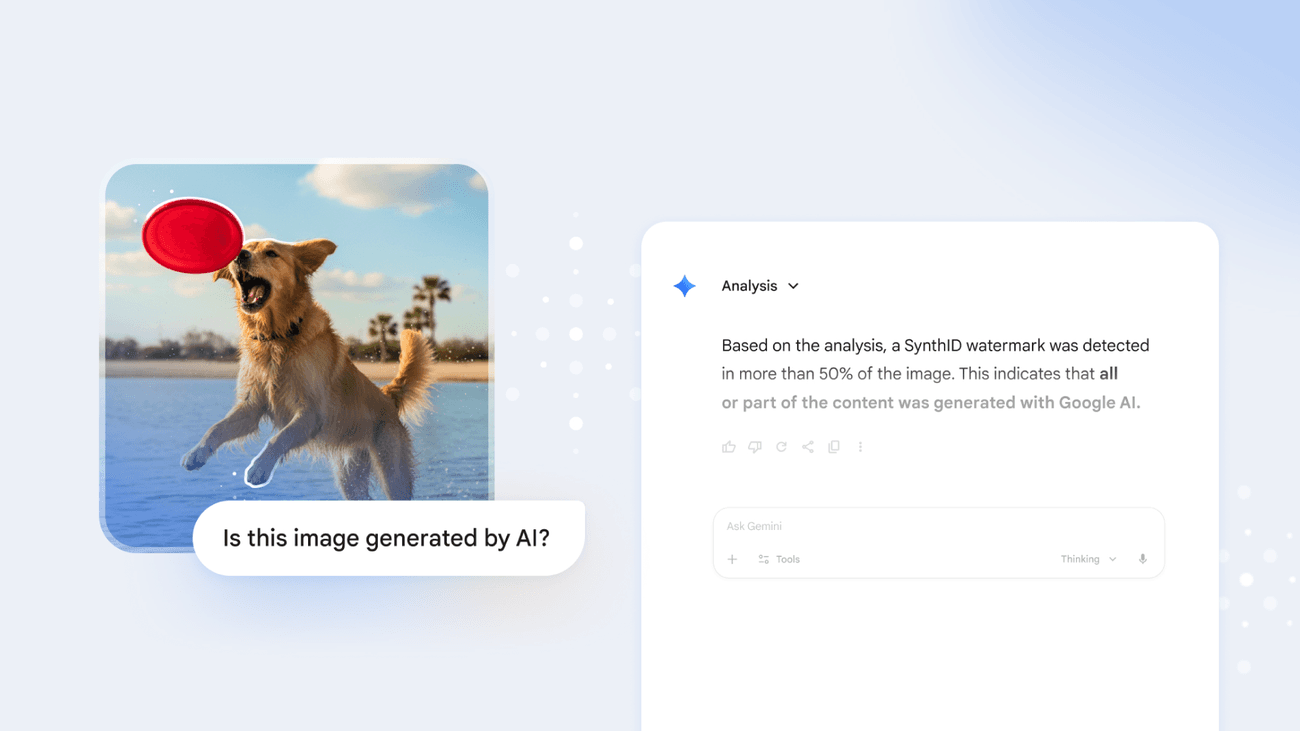
Google has moved AI content verification out of the background and into the places people already search, read and create. On May 19, 2026, the company began expanding SynthID verification in Search and Gemini, with Chrome support set to follow in the coming weeks, as Google widened its transparency tools across Search, Gemini, Chrome, Pixel and Cloud.
The shift matters because the company is no longer treating provenance as a niche safeguard. Google said SynthID has now watermarked more than 100 billion images and videos, along with 60,000 years of audio, a scale that makes the system feel less like an experiment and more like part of the mainstream content stack. The Gemini app’s verification tools have already been used 50 million times globally, giving Google a real-world proving ground for how often people will check the source of an image before trusting it.

Google’s verification push now goes beyond its own watermark. The Gemini app also began supporting C2PA Content Credentials on May 19, 2026, with Search and Chrome support planned for the coming months. That layer can show whether content is an unaltered original from a camera or has been edited, and by what tools. In practice, that gives users two different signals to read: SynthID for Google’s imperceptible watermarking and C2PA for a broader chain of custody around how media was created and modified.
The company’s timeline shows how quickly this has matured. Google DeepMind launched SynthID in beta on August 29, 2023, beginning with AI-generated images made with Imagen. By May 20, 2025, Google said SynthID Detector could identify AI-generated content made with Google AI across image, audio, video and text, and that more than 10 billion pieces of content had already been watermarked. Google also said it had tested the Gemini verification tools with journalists and media professionals, a sign that the feature is aimed at professional workflows as much as consumer curiosity.
The provenance push is also spreading beyond Google’s own products. The company said OpenAI, Kakao and ElevenLabs are adopting SynthID watermarking, which suggests AI disclosure is becoming part of the default infrastructure for generated media. Google said Pixel 10 was the first smartphone to provide Content Credentials for images in its native camera app, and it plans to expand Content Credentials for video to Pixel 8, Pixel 9 and Pixel 10 in the coming weeks.
For search, creator tools and brand safety alike, the message is clear: visibility now includes verification. Google is turning authenticity into a product feature, and that changes what users expect to see when an image, video or voice clip lands on screen.
Know something we missed? Have a correction or additional information?
Submit a Tip