Google says SEO still matters for AI search growth
Google is recasting AI search as an SEO problem: agencies now need unique content, clear structure, and agent-ready sites, not AEO shortcuts.
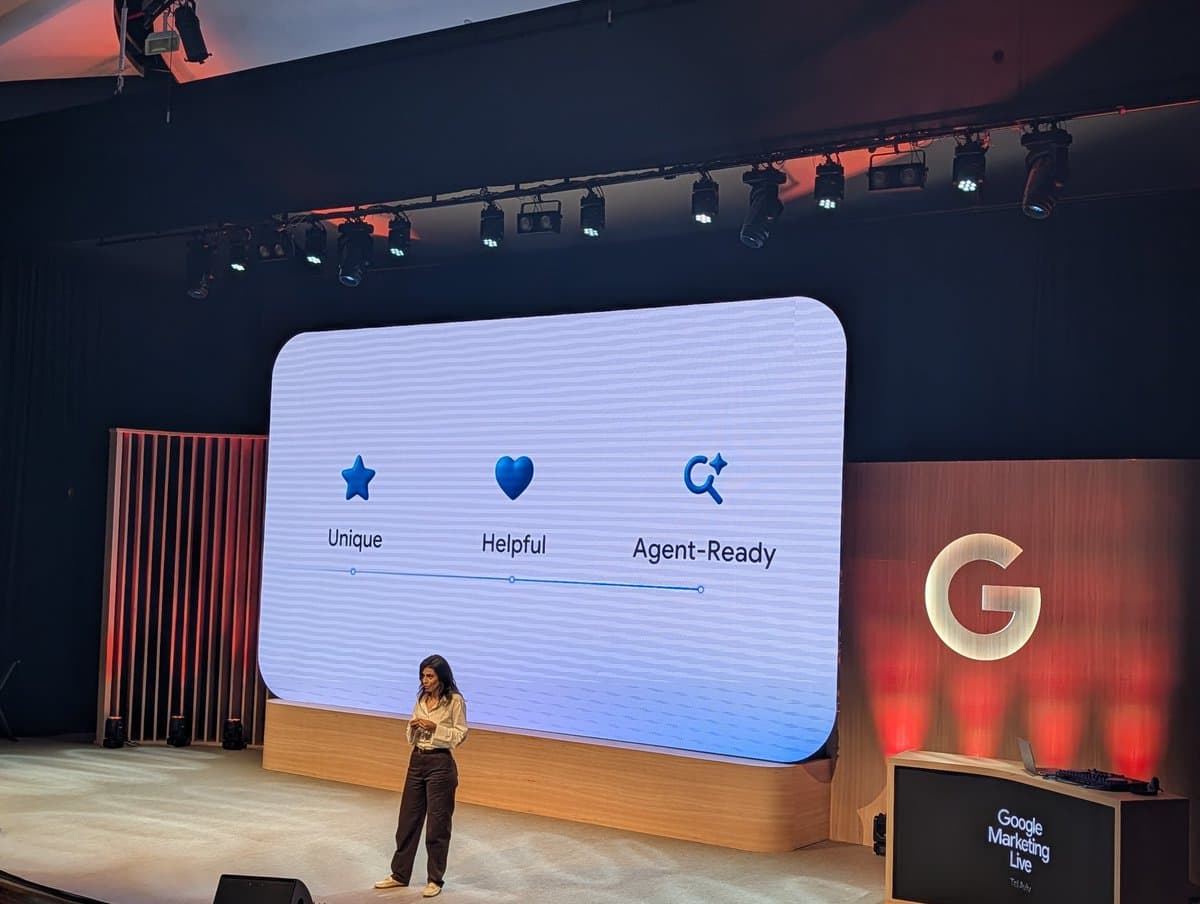
AI Mode now has more than one billion monthly active users globally, and Google’s message to SEO agencies is blunt: AI search has not replaced SEO, it has raised the standard for it. The practical test now is whether a site can produce content that is clearly different, actually useful, and technically ready for agents and AI systems that summarize, compare, and update information at speed. The search box is becoming a multimodal interface built for text, images, and other inputs.
Unique content is the first filter
Eli Schwartz’s warning against short-lived AEO tactics lines up with Google’s guidance: do not chase automation for its own sake, and do not publish content that repeats what everyone else has already said. The work starts with valuable, non-commodity content, which is a more demanding standard than keyword coverage or templated blog production. In client terms, that means the agency has to prove the brand knows something specific, not just something searchable.
It means building pages that contain original point of view, first-party examples, proprietary data, subject-matter depth, and distinctions a model cannot easily reconstruct from five competing articles. If a page would still read the same after a light rewrite by any competitor, it is commodity content and will struggle in both classic search and AI search surfaces.
Website owners should treat third-party AEO and GEO advice with the same scrutiny they would apply to SEO advice.
Helpful means structured, specific, and easy to retrieve
AI search is still rooted in core Search ranking and quality systems. It uses retrieval-augmented generation and query fan-out, which means the system expands a query into related sub-questions, then assembles an answer and supporting links from multiple sources. For agencies, content structure becomes the mechanism that allows Google to understand the page, extract the right facts, and connect them to the right follow-up intent.

Helpful content in this environment does three things at once. It answers the primary question quickly, it gives supporting detail that can survive a broader query expansion, and it uses clear technical structure so machines can parse the page cleanly. Better page experience, structured data, and multimodal content together make the site easier to interpret across formats and devices.
That is where old-school SEO still pays off. Clean headings, descriptive subheads, logical internal linking, schema markup, and fast, readable pages are not legacy chores. They are the scaffolding that lets both search systems and users move from broad query to specific action. As AI Overviews and AI Mode become more visible, that scaffolding matters because Google says AI search is already driving more queries and higher-quality clicks, with AI Overviews delivering more than one billion monthly users globally and billions of clicks to the web every day.
Google has said clicks from AI Overviews are higher quality and more likely to lead to time on site.
Agent-ready is the new technical brief
In “Explore agentic experiences,” Google says it is entering the era of Search agents, including information agents that continuously scan the web and surface synthesized updates. Search agents are first rolling out to AI Pro and Ultra subscribers. It is a live product direction that will influence how pages are discovered, summarized, and refreshed.
Sites need crawlable architecture, structured facts, stable URLs, clear entity relationships, and content that can be updated without breaking interpretation. For agencies managing enterprise accounts, that means treating technical SEO, editorial planning, and content operations as one system instead of separate workstreams.
The practical checklist is straightforward:
- Make key facts machine-readable through structured data and consistent page templates.
- Keep page hierarchies shallow enough that important material is easy to find and refresh.
- Publish multimodal assets, including images and supporting media, where the topic benefits from them.
- Build update workflows so time-sensitive content can be revised before it goes stale in an agentic environment.
- Audit third-party AEO or GEO tools against the same standards you would use for any SEO recommendation.
Google said at I/O 2026 that AI Mode queries have more than doubled every quarter since launch and that the search box has been redesigned more radically than it has in more than 25 years.
The agency playbook shifts from tactics to systems
Short-lived AEO tricks can produce a temporary lift in attention, but they do not build the content depth, technical integrity, or brand differentiation needed for AI discovery. Long-term growth comes from making a client the most specific, most useful source in its category and ensuring the site is technically clean enough for both people and agents to read it correctly.
If the work is about visibility in AI search experiences, Google still calls it SEO.
This article was produced by Prism’s automated news system from verified source data, official records, and press releases, then run through automated quality and moderation checks before publishing. The system is built and supervised by the people who set the standards it runs under. Read our full AI policy.
Know something we missed? Have a correction or additional information?
Submit a Tip