How SEO agencies use pricing ladders to drive growth
The pricing ladder is the agency growth lever: most SEO firms already mix retainers, projects, and hourly work, and the right rung set protects margin.
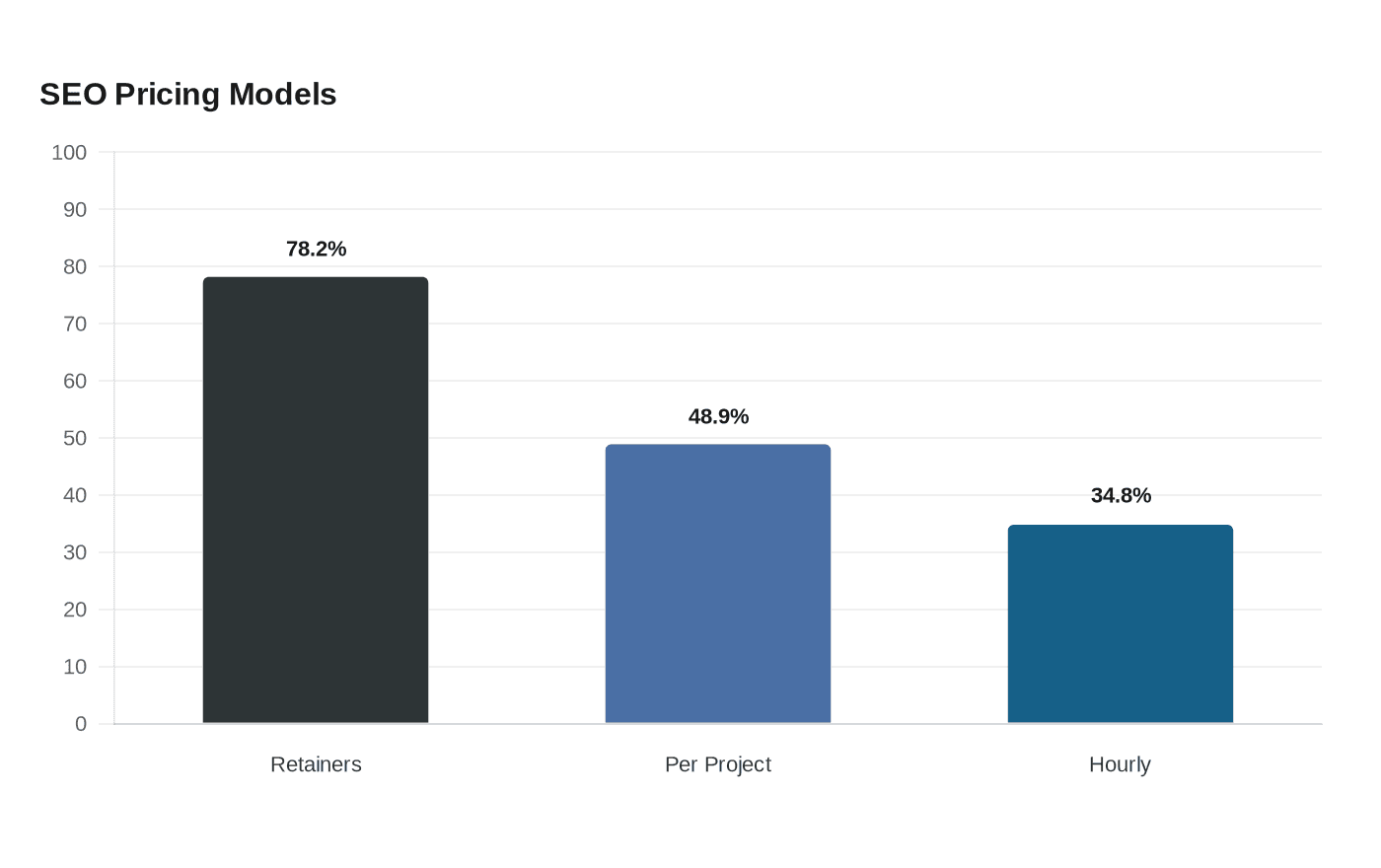
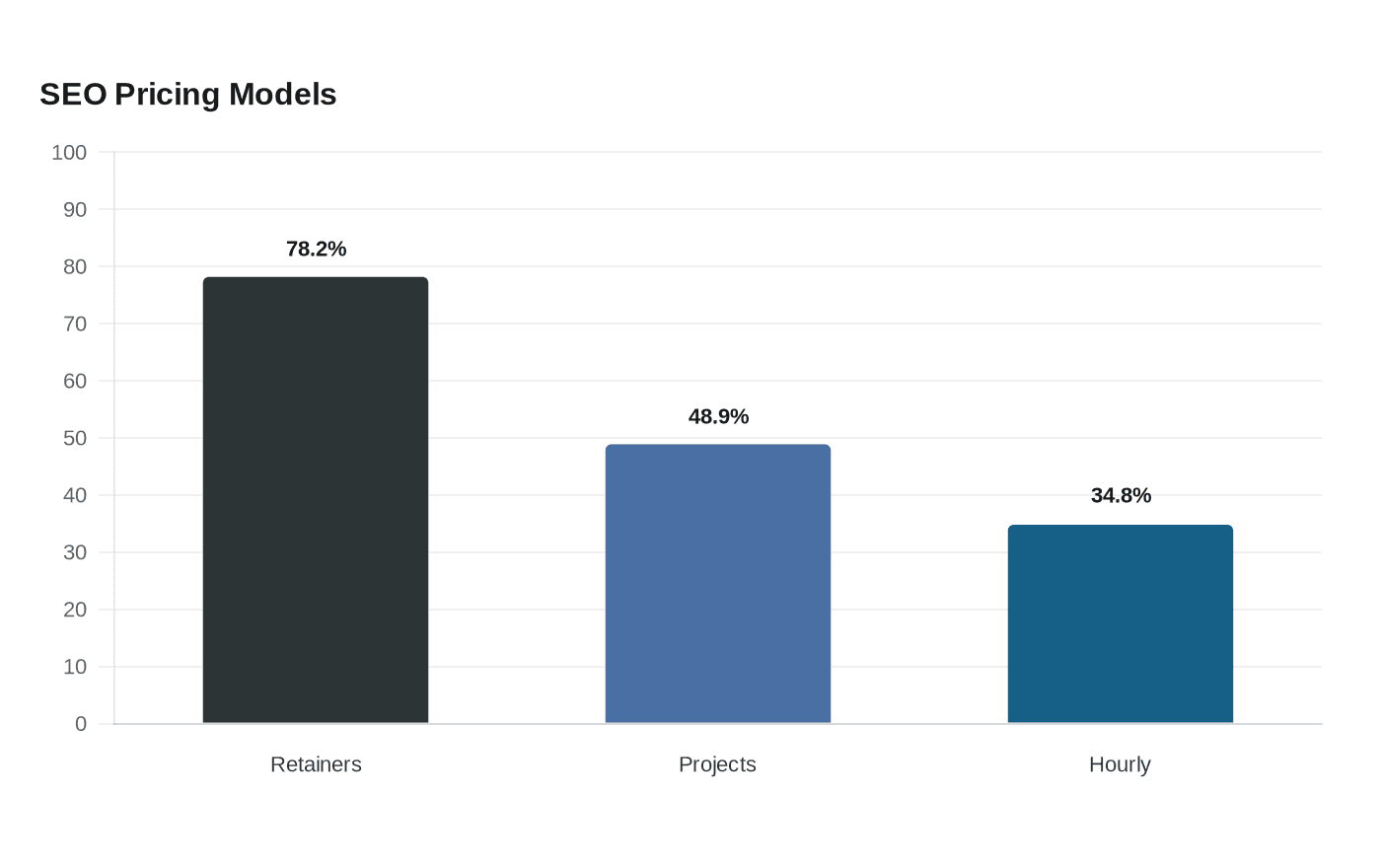
Ahrefs surveyed 439 SEO service providers: 78.2% charge monthly retainers, 48.9% charge per project, and 34.8% charge hourly. The market already runs on blended pricing rather than a single packaged offer. Agencies that grow cleanly use that mix as a ladder, moving clients from low-friction entry work into steadier retainers, then into higher-ticket strategic and enterprise programs.
The ladder starts with a small, specific win
The bottom rung should be easy to buy and easy to deliver. In Ahrefs’ pricing data, the most common monthly retainer is $501 to $1,000, with 42.8% of respondents charging between $501 and $2,000 per month and 68.8% charging $2,000 or less. That makes the first layer of the ladder a sensible place for audits, local visibility work, and tightly scoped implementation sprints that do not require a large team.
Local SEO is the clearest entry point. In Ahrefs’ data, local SEO averages $1,557 per month, and the most common hourly range for local SEO is $75 to $100, making it a natural bridge between one-off consulting and recurring management. Google found that 30% of mobile searches are location-related, 78% of nearby mobile searchers visit a business within a day, and 28% of nearby searches lead to a purchase.
The middle rung is where agencies protect margin
The core of the ladder is the recurring management retainer. Ahrefs’ broader pricing summary puts SEO at $250 to $10,000 per month, with most businesses spending between $500 and $5,000. That is the band where agencies can standardize process, set reporting cadence, and build delivery around a repeatable scope instead of a constantly shifting project brief.
This is also where mixed-model pricing matters most. Ahrefs found the most common hourly rate for SEO is $100 to $150, which helps explain why many agencies keep advisory, implementation, and project support separate rather than forcing everything into one flat package. Moz’s older pricing survey found project-based pricing was the most popular model among surveyed providers, with 70.1% offering it, while monthly retainers showed the widest distribution across pricing models.
Project work should have milestones, not ambiguity
Project pricing belongs on the ladder when the scope is finite and the business outcome is clear. Profitability depends on clear goals tied to budget, and Ahrefs uses a $5,000-per-month project as an example of work that needs meaningful results and milestones. That is the right structure for site migrations, technical audits, content architecture, or a one-time local rollout where the agency needs a defined start, a defined finish, and reporting that can prove the work changed something measurable.
If the retainer tier is built for continuity, the project tier should absorb discrete jobs that would otherwise pull a team out of its monthly operating rhythm. It lets the agency keep recurring work stable while selling spikes of higher-value execution when the client has a launch, redesign, or market expansion in front of them.
The top rung belongs to maturity, complexity, and geography
The strongest top-tier offers are not just bigger versions of the middle tier. They are reserved for clients with multiple markets, larger content and technical footprints, heavier reporting demands, or enough internal maturity to use SEO as a planning function rather than a channel add-on. In Ahrefs’ survey, 79.1% of U.S. and Canada-based SEOs charge at least $1,001 per month, and some command retainers of $25,001 to $50,000.
Traditional SEO agency retainers often range from $2,000 to $20,000 depending on scope and complexity, while AI-powered alternatives may cost $500 to $2,000 monthly. Agencies that want to move clients upward need to show what the higher tier includes: multi-location reporting, content governance, technical roadmaps, and leadership-level forecasting.
Use service type and client segment to set the rung
A pricing ladder works best when it reflects segment differences instead of forcing one offer across all buyers. Ahrefs’ data shows agencies charge an average of $3,209 per month, compared with $1,348 for freelancers. That spread also explains why the same agency may need one entry offer for local businesses, a mid-market management retainer for growing brands, and a more expensive enterprise layer for U.S. and Canada-based accounts that expect broader scope and faster response times.
The service mix should follow the client’s maturity. A small local operator may start with a site audit and a local SEO retainer, then move into content planning or conversion work once traffic starts producing calls. A mid-market company may begin at the core retainer rung and then buy project-based technical work when a site change is due. A larger national or international client may enter the ladder already expecting multi-channel coordination.
Reporting is what moves clients up the ladder
Pricing tiers only work when each step ties to a clearer outcome. Reporting has to bridge execution and business impact so stakeholders can secure future budgets and demonstrate revenue effect. That is the mechanism that turns a cheap entry offer into a larger relationship: the agency proves that one rung produced something the next rung can build on.
That logic is especially strong in local SEO. When nearby search leads to a same-day visit or a purchase, the agency can move the client from visibility work to conversion work, then into recurring site management or content operations.
This article was produced by Prism’s automated news system from verified source data, official records, and press releases, then run through automated quality and moderation checks before publishing. The system is built and supervised by the people who set the standards it runs under. Read our full AI policy.
Know something we missed? Have a correction or additional information?
Submit a Tip