LinkedIn emerges as a key signal in AI search discovery
LinkedIn is becoming a discovery layer, not just a distribution channel. Agencies that tune profiles, authority, and posting workflows can help B2B brands surface inside AI search.
LinkedIn is now part of the discovery stack
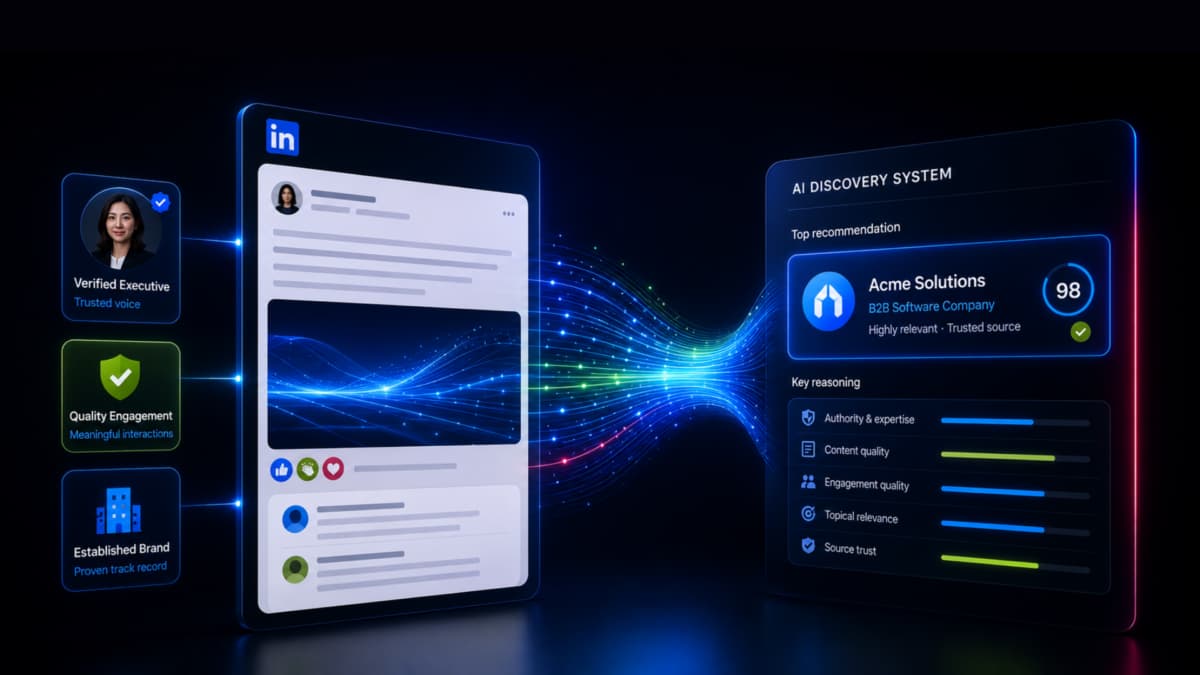
For B2B agencies, LinkedIn has quietly shifted from a place to post updates into a place where visibility is earned. The change is not just about reach on the platform itself. It is about whether AI systems can find enough credible, public-facing signals to trust a brand when they synthesize answers for buyers.
That matters because AI search is already shaping consideration-stage behavior. TrustRadius’ 2025 B2B buyer research found that 72% of buyers encountered Google’s AI Overviews during research, and 90% clicked through to cited sources. In other words, buyers are not only reading summaries, they are following the breadcrumbs. If your clients leave a thin trail, or only publish on a website that rarely gets reinforced elsewhere, they risk becoming invisible at the exact moment curiosity turns into evaluation.
Why LinkedIn carries extra weight
LinkedIn brings scale, credibility, and context together in a way few other channels do. The platform says it is the world’s largest professional network, with more than 1 billion members across 200+ countries and territories, and Reuters reported that it crossed the 1 billion-member mark in November 2023. That matters because B2B buyers, executives, and subject-matter experts already use LinkedIn as a professional identity layer, not just a social feed.
The Microsoft connection makes the channel even more relevant to AI-enabled discovery. Microsoft acquired LinkedIn in 2016, and Microsoft also owns Bing, which ties LinkedIn more closely to the broader search ecosystem than many agencies assume. Add in Reuters’ reporting that LinkedIn is also adding artificial intelligence features for paying users, and the channel starts to look less like an optional distribution outlet and more like infrastructure for visibility.
What agencies should change first
The biggest adjustment is operational, not creative. Agencies need to stop treating LinkedIn as a broadcast lane and start treating it as a trust-signal system that supports search visibility, AI citations, and sales enablement at the same time. That means planning content for both human readers and the systems that ingest public expertise, then shaping profiles and pages so the brand shows up as consistent, credible, and easy to summarize.
Search Engine Land’s framing is useful here because it points to a layered approach: employee profiles, company pages, and thought leadership content each play a different role. Executives and subject-matter experts should not be posting random updates when inspiration strikes. They need a repeatable publishing cadence that creates recognizable expertise around the topics a client wants to own, especially in complex, high-consideration categories where buyers do not convert after one touch.
Personal profiles are the first authority surface
If AI systems are looking for reliable public evidence, executive profiles are often the cleanest signal a brand can control. Agencies should audit whether client leaders have complete bios, current titles, consistent role descriptions, and clear topical focus. A profile that reads like a résumé is not enough; it should look like a visible source of expertise.
This is where agencies can add a new advisory layer to retainers. Instead of only writing posts, they can coach executives and subject-matter experts on what they should be known for, which topics deserve recurring commentary, and how to turn internal knowledge into public proof. The point is not volume for its own sake. It is consistency, because repeated, aligned signals across people and companies make a brand easier for AI systems to recognize and for buyers to remember.
Company pages still matter, but only as part of a larger system
A strong company page gives the brand a home base, but it should not operate in isolation. Agencies should use it to reinforce the same themes that appear in leadership profiles and thought leadership posts, so there is no gap between the company’s official story and the public voice of its people. When those signals match, the brand looks more authoritative, more stable, and more worth citing.
That alignment also helps with reputation management. If buyers encounter the brand through an AI summary, then visit LinkedIn, they should immediately see the same expertise reflected in the company page, the leadership team, and the content they publish. A fractured presence creates doubt; a coherent one creates confidence.
Thought leadership has to be built for public retrieval
The old model of LinkedIn content rewarded clever hooks and quick engagement. The new model rewards clarity, specificity, and useful expertise that can be surfaced later. Agencies should help clients publish content that names the problem, explains the mechanism, and shows the point of view in language that a buyer could quote back to a colleague.
That does not mean stripping out personality. It means making sure every post contributes to a visible body of evidence. If a client wants to be discovered for AI strategy, demand generation, or enterprise software operations, then its posts, articles, and commentary need to keep returning to those themes in a way that is easy to map. The stronger the topical footprint, the more useful the brand becomes to both humans and machines.
Distribution workflows need to be more disciplined
This shift also changes how agencies run content operations. LinkedIn can no longer be treated as the final step after a blog post goes live. It should be part of the publishing plan from the start, with executive participation, repurposed insights, and coordinated timing built into the workflow.
A practical system might look like this:
- Define a small set of authority themes for each client and assign them to specific leaders
- Draft posts, comments, and company-page updates in a shared content calendar, not ad hoc
- Reuse one research point or customer insight across profile posts, company updates, and sales materials
- Track how LinkedIn activity supports branded search, AI mentions, and downstream pipeline conversations
- Review which voices inside the company consistently earn engagement and which topics get cited back by buyers
That approach is especially valuable for agencies serving B2B brands with long sales cycles. LinkedIn can help keep expertise visible between campaigns, giving buyers repeated exposure to the same names, ideas, and problem framing before they ever talk to sales.
The business case is bigger than social reach
Search Engine Land also reported that LinkedIn said Google’s AI Overviews cut non-brand B2B awareness traffic by up to 60%. Whether agencies think of that as a warning or a proof point, the message is the same: discovery is fragmenting, and the website alone is no longer enough. Brands need public authority everywhere buyers and AI systems are likely to look.
That is why LinkedIn now sits inside a broader growth strategy. It supports demand generation by keeping expertise visible. It supports reputation management by giving a brand controlled public signals. And it supports brand recall by making sure the same names and ideas keep reappearing across the places that matter.
The agencies that win this shift will not be the ones posting more often. They will be the ones that connect LinkedIn presence to search visibility, AI citations, and pipeline outcomes, then build workflows that make that connection repeatable.
This article was produced by Prism’s automated news system from verified source data, official records, and press releases, then run through automated quality and moderation checks before publishing. The system is built and supervised by the people who set the standards it runs under. Read our full AI policy.
Did this article answer your question?