Semrush study finds marketers embrace AI search, lag in execution
Marketers say AI has already changed search, but only 22% have fully integrated it. That gap is becoming a new service line for SEO agencies.
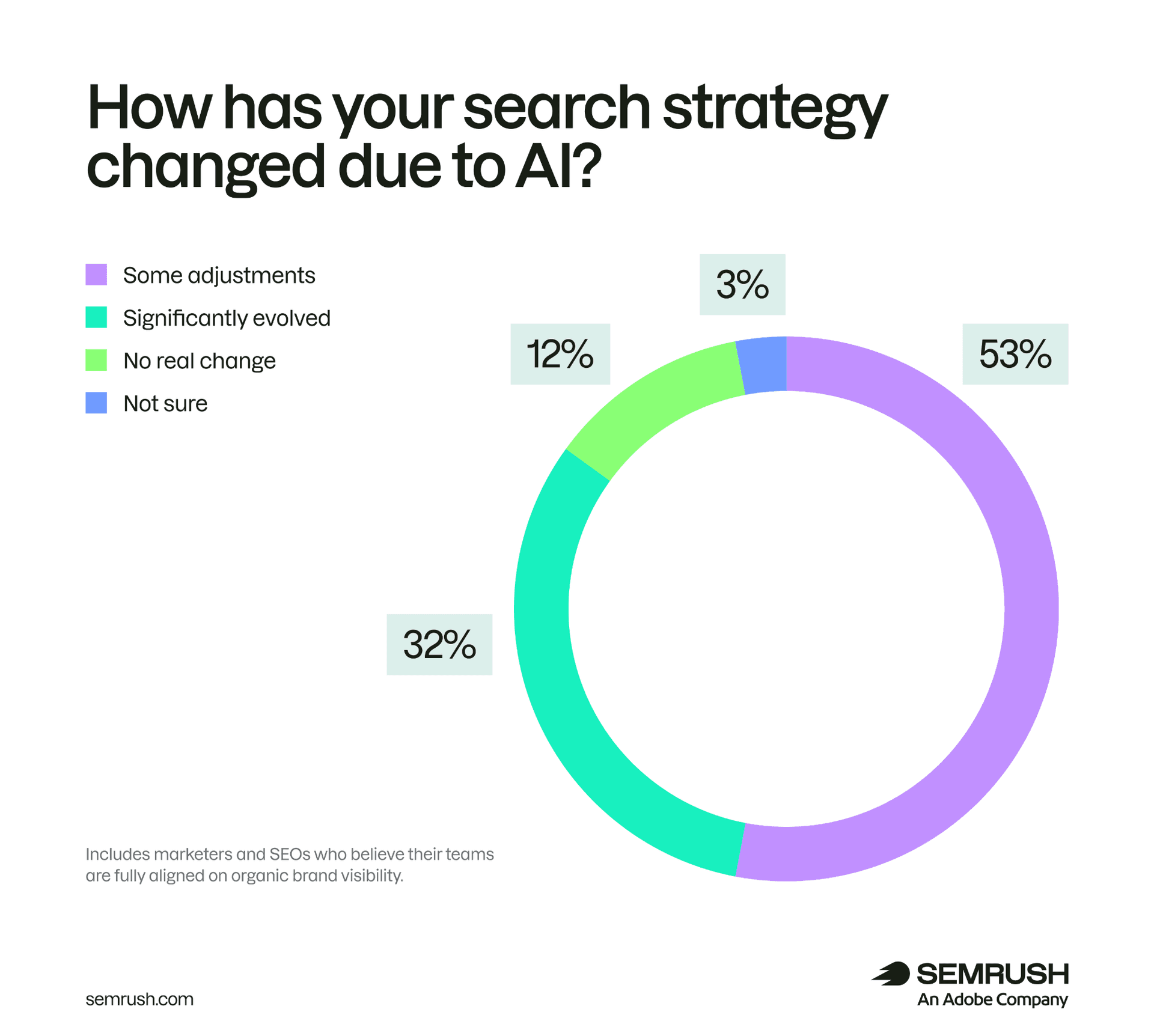
AI search has won the strategy conversation, but not the operating room. In Semrush’s latest survey of 481 marketers, business owners and SEO professionals, 85% said AI has changed their search strategy, yet only 22% said SEO and AI search are fully integrated across strategy, execution and reporting.
The split is even sharper inside teams that claim alignment. Among the 197 marketers who said their teams are fully aligned, just 41% also reported fully integrated SEO and AI search execution. The rest were still working in separate workflows, with limited coordination or alignment that stopped at the planning stage. Even among respondents who already treat AI search as an extension of SEO, which was 77% of the sample, only 28% said they use one shared workflow across both.

The study points to measurement as the bottleneck. Forty-nine percent said AI’s effect on pipeline or revenue is one of the hardest things to track, and 45% said visibility in AI-generated answers is equally difficult to measure. Forty percent still rely on manual ChatGPT checks as their primary tracking method, a signal that many teams are still improvising when they need repeatable reporting.
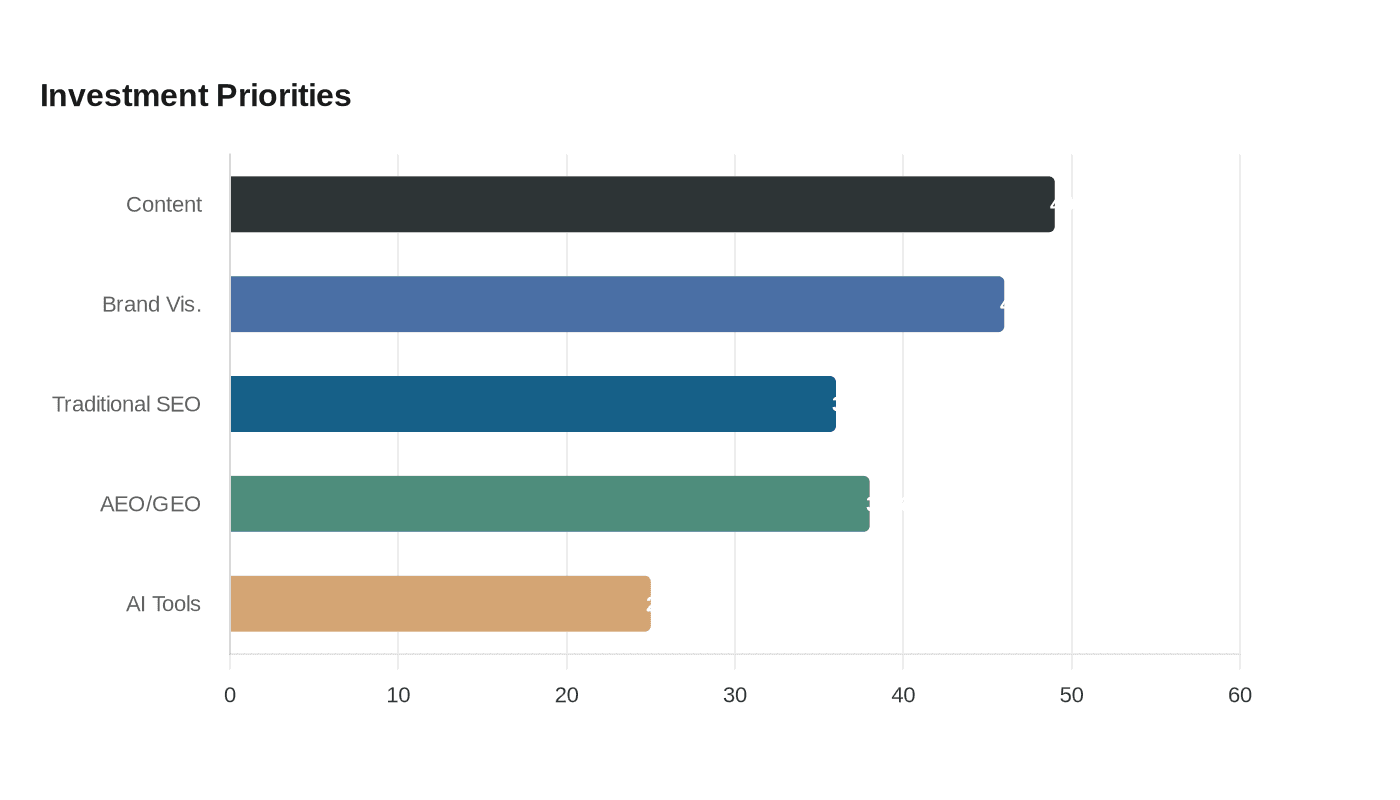
That matters because the spending is already shifting. Content creation remained the top investment area at 49%, but 46% of marketers said brand visibility across channels is now a priority, 38% plan to invest in AI search optimization, also known as AEO or GEO, and 25% are putting money into AI visibility tools. Traditional SEO still drew investment from 36% of respondents, showing that the market is not replacing search discipline so much as trying to layer new AI workflows on top of it.
For agencies, that is the commercial opening. Clients want help showing up in AI-generated answers, but many in-house teams have not built the dashboards, reporting logic or cross-functional handoff needed to deliver that work consistently. Semrush’s numbers suggest the agencies that win will not be the ones pitching AI search as a buzzword. They will be the ones packaging strategy, implementation and measurement into one service, then tying visibility to traffic and leads.
The payoff is already visible. Semrush said 81% of teams with fully integrated SEO and AI search execution reported more traffic or leads connected to AI platforms, compared with 36% of teams running the two separately. The timing is favorable too: on June 3, 2026, Google introduced Search Console reporting for generative AI performance and began testing a control that lets some site owners block content from appearing in AI Overviews and AI Mode, while the new reports surface impressions by page, country, device and date, but not clicks. The market is talking about AI search. The agencies that turn it into an operating system will be the ones that grow with it.
This article was produced by Prism’s automated news system from verified source data, official records, and press releases, then run through automated quality and moderation checks before publishing. The system is built and supervised by the people who set the standards it runs under. Read our full AI policy.
Know something we missed? Have a correction or additional information?
Submit a Tip