SEO reporting must evolve for a zero-click, AI-assisted search era
SEO dashboards need to stop worshiping traffic and start proving value. In a zero-click search world, the clicks that matter are the ones tied to intent, conversion, and revenue.
The traffic chart is lying to you
SEO reporting breaks the moment you assume every organic visit matters equally. In a search landscape where people often research inside AI tools, then click later only to verify a shortlist, raw session volume can make a weak page look great and a strong page look flat. The agencies that still lead with traffic totals are usually defending the wrong thing.

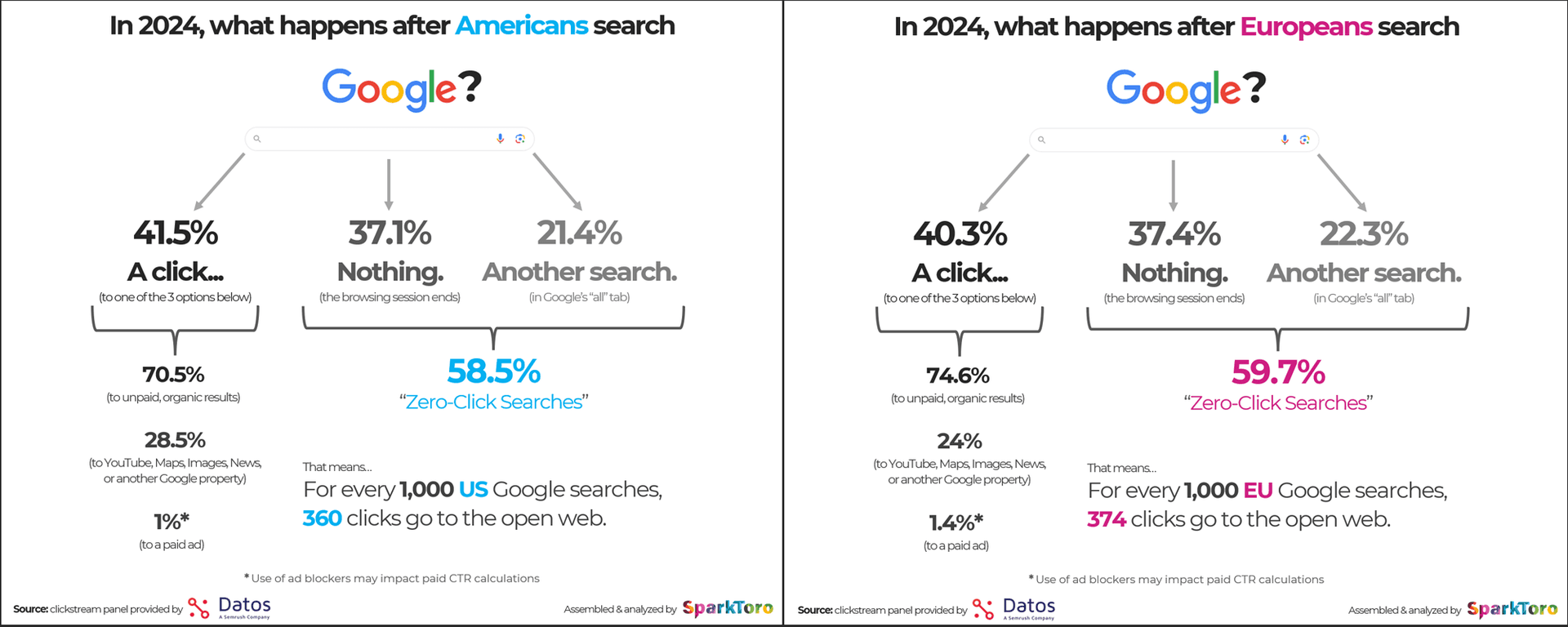
SparkToro’s 2024 zero-click study put a hard number on that shift: in the United States, only 360 out of every 1,000 Google searches sent clicks to the open web, and in the European Union the number was 374. That is not a small wobble. It means a majority of searches are already ending without a traditional visit, so the old habit of treating organic traffic as a clean proxy for demand has stopped working.
Why the old SEO story is wearing out
The biggest mistake agencies make is reporting volume without context. A blog post that attracts thousands of informational visits might look healthy in a dashboard, but if those users never move toward a demo, a quote request, a store locator, or a branded follow-up search, the traffic is mostly decoration. At the same time, a service page, comparison page, pricing page, or location page can bring in fewer visits and still be worth far more to the business.
That is the reporting reset SEO needs: stop asking only how much traffic a page gets, and start asking what kind of traffic it brings and what it does next. The useful slices are the ones closest to revenue, especially high-intent and conversion-adjacent traffic. If a client is buying leads, the pages that matter most are rarely the ones with the biggest visit counts. They are the ones that help people decide.
Zero-click is not theory anymore
Pew Research Center added another layer in March 2025. About 58% of respondents said they had at least one Google search that produced an AI-generated summary, and users were less likely to click result links when that summary appeared. Even more telling, they very rarely clicked the sources cited inside the summary itself.
That matters because it changes how discovery works. The first touch may happen inside an AI interface, while the traditional organic click becomes a later-stage confirmation step. In that model, the value of SEO is not just the click. It is the influence on the shortlist, the branded query that comes after, and the eventual conversion that happens elsewhere. If your dashboard only counts the first click, it misses most of the story.
The CTR collapse is real, and the data backs it up
Seer Interactive’s analysis makes the scale of the problem hard to ignore. Across 3,119 informational queries from 42 organizations, covering 25.1 million organic impressions and 1.1 million paid impressions, organic CTR for informational queries with AI Overviews fell 61% since mid-2024. Even queries without AI Overviews saw organic CTR fall 41% year over year.
That is the reporting environment agencies are working in now: lower click-through rates, less visible attribution, and more searches that end before a visit ever happens. The old dashboard still reports impressions, clicks, and sessions, but those numbers need interpretation. Without it, you end up calling a traffic decline a failure when it may simply be a sign that the search interface changed.
What agencies should report instead
The cleanest way to rebuild SEO reporting is to separate organic traffic into business-relevant buckets. Not all organic sessions deserve the same label, and not all landing pages serve the same job. A practical dashboard should split traffic at least four ways:
- Branded versus non-branded traffic, so you can see whether SEO is creating demand or just harvesting existing demand.
- High-intent versus informational traffic, so the team can tell the difference between research content and content that is close to conversion.
- Conversion-adjacent landing pages versus top-of-funnel articles, so you can see which pages support revenue rather than just visibility.
- Landing-page-level performance, so one strong article does not hide a weak product page or a weak product page does not get buried inside a sitewide average.
That structure changes the conversation fast. Instead of saying, “Organic sessions are down,” you can say, “Informational traffic fell while branded and conversion-adjacent pages held steady,” or, “Traffic dipped, but service-page entries and quote-starts rose.” That is a much better client conversation because it connects search behavior to business impact.
Build the dashboard around decisions, not vanity
Search Engine Land’s reporting guidance points in the same direction: SEO reporting should bridge execution, website performance, and stakeholder understanding, with an emphasis on stakeholder buy-in and revenue. That is the key. A dashboard should not just describe what happened. It should help a leadership team decide what to fund next.
In practice, that means reporting should answer questions like these:
- Which organic landing pages contribute to pipeline, not just visits?
- Which queries attract people who are early in the journey versus ready to buy?
- Which branded pages are capturing demand created elsewhere?
- Which non-branded pages are helping the site win new users who later return by name?
- Which page types still earn clicks in a zero-click environment?
If a page gets plenty of traffic but never feeds the next step, it should not receive the same strategic credit as a smaller page that drives demos or quote requests. Agencies do themselves no favors by protecting weak content with a blanket traffic defense.
Why branded and non-branded deserve separate treatment
Branded traffic is not the same as discovery traffic, and mixing them blurs the real value of SEO. Branded searches often reflect prior exposure from other channels, word of mouth, paid media, or AI-assisted research that happened before the click. Non-branded traffic, especially high-intent non-branded queries, is usually the cleaner signal that SEO is still opening the door.
That distinction matters even more now because buyers are discovering through AI before they click, as HubSpot said when it rebranded INBOUND as UNBOUND in April 2026 after 15 years. HubSpot’s explanation was blunt: growth no longer fits within a single framework or function, and traffic patterns are less predictable because discovery now happens across AI-assisted journeys. That is the right mental model for reporting too. If discovery is fragmented, reporting has to be fragmented in the right way.
The reporting reset agencies actually need
The goal is not to stop tracking organic traffic. It is to stop pretending every click has equal value. The agencies that win this next phase will be the ones that can show where organic still drives business: the branded searches that prove awareness, the conversion-adjacent pages that support pipeline, the high-intent queries that reach ready buyers, and the landing pages that keep producing revenue even as total clicks flatten.
That is the new SEO report. Not a victory lap for sessions, but a clear map of which organic slices still matter when search itself does less of the clicking.
Know something we missed? Have a correction or additional information?
Submit a Tip