SEO reporting shifts to AI mentions, conversions and business outcomes
Click-only SEO reporting is losing its grip. Agencies that track AI mentions, conversions, and business outcomes can prove value even as traffic flattens.

Clicks still matter, but they no longer tell the whole story. Curtis Weyant’s Search Engine Land guide makes the case that SEO reporting has moved beyond the old comfort zone of rankings and sessions, and that agencies now need to measure what happens after visibility, not just visibility itself. The shift is bigger than a dashboard update. It is a reset of how search value gets defined when answers appear before the click, and when one visit may be only a small step in a much longer buying journey.
Why the old SEO dashboard is breaking
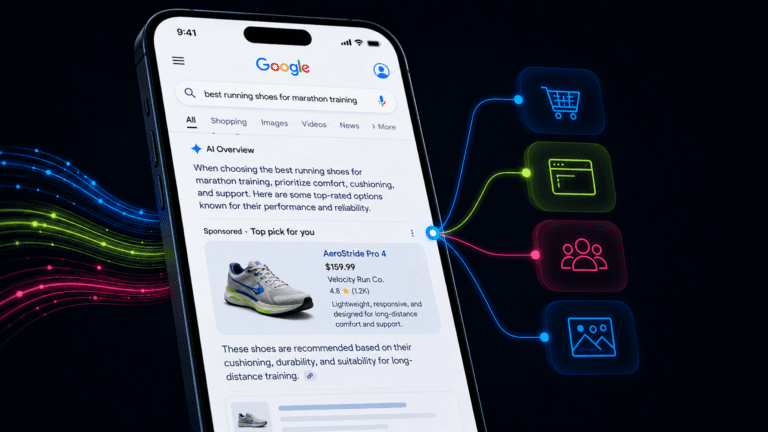
Google’s AI Overviews changed the shape of search visibility the moment they launched in the United States in May 2024, then expanded to more than 100 countries in October 2024. In parallel, outside analysis based on Similarweb data showed how quickly no-click behavior has intensified: the share of news searches ending without a click rose from 56% in May 2024 to nearly 69% in May 2025. That is the backdrop agencies are now reporting into, whether clients realize it or not.
The implication is simple: a traffic chart can flatten even while visibility rises. If a brand is being surfaced in AI-generated answers, or if users are getting what they need without visiting a site, traditional organic sessions may understate the real reach of search. That is why reporting built for 2019 starts to misread 2026 search behavior almost immediately.
Keep Search Console, but stop treating it as the whole truth
Google Search Console still matters, and it remains the first place many teams look for search performance. Its Performance report tracks clicks, impressions, CTR, and average position, and Google’s help pages say it is designed to show how traffic changes over time and which queries bring traffic to a site. Those are useful foundations, but they are no longer enough on their own.
The problem is that Search Console does not provide a dedicated filter for AI Overviews. That leaves agencies with a measurement gap right at the point where search visibility is increasingly happening in answer surfaces, not just blue links. When impressions rise and clicks lag, the native report cannot tell you whether the brand is winning in AI-generated answers, losing attention to a summary panel, or simply being seen in a new part of the journey.
The KPI stack agencies need now
The new scorecard has to capture the full path from visibility to value. That means adding metrics that show whether AI exposure and search activity are producing actual business impact, not just traffic volume. The most important additions are straightforward:
- AI mentions, or how often the brand appears in AI-generated answers and answer-engine surfaces.
- User interactions, including what people do once they arrive and whether they meaningfully engage.
- Conversions, with a sharper focus on the leads, signups, sales, or inquiries that search creates.
- Assisted conversions and assisted revenue, so SEO gets credit when it supports a later sale instead of the last click.
- Brand lift, which helps show whether search visibility is building demand even when the visit does not happen immediately.
- Engagement quality, which goes beyond raw time on site and asks whether the session signals real intent.
Those metrics matter because they reflect the business question clients are actually asking: did search influence growth, pipeline, or revenue? A report that can answer that question will always be easier to defend than one that only celebrates higher rankings.
How to make the new reporting usable
The point is not to abandon classic SEO metrics. It is to connect them to the rest of the funnel so the story does not stop at visibility. Search Console can still anchor query-level reporting, but it needs to be paired with downstream performance data that shows whether traffic is valuable, whether conversions are improving, and whether AI mentions are expanding the brand’s footprint across answer engines.
A practical scorecard does a few things well. It separates visibility from traffic, traffic from engagement, and engagement from revenue. It also lets you compare branded and non-branded demand, because AI exposure often builds familiarity first and conversion later. When the site sees fewer clicks but stronger assisted conversions or better lead quality, the report should make that progression obvious instead of burying it.
That is especially important for agencies managing multiple stakeholders. A CMO may care about revenue impact, a demand gen lead may care about lead quality, and an SEO manager may still need query-level detail. A modern scorecard gives each of them something useful without forcing SEO to pretend it is only a traffic channel.
Why this protects retainers
Search Engine Land’s reporting guide frames reporting as the bridge between SEO execution, website performance, and stakeholder understanding, and says good reporting helps secure future budgets and demonstrate impact on revenue. That is the core agency opportunity in the AI era. If clients see traffic flatten but the business impact keeps growing, the report has to prove it, or the budget conversation gets harder fast.
The agencies most likely to protect retainers are the ones that can show more than sessions. They will show how often the brand appears in AI answers, how those appearances affect engagement and conversions, and how search contributes to revenue even when the click is no longer the center of gravity. That is not just a reporting upgrade. It is the difference between SEO being treated as a dashboard and SEO being treated as a growth channel.
This article was produced by Prism’s automated news system from verified source data, official records, and press releases, then run through automated quality and moderation checks before publishing. The system is built and supervised by the people who set the standards it runs under. Read our full AI policy.
Know something we missed? Have a correction or additional information?
Submit a Tip