TikTok search grows, SEO agencies must adapt to discovery-first journeys
TikTok now sits inside the search funnel, and agencies that only optimize for Google are missing where discovery starts, gets verified, and turns into action.
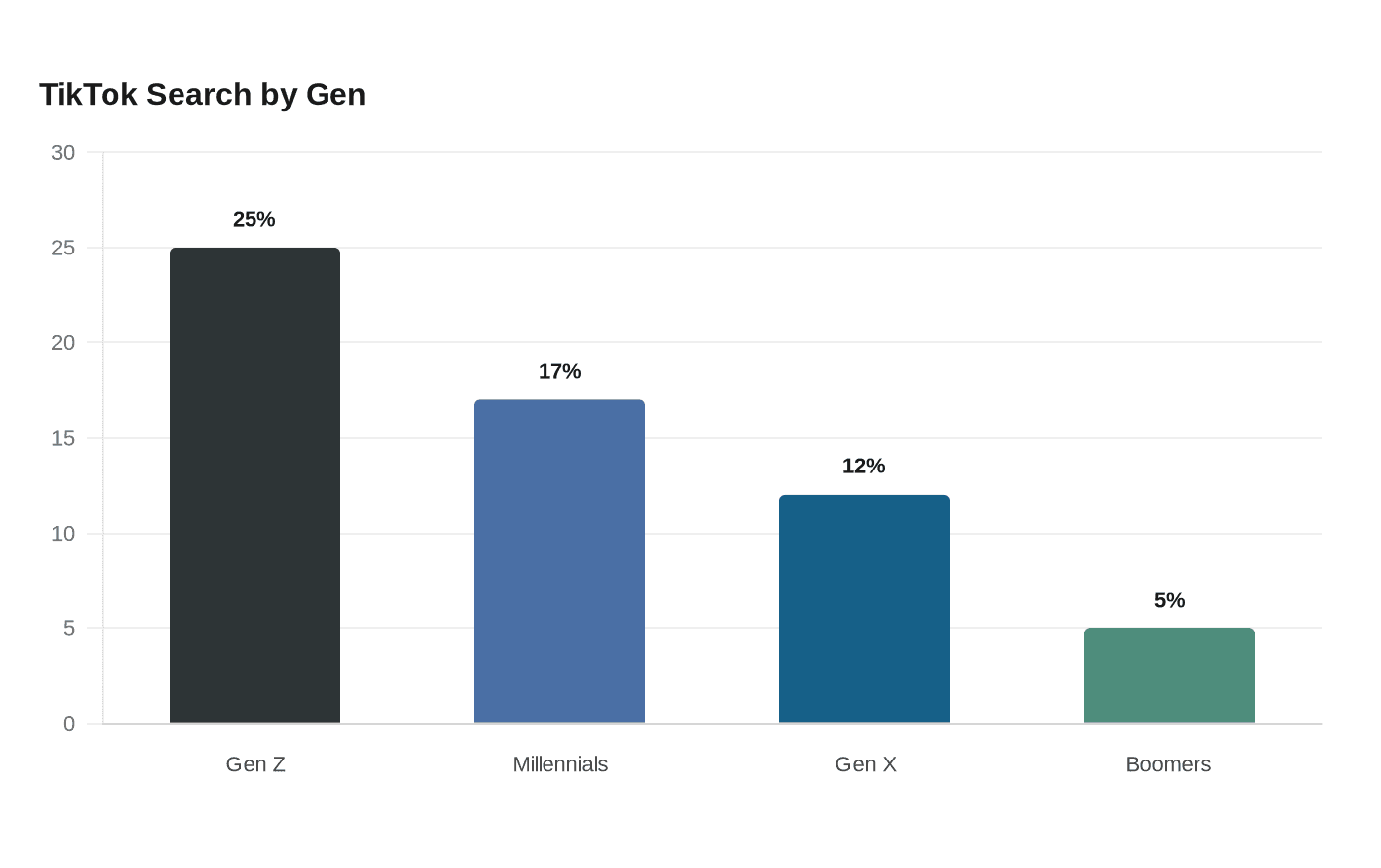
Adobe’s 2026 survey found that 49% of U.S. consumers used TikTok as a search engine, up from 41% in 2024. People notice a restaurant, a product, or a service there, then carry that discovery into Google, Reddit, or a booking page before they decide what to do next.
TikTok has become a discovery layer, not a side channel
The platform is now influencing the earliest part of the buyer journey, not just the last click. In Adobe’s survey, 25% of Gen Z respondents found it useful for information-finding, compared with 17% of millennials, 12% of Gen X, and 5% of baby boomers.
Visibility now has more than one front door. A user may start with a TikTok video, validate the brand through comments or outside opinions, compare options on another platform, then convert on a site or reservation flow.
What TikTok SEO now actually includes
Old TikTok optimization was mostly about hashtags and a loose sense of virality. That is too shallow for the platform TikTok is building now. Search relevance on TikTok is broader: query alignment, spoken topic clarity, on-screen text, captions, location cues, search suggestions, reviews, comments, product signals, and the actions people take after viewing all feed into discoverability.
That wider stack is why agencies can sell TikTok inside an SEO retainer instead of treating it as a separate social experiment. A strong TikTok search presence depends on the same discipline that powers organic search elsewhere: intent mapping, clear language, useful metadata, and content designed to answer a real query. The difference is that the query is often expressed through video, not a text field.
TikTok has been laying the groundwork for that model through Creator Search Insights, a tool that surfaces topics people are searching for often. For an agency, that is a source of keyword-like demand signals that can shape content briefs, local landing-page themes, and creator partnerships around the terms people are already trying to solve.
Local discovery is now built into the platform
TikTok’s U.S. Local Feed makes the discovery case even stronger for agencies serving local businesses. The new tab on the home screen is designed to help people stay connected to their community and discover what is going on nearby, with nearby travel, events, restaurants, shopping, small-business, and local-creator content. Posts in the feed are shown based on location, topic, and posting time.
Location intent is one of the easiest ways to tie TikTok into an SEO growth plan. A local restaurant, med spa, home service brand, or retail chain can use TikTok content to capture neighborhood discovery, then reinforce that interest with location pages, Google Business Profile work, and conversion-ready landing pages.
TikTok positions its discovery ecosystem as connecting merchants across video, search, and location pages.
AI tools make search-friendly video production less expensive
TikTok has also made it easier to publish the kind of content searchers actually want. In 2025, it announced AI-powered editing tools that can automatically clip, reframe, caption, and transcribe longer videos into shorter TikTok-ready pieces. That lowers the production cost for brands that need to turn one expert recording, product demo, or location walkthrough into multiple search-friendly assets.
Agencies no longer need to build a TikTok program around one-off trend chasing. They can build repeatable production around topic clusters, then use AI-assisted editing to spin each subject into a set of clips with clear spoken intent, on-screen text, captions, and strong local or product cues.
At TikTok World ’26, the company emphasized AI-powered innovations, vertical experiences, and high-impact brand solutions designed to turn discovery into business growth.
TikTok Shop turns discovery into commerce
TikTok Shop fits the same pattern. Shoppers do not come only to buy; they come to explore and discover. They encounter a product through creator-style content, then keep moving through search, comments, and related clips before they decide.
For ecommerce agencies, the opportunity is to stop separating content discovery from assisted conversion. A product video that answers a real query, shows use cases clearly, and makes the item easy to find again can support both discovery and sales. TikTok Shop gives that journey a native commerce layer, while SEO work outside the app can reinforce category pages, product education, and branded search demand.
Google is changing too, which makes the case stronger
Google is also upgrading Search in 2026 to be more AI-driven and conversational. The whole search market is shifting toward answer surfaces, not just keyword pages.
For agencies, the smartest response is not to pick a winner. It is to build a visibility strategy that follows the user across the places where intent gets formed, checked, and converted. TikTok now belongs in that mix, especially for local, ecommerce, and consumer brands that need more than Google alone can deliver.
This article was produced by Prism’s automated news system from verified source data, official records, and press releases, then run through automated quality and moderation checks before publishing. The system is built and supervised by the people who set the standards it runs under. Read our full AI policy.
Did this article answer your question?