Where agencies should list themselves for SEO and lead generation
The best agency directories are not vanity badges, they are buyer-research channels that can generate qualified leads when intent and trust line up.
Why directory placement still matters
The smartest directory strategy is not about showing up everywhere. It is about showing up where buyers are already comparing providers, where the profile can signal credibility, and where the listing can support both search visibility and lead flow.
That matters even more now that discovery has spread beyond classic search results. People are using review platforms, social apps, and AI tools to check whether an agency looks credible before they ever fill out a form or book a call.
Treat directories as a distribution channel
A good directory does three jobs at once. It supports organic visibility, gives prospects a place to compare agencies side by side, and sends referral traffic from people who are actively researching vendors. For SEO firms and digital marketing agencies, that can become a lightweight inbound engine when paid acquisition is expensive or outbound slows down.
The key shift is mindset. Directory placement should be evaluated like a media buy or a channel test, not a checkbox exercise. If a platform does not attract commercial intent, fit your niche, or produce measurable conversions, it is probably a vanity listing.
Follow buyer intent, not directory volume
The cleanest way to separate useful platforms from empty brand mentions is to start with intent. Look for directories where buyers can filter by budget, industry, location, service line, or other procurement signals, because those features show that the visitor is closer to buying.
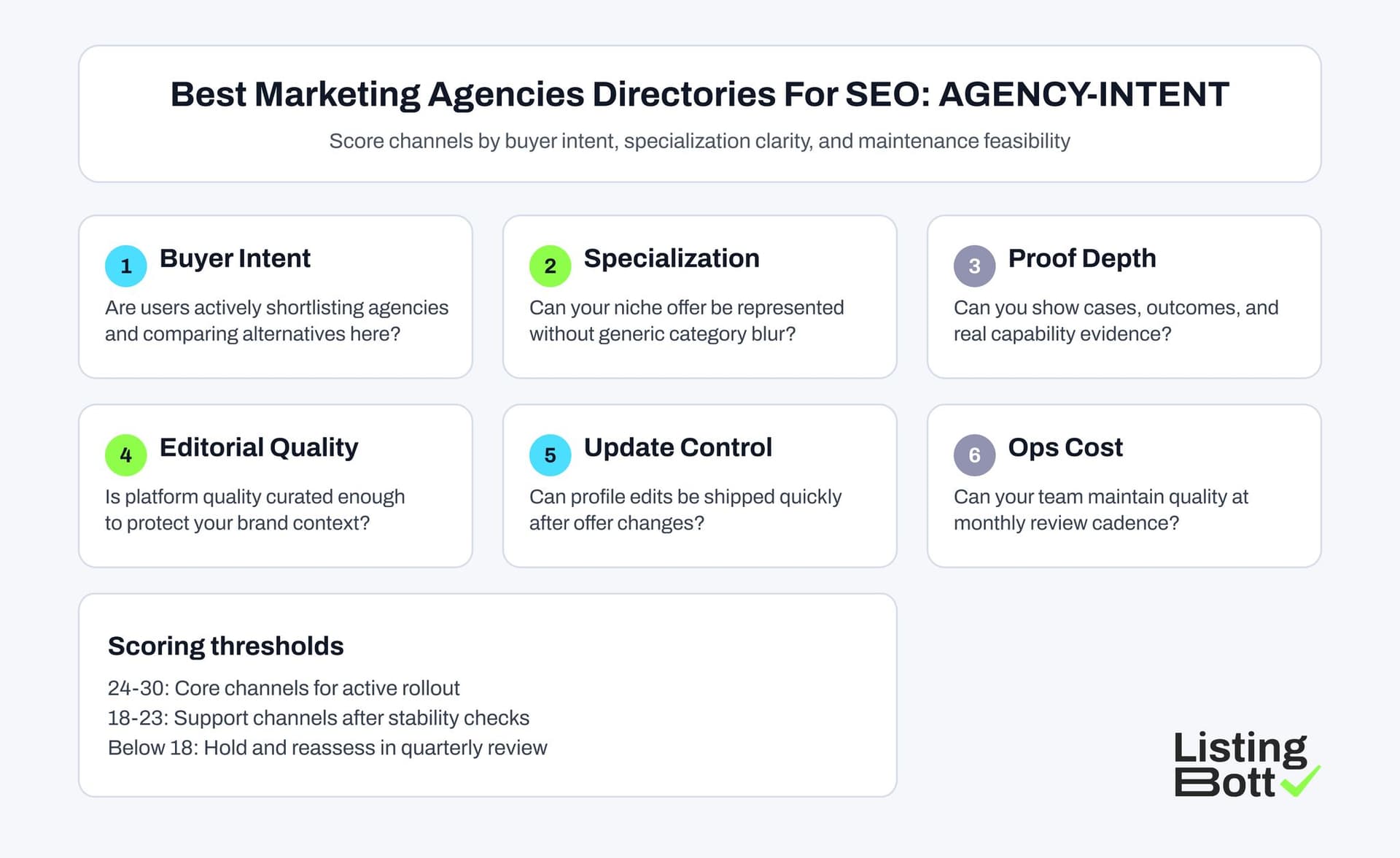
A practical scoring model should include four things:
- Buyer intent: Are people using the directory to shortlist vendors, or just browse?
- Niche relevance: Does the platform surface SEO, digital marketing, and adjacent B2B services in a meaningful way?
- Profile depth: Can you add service descriptions, team details, case studies, locations, reviews, and proof points?
- Conversion potential: Can you measure clicks, inquiries, calls, or booked meetings from the listing?
That framework keeps you focused on platforms that can contribute to pipeline. It also forces you to think about the listing as a landing page, not a citation stub.
Why review behavior now shapes directory strategy
BrightLocal’s Local Consumer Review Survey has tracked consumer behavior since 2010, and the 2025 edition shows how much the research journey has widened. People are still reading reviews carefully, but they are becoming more lenient about raw review counts and recency, and they are looking more for facts and objectivity than polished praise.
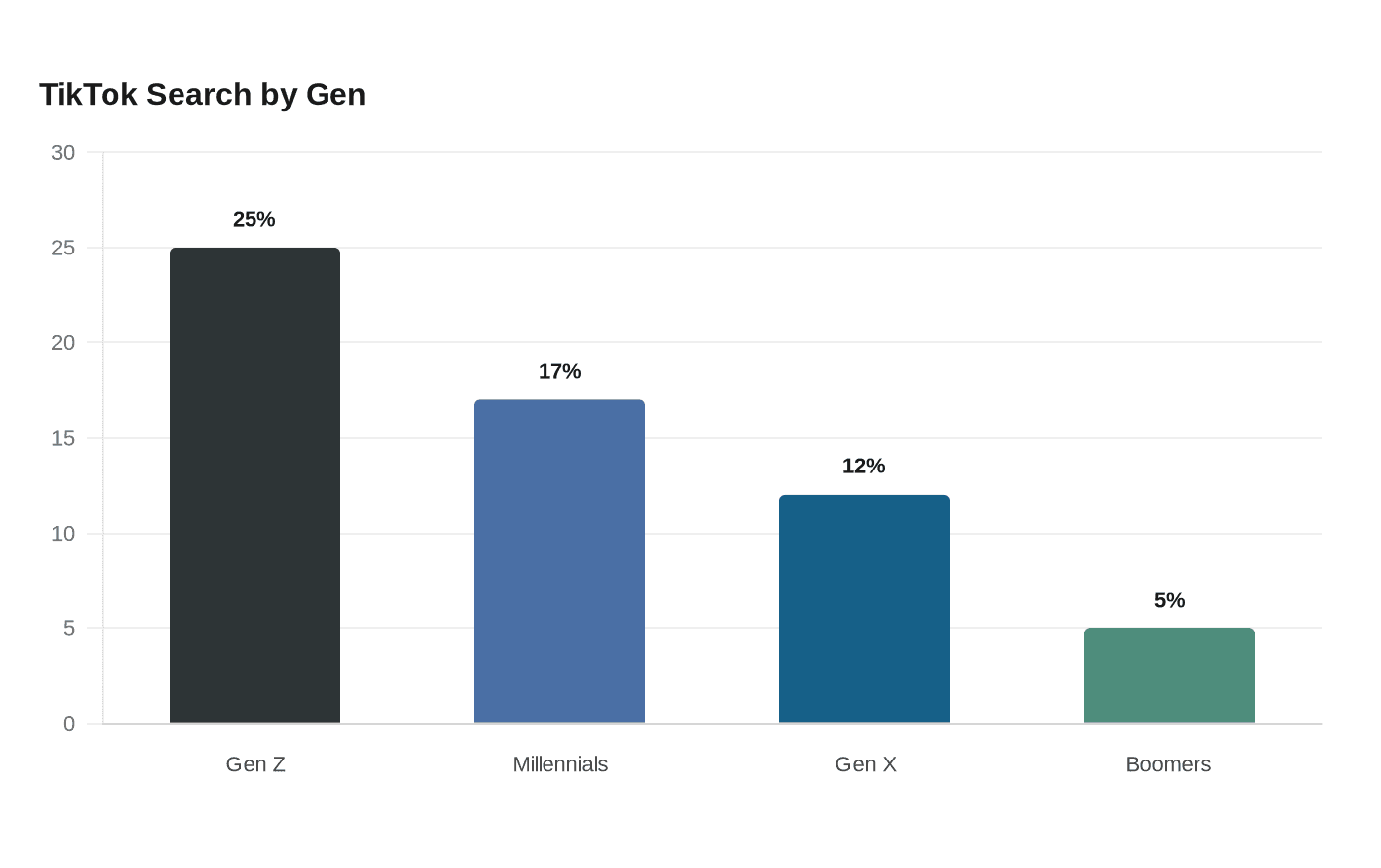
The same research also points to a major shift in where people look. Consumers are increasingly using Instagram, TikTok, and AI tools like ChatGPT to search for local business reviews, which means your reputation can no longer live in one place. For agencies, that makes directory and review-platform choice part of a broader discovery system, not just a reputation task.
Choose platforms that buyers already trust
Clutch is one of the clearest examples of a directory that behaves more like a buyer-research marketplace. It says it covers more than 2,000 specialized service lines, lets users filter by budget, industry, and location, and is used by 1 million leaders each month. It also positions itself as a place where businesses can get in front of millions of active B2B buyers and rely on verified client reviews during shortlisting.
That matters for SEO agencies because B2B services are usually sold on trust, not commodity pricing. A profile on a platform like Clutch can do more than earn a mention; it can help buyers validate expertise, compare fit, and move from awareness to vendor selection faster.
Make the profile do real work
A directory profile should read like a sales asset. It should quickly answer what you do, who you serve, where you work, and why a buyer should care. The strongest listings mirror the questions a prospect asks during the first vetting call: Can this agency solve my problem, does it understand my industry, and is there enough proof to justify a conversation?
- Clear service categories, especially where the directory supports specialized lines
- Location signals, including office cities and service areas when relevant
- Verified reviews with details that show process, communication, and outcomes
- Case studies or portfolio examples that show matching work
- A tight description that aligns with the language buyers use when searching
A useful profile usually includes:
That last point matters because profile copy can reinforce entity signals across the web. When the agency site, directory profiles, and review platforms all describe the business consistently, the market has an easier time understanding who you are and what you do.
Back the directory with structured data
Google Search Central says Local Business structured data can help pages appear in unique search features, including knowledge panels and business carousels. Google also says structured data helps it understand page content and can lead to richer search features that encourage interaction.
That means directory strategy works best when it is paired with accurate markup on your own site. If your agency has one office or multiple locations, make sure the structured data, local pages, and directory profiles all tell the same story. Google’s documentation points to strong rich-result case studies as proof of impact, including a 25% higher click-through rate for Rotten Tomatoes pages and an 82% higher click-through rate for Nestlé rich-result pages.
Build the rollout like a channel test
A directory rollout should be staged, not random. Start with the platforms that match your buyer profile, then optimize the listings before you add more. The goal is to get measurable signals from each platform so you can decide whether it deserves more time, stronger content, or a paid tier.
A practical rollout looks like this: 1. Audit your current listings and remove duplicates, stale descriptions, or inconsistent company details. 2. Prioritize the directories where buyers can actually filter and compare firms in your category. 3. Optimize the profile with reviews, service details, proof points, and a strong location story. 4. Track referral traffic, lead quality, and assisted conversions so you know which listings support pipeline.
The larger discovery environment now rewards authority, trust, AI assistants, and entity verification more than simple keyword placement alone. In that world, the agencies that win are the ones that choose directories with care, treat profiles as conversion assets, and use every credible surface to reinforce the same market signal: this is a firm worth contacting.
This article was produced by Prism’s automated news system from verified source data, official records, and press releases, then run through automated quality and moderation checks before publishing. The system is built and supervised by the people who set the standards it runs under. Read our full AI policy.
Did this article answer your question?