White-Label AI Tools Help Digital Agencies Build Recurring Revenue Streams
Agencies reselling white-label AI tools at $5/month wholesale can stack recurring margins fast without building engineering teams or paying platform fees upfront.
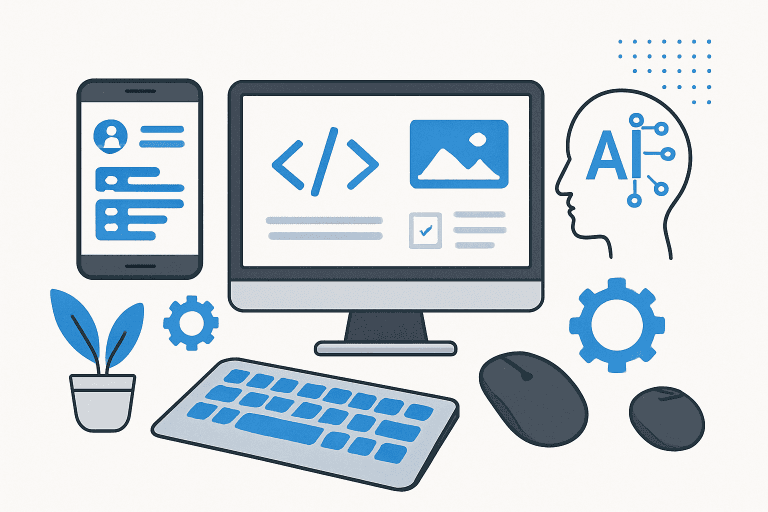
The math behind white-label AI reselling is straightforward enough to sketch on a napkin, but the operational details are where most agency owners get stuck. ResellPortal's AI Business Suite model cuts through that ambiguity with a concrete framework: buy AI tools at wholesale, brand them as your own, bundle them into recurring packages, and build a SaaS-style revenue line without writing a single line of proprietary code.
The strategic case is timely. As generative AI tools continue to proliferate in 2026, digital agencies face a fork in the road: invest heavily in building bespoke AI capabilities, which is expensive and slow, or move quickly by reselling vetted white-label products and capturing recurring margins now. For most independent agencies and boutique shops without dedicated engineering teams, the build path is a capital trap. The resell path, structured correctly, is a low-capex route to product diversification and predictable monthly income.
Understanding the Product Catalog and Wholesale Economics
The ResellPortal model illustrates the margin opportunity with specific numbers. The platform's AI Business Suite includes four core tools: an AI Chatbot, an AI Blog Writer, an AI Social Manager, and an AI SEO Optimizer. Each tool carries a wholesale rate of $5 per month. That baseline cost gives resellers a clean canvas to layer markup, construct tiered packages, and set retail prices that reflect the value delivered to end clients rather than the cost of the underlying technology.
The commercial structure removes a major barrier for agencies cautious about overhead: there are no monthly platform fees. Resellers pay only when they sell, which reduces cash burn during the ramp-up phase and lowers the financial risk of testing new market segments. For agencies evaluating white-label AI for the first time, that zero-fixed-cost entry point eliminates the need to hit a break-even client threshold before the model starts working.
Operational Capabilities That Make White-Labeling Work
Reselling AI tools only creates real brand equity if clients never see the underlying supplier. ResellPortal addresses this with a set of operational features designed specifically for white-label delivery: auto-provisioning, custom branding controls including domain and logo configuration, multi-language support, and full storefront management. These capabilities matter because they determine whether an agency looks like a product company or a reseller. Auto-provisioning in particular is critical for scaling; manually onboarding each new client onto a third-party platform kills the margin efficiency that makes the model attractive in the first place.
Multi-language support extends the addressable market for agencies that serve international clients or operate in non-English markets, removing a friction point that would otherwise require custom development.
Three Strategies for Maximizing ARPA and Retention
Getting clients onto a recurring plan is the first win; keeping them and growing the account is the actual business. The ResellPortal guide outlines three practical strategies for optimizing average revenue per account and reducing churn:
1. Niche bundles: Rather than selling generic AI access, package tools around a specific vertical use case.
An e-commerce agency, for example, could combine the AI SEO Optimizer with a product description writer into a bundle priced and positioned specifically for online retailers. Vertical specificity increases perceived value and makes it harder for clients to comparison-shop on price alone.
2. Outcome-based pricing: Where possible, tie the monthly fee to a business result, such as leads generated or conversions attributed to AI-assisted content.
This repositions the agency from a software vendor to a performance partner, which commands higher prices and creates stickier relationships.

3. Incremental onboarding: Start clients on an entry-level bundle at around $49 per month, then upsell premium features once they have experienced tangible results.
The low entry price reduces sales friction during the initial close, while the structured upsell path protects long-term account value. Clients who see ROI at $49/month are far easier to move to $99 or $149/month than cold prospects.
Speed to Revenue Versus the Build Alternative
One of the clearest advantages of the white-label resell model is the compressed timeline from decision to first billing cycle. An agency can launch an AI storefront, configure custom branding, and begin recurring billing in a fraction of the time it would take to scope, develop, and QA a proprietary AI product. For agency owners who have watched competitors roll out AI-adjacent services while their own roadmaps stayed static, that speed advantage is not trivial.
The broader 2026 market context reinforces the urgency. Agencies across the industry are actively seeking SaaS-like recurring margins without the engineering headcount that traditionally supports them. White-label AI reselling fills that gap by transforming a software procurement decision into a revenue line.
Where Margins and Positioning Can Erode
The model is not risk-free, and understanding where value can leak is essential for running it profitably. With $5/month wholesale costs, the raw margin looks generous, but resellers must factor in support time, account management, and platform overhead when setting retail prices. Margins that look healthy on paper can compress quickly if client support demands are underestimated, particularly for AI tools that require onboarding guidance or prompt configuration.
The deeper strategic risk is commoditization. Any agency can access the same wholesale catalog, which means the tools themselves cannot be the differentiator. Agencies that succeed long-term in this model will do so by wrapping the tools in vertical expertise, bundled implementation services, or fully managed AI workflows that clients cannot easily replicate by going direct. The white-label infrastructure is the foundation; the agency's domain knowledge and service layer is what makes the offer defensible.
Building a Durable Recurring Revenue Line
The white-label AI resell model works best when treated as a product strategy rather than a side hustle. That means investing in a coherent pricing architecture, building niche bundles with real vertical credibility, and using the zero-fixed-cost entry point to test offers quickly before doubling down on what converts. Agencies that approach it with that discipline will find a genuinely scalable path to recurring revenue; those that treat it as a passive add-on will likely see thin margins and high churn.
The broader shift underway in 2026 favors agencies willing to act as product companies without necessarily being software companies. White-label AI tooling makes that possible at a cost structure that was not available even two years ago.
This article was produced by Prism’s automated news system from verified source data, official records, and press releases, then run through automated quality and moderation checks before publishing. The system is built and supervised by the people who set the standards it runs under. Read our full AI policy.
Did this article answer your question?