Why SEO agencies grow faster by choosing a profitable niche
The fastest-growing SEO agencies usually narrow to one high-LTV vertical. WEBRIS's personal injury focus shows how niche economics can shorten sales cycles and support premium retainers.
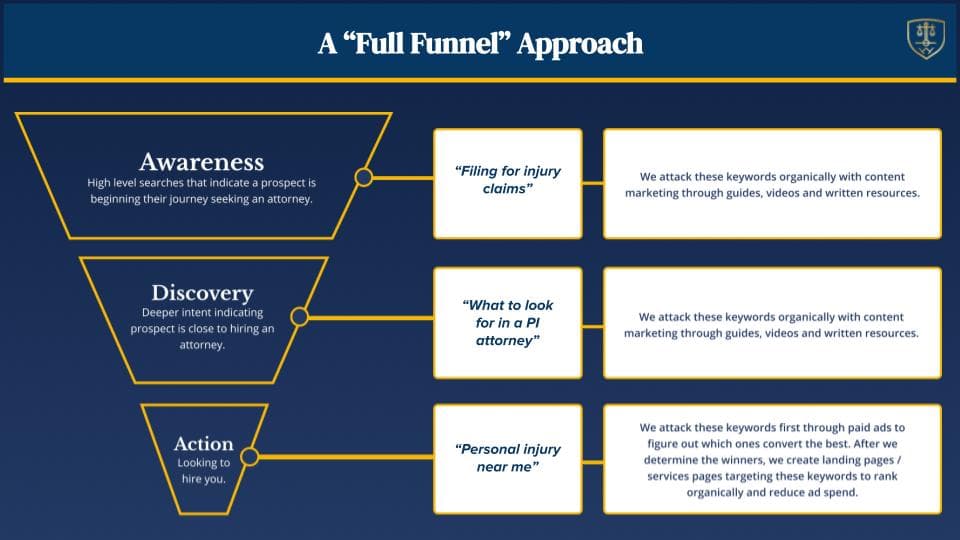
WEBRIS chose personal injury law firms as its niche, making its marketing more targeted and shortening the sales cycle. Agencies that scale fastest usually stop selling generic SEO and start selling a narrow business outcome inside one vertical, where the retainer becomes easier to defend when the niche has real economics behind it.
Niche choice is a unit economics decision
Ryan Stewart, founder of The Blueprint Training, has worked with over 1,000 agency owners. He says the agencies that struggle most are the ones trying to be "everything to everyone." That is usually where price pressure starts, because broad SEO offers sound interchangeable and buyers compare them like commodities. In contrast, a focused agency can speak the language of a client’s economics, regulations, competitive landscape, and buyer journey, which is where premium pricing becomes possible.
The Blueprint Training says it has trained 3,000+ agencies over 9 years, and its membership is priced at $199 per month with 300+ video lessons and growing.
Why personal injury is the clearest test case
Personal injury law firms are a strong example because the category combines high client value, high competition, and a clear incentive to invest in ranking visibility. The logic is straightforward: if one client can justify meaningful acquisition spend, the agency has room to sell a more serious retainer.
WEBRIS has built a visible stack around that niche. It runs dedicated pages for Personal Injury SEO Services, Personal Injury Marketing, Local SEO Services for Law Firms, GEO for Lawyers, and attorney SEO. The company also says local SEO has become one of its most profitable service lines, and that it works with over 100 local law firms.
How to judge whether a niche can support premium retainers
The practical test is not whether a vertical sounds exciting. It is whether the economics support recurring spend and repeatable delivery.
- Client lifetime value: if one signed client can generate enough revenue to justify sustained acquisition costs, the niche can usually support more ambitious SEO investment. Personal injury is a useful benchmark because the upside of a single case can be substantial, which raises the value of being visible in search.
- Competitive intensity: if the vertical is crowded, paid media is expensive, and organic ranking is contested, visibility becomes a revenue lever instead of a branding exercise. That is where local SEO, Maps Pack work, and search content become easier to sell.
- Sales cycle length: a niche with a faster decision cycle is easier to scale because agencies get to cash sooner and can test offers more quickly.
- Case-study repeatability: if the same audit, content map, and reporting structure can be reused across similar clients, the agency can standardize delivery. That is the difference between custom work and a productized offer.
The strongest niches usually clear all four tests at once. If they do not, the agency ends up discounting to win business or rebuilding the delivery model for every account.
What productized niche SEO looks like in practice
Specialization shows up in the offer stack, not just the homepage copy. WEBRIS does not only market SEO in the abstract; it packages the work around legal-client needs, from personal injury marketing to local SEO for law firms and GEO, which it frames as getting recommended by ChatGPT, Claude, and AI search.
On its page 6 ChatGPT Ranking Factors For Lawyers, the company says ChatGPT and other AI search engines have taken a massive bite out of Google, and that impressions and clicks are down across client accounts because of AI search behavior, not because rankings dropped. For lawyers and other verticals, that is the kind of shift a niche agency has to explain in plain English, because the reporting conversation has changed along with the traffic mix.
The scale signals matter as much as the niche
The Blueprint Training says it has trained 3,000+ agencies over 9 years, and WEBRIS says it works with over 100 local law firms. An agency that manages 100+ active SEO clients, or works with over 100 local law firms, has a process repeatable enough to hold together at volume.
This article was produced by Prism’s automated news system from verified source data, official records, and press releases, then run through automated quality and moderation checks before publishing. The system is built and supervised by the people who set the standards it runs under. Read our full AI policy.
Did this article answer your question?