Agentic SEO lets AI agents handle repetitive optimization work
AI agents can now shoulder the repetitive SEO work, but the real advantage comes when teams pair them with human judgment and AI search visibility checks.
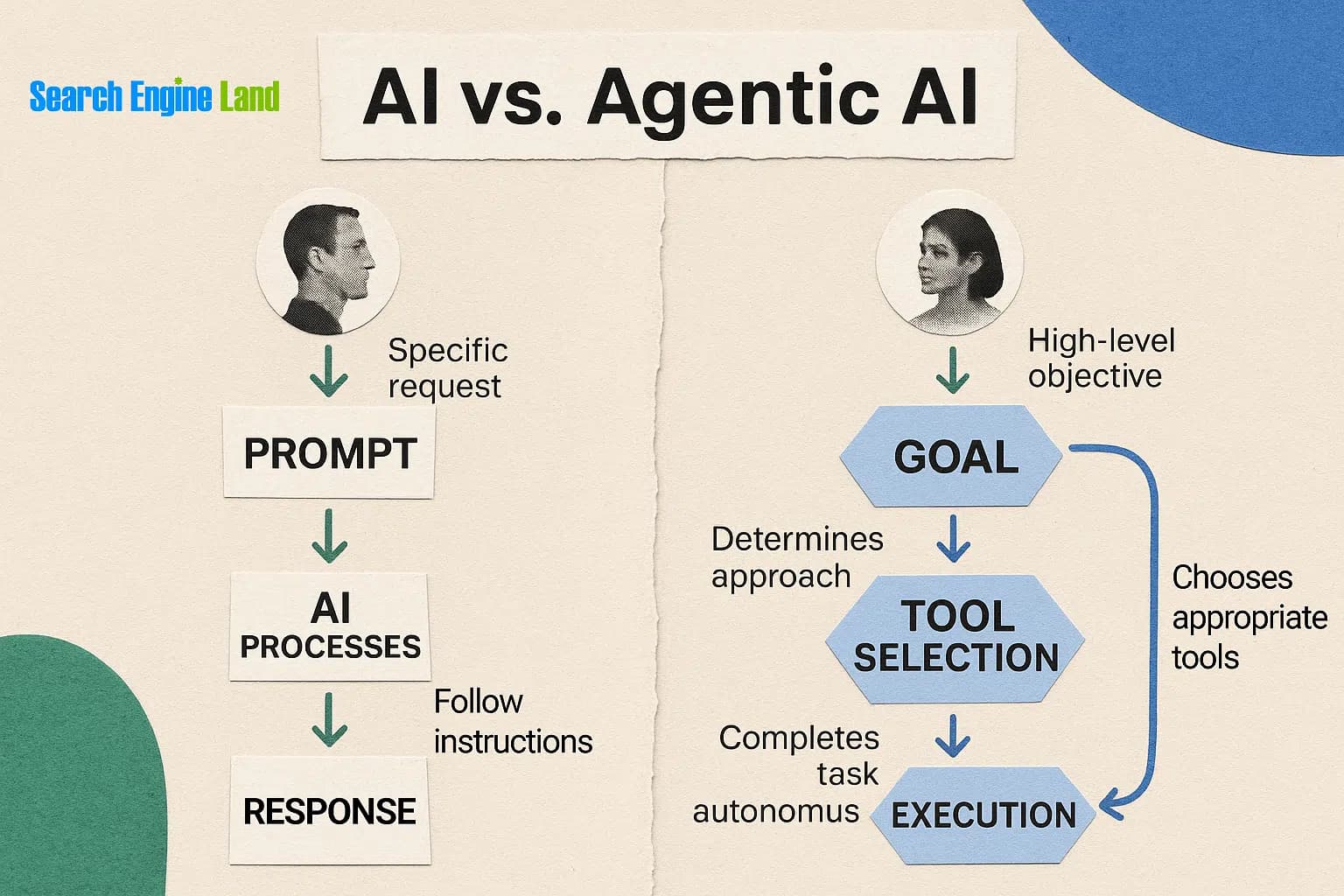
What agentic SEO changes
Agentic SEO takes the busywork out of search optimization without handing over the steering wheel. Instead of asking a tool to generate a single answer, you define the outcome, supply context, and let an AI agent plan the steps, run the checks, chase down dead ends, and come back with recommendations or drafts. The point is not full autonomy. The point is speed, consistency, and the ability to work across far more signals than a person can manually inspect in one sitting.
That distinction matters because the strongest version of this workflow is practical, not flashy. A marketer still sets the goal, decides which pages or markets matter, and reviews the output before anything ships. What changes is the shape of the work: SEO becomes less about one-off audits and more about repeatable operations that an agent can run again and again.
Where agents already earn their keep
The most reliable use cases are the repetitive tasks that already eat time in SEO teams. An agent can identify pages losing traffic year over year, compare those pages against prior performance, and draft a plausible diagnosis from the signals it finds. It can also assemble fix lists, summarize patterns, and generate a first pass at updated copy or metadata that a human can then refine.
The other especially useful task is competitive gap hunting. Agentic workflows can search for AI prompts and query patterns where competitors appear but your brand does not, then organize those misses into a usable action list. That matters because the new search environment is not just about ranking a page once, but about showing up in the right AI-generated answers, summaries, and conversational results over and over.
A practical division of labor looks like this:
- Detect traffic declines across a set of pages or templates.
- Diagnose likely causes, such as content decay, intent drift, or crawlability problems.
- Draft fixes for titles, copy, internal links, and structured data.
- Compare brand visibility against competitors in AI search surfaces.
- Surface prompt and query gaps that human auditors would likely miss.
- Turn findings into prioritized tickets or briefs for editorial and product teams.
Why the timing is changing the job
Google’s own search product is shifting in ways that make this kind of workflow more important. AI Overviews began rolling out to everyone in the United States on May 14, 2024, after people had already used them billions of times in Search Labs. By May 20, 2025, Google said AI Overviews were available in more than 200 countries and territories and more than 40 languages, and it said AI Overviews were driving over a 10% increase in usage of Google for the types of queries that show them in major markets like the U.S. and India.
Google has also introduced AI Mode, a more advanced conversational search experience rolling out in the U.S. It uses query fan-out, which means it breaks a question into subtopics and issues multiple queries simultaneously on the user’s behalf. That is a key signal for SEO teams: the search engine itself is becoming more agentic, so the work around visibility has to become more systematic too.
At the same time, Google Search Central is still emphasizing continuity with classic SEO. Its guidance says there are no special optimizations required for AI Overviews or AI Mode beyond foundational best practices: unique, valuable content, a strong page experience, crawlability, and structured data that matches what users can actually see. The message is clear enough: the fundamentals still matter, but the operational tempo around them has gone up.
The pressure on teams is already real
Bain & Company put hard numbers behind the shift in February 2025. It reported that about 80% of consumers rely on AI-written results for at least 40% of their searches, and that about 60% of searches now end without the user clicking through to another website. Bain estimated that AI search and generative summaries could reduce organic web traffic by 15% to 25%.
That kind of outlook is pushing SEO from a traffic-management function toward a visibility-management function. Search Engine Land reported in October 2025 that 87.8% of businesses were worried about online findability in the AI era, 85.7% were already investing or planning to invest in AI and LLM optimization, and 61.2% planned to increase SEO budgets. Semrush added to that shift on September 8, 2025, when it launched its AI Visibility Index as a benchmark for brand performance across AI-powered search platforms.
The industry has reached a point where AI visibility is no longer an experiment tucked into a corner of the marketing stack. It is becoming a measurable category, and the teams that can monitor it quickly will have an advantage over the teams still treating it like a static monthly audit.
A first-use workflow to start with
The easiest way to bring agentic SEO into a real team workflow is to begin with one narrow, high-value use case. Pick a set of pages that matter commercially, then ask the agent to work from a defined brief, a context file, and a simple success metric tied to visibility, not vanity.
1. Choose a small cluster of pages with declining traffic or weak AI visibility.
2. Give the agent the page list, brand rules, target audience, and any content constraints.
3. Have it inspect the pages for possible causes, such as outdated information, weak internal linking, missing structured data, or mismatched search intent.
4. Ask it to compare your brand presence with competitors in AI-style queries and prompt patterns.
5. Review the draft recommendations, then turn the best ones into human-approved changes and tickets.
6. Recheck the same pages after updates to see whether visibility, citation presence, or clicks improved.
That workflow keeps the agent in a productive lane. It handles the repetitive scanning, organizing, and drafting, while people keep control of strategy, tone, legal risk, and final prioritization. It also creates a repeatable loop, which is where the real efficiency gain shows up.
Where human review still matters most
Agentic SEO works best when humans supply judgment that the machine cannot infer safely. Strategy still belongs to people, especially when a decision affects brand positioning, content investment, or product messaging. Human review is also essential when the content touches claims that need proof, regulated topics, or anything where a small wording change could create a false promise.
The same is true for the basics that Google still cares about. Unique content has to stay truly useful, structured data has to match visible content, and page experience still matters. An agent can flag a problem, but it cannot decide whether a fix serves the business or merely makes a report look cleaner.
The teams that win this transition will not be the ones chasing automation for its own sake. They will be the ones that build prompt libraries, context packs, and repeatable review workflows that let AI do the routine work while people focus on judgment, differentiation, and response speed. That is the real promise of agentic SEO: not a replacement for SEO teams, but a faster operating model for a search landscape that is already moving beyond static dashboards.
This article was produced by Prism’s automated news system from verified source data, official records, and press releases, then run through automated quality and moderation checks before publishing. The system is built and supervised by the people who set the standards it runs under. Read our full AI policy.
Did this article answer your question?