Ahrefs' Agent A automates SEO and marketing workflows autonomously
Agent A is less a chatbot than a workflow engine, and after 200+ hours of use, Ahrefs shows why AI search rewards teams that package work for machines as well as humans.
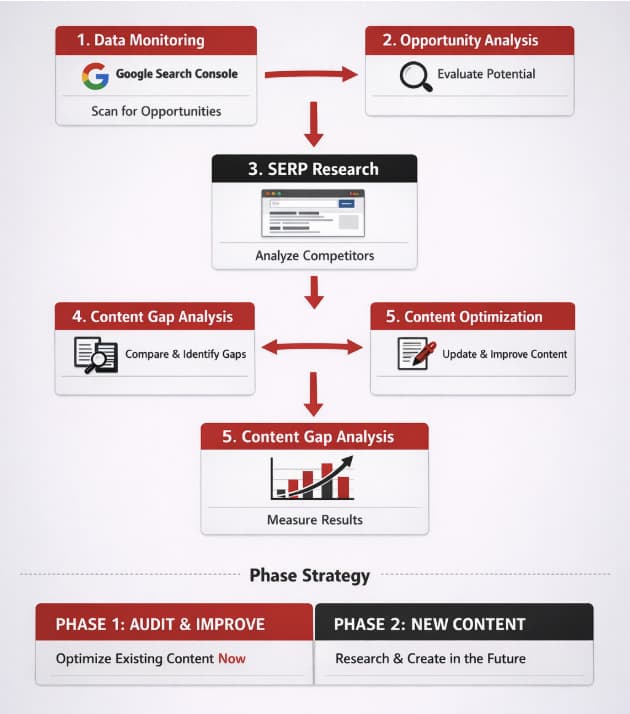
Ahrefs’ Agent A lands as something more unsettling than a clever writing aid. After more than 200 hours with it, the picture that emerges is not of an assistant that replaces marketers, but of one that takes over the repetitive work that used to eat analyst time, content-team time, and a surprising amount of attention.
That matters because the product is being framed around execution, not just generation. Agent A is built on Ahrefs’ 170T+ indexed pages, has unrestricted access to Ahrefs data, and is meant to connect directly to the tools marketing teams already live in. In practice, that makes it a workflow layer for SEO and marketing, not a chat window with a better prompt.
From content production to orchestration
The biggest shift here is structural. Agent A is described as capable of building small tools, automating SEO research, improving writing, organizing knowledge, running recurring checks, and wiring itself into the systems teams already use. That is a very different promise from “write me a blog post.” It moves the marketer’s job away from grinding through first drafts and manual audits, and toward deciding what needs to happen, checking whether it happened correctly, and turning the output into something usable.
That reordering is the story’s real payoff. If AI can handle repeatable tasks, then the person using it spends less time assembling raw material and more time on interpretation, strategy, and quality control. The result is not just faster content production. It is a new workflow in which the person is closer to an editor, operator, and systems designer than a lone producer.
What Agent A is built to do
Ahrefs positions the agent as a marketing worker with broad access and a very specific set of integrations. The native connectors include Slack, HubSpot, GitHub, Notion, Linear, Mailchimp, Resend, SendGrid, Stripe, Gong, WordPress, Airtable, Apify, and Semrush. That list matters because it shows the product is meant to move between communication, publishing, CRM, development, and reporting systems without forcing the user to stitch everything together by hand.
The article’s practical value comes from the fact that each section includes a prompt readers can try. That makes the piece feel like a working manual, not a product announcement. It also signals the kind of work Agent A is supposed to absorb.
- Building small tools to support marketing operations
- Automating SEO research and recurring checks
- Improving drafts and organizing campaign knowledge
- Connecting outputs to platforms like Slack, HubSpot, WordPress, and Mailchimp
- Moving work across planning, execution, and reporting systems
Ahrefs also says the team has built pre-made marketing skills into the product. Combined with its access to Ahrefs data, that suggests a system tuned for repeatable tasks rather than one-off brainstorming.
Why this matters for AI search visibility
The broader significance reaches beyond the assistant itself. Ahrefs is explicit that discovery is shifting toward AI surfaces such as ChatGPT, Perplexity, Gemini, Google AI Overviews, and Google AI Mode. If audiences are finding brands in those environments, then the work of search marketing changes from simply chasing rankings to making sure the brand is visible where answers are assembled.

That is where the workflow story becomes a visibility story. A team using Agent A to run recurring checks, summarize monitoring data, and build content assets faster can experiment more quickly than a team that still does everything manually. More importantly, it can produce content and supporting assets in a form that is easier to retrieve, review, and reuse across AI search surfaces. In other words, the promise is not only more content. It is more structured content operations that can feed a broader visibility strategy.
Ahrefs has been building that frame into Brand Radar, which the company says monitors brand visibility across search, AI, and the wider web. It has also expanded Brand Radar to include YouTube, TikTok, and Reddit tracking. That expansion matters because it acknowledges how often discovery now begins outside classic search results and spreads across multiple surfaces before a brand ever gets a click.
Brand Radar turns visibility into a measurement problem
The company’s own guidance makes clear that AI search is not deterministic. Ahrefs says custom prompt tracking in Brand Radar can run daily, weekly, or monthly, which is important because AI-generated answers can vary even when the prompt does not. That kind of variability changes the job of measurement. You are no longer just checking one stable ranking position. You are checking a living answer environment that can move from one run to the next.
Ahrefs also points to one AI brand visibility study in which YouTube mentions showed the strongest correlation with AI mentions, while warning that correlation does not prove causation. That caution is useful, because it keeps the conversation grounded. Visibility in AI systems is not a simple echo of search ranking logic, and it is not enough to publish more. Teams need to understand which assets, mentions, and channels are actually feeding the systems that surface answers.
This is why Brand Radar is being positioned as a search visibility tool for the AI era rather than just a reporting dashboard. Ahrefs’ own competitor-analysis and audit materials now treat AI visibility as a stakeholder issue, something that has to be translated into action plans for teams and executives, not just charts for specialists.
The 200-hour lesson for marketing teams
The sharpest insight from the 200-plus hours of use is that the person who gets the most from Agent A is not the person looking for a shortcut. It is the person who can define good work, structure it clearly, and judge whether the output is useful. That is the human bottleneck the product cannot remove.
Ahrefs launched Agent A publicly on Product Hunt on May 29, 2026, and its Spanish-language launch notice says the agent is designed to autonomously execute complete marketing workflows with access to 14 years of Ahrefs data. That claim fits the larger direction of the product line: a move from SEO software that reports on the web to an AI system that participates in the work itself.
For marketing teams, the lesson is practical and immediate. The advantage is not merely producing more. It is producing better-organized, more reusable work that can be monitored, connected, and surfaced across AI search environments. Agent A points to a future where the most valuable marketing teams are not the ones cranking out the most assets by hand, but the ones building the cleanest, most retrievable systems around them.
This article was produced by Prism’s automated news system from verified source data, official records, and press releases, then run through automated quality and moderation checks before publishing. The system is built and supervised by the people who set the standards it runs under. Read our full AI policy.
Did this article answer your question?