Ahrefs study shows Perplexity citation share shapes AI visibility
Perplexity visibility is a citation-share game: Ahrefs’ metric shows who captures answer-engine attention, and that pushes publishers to fight for repeated mentions.
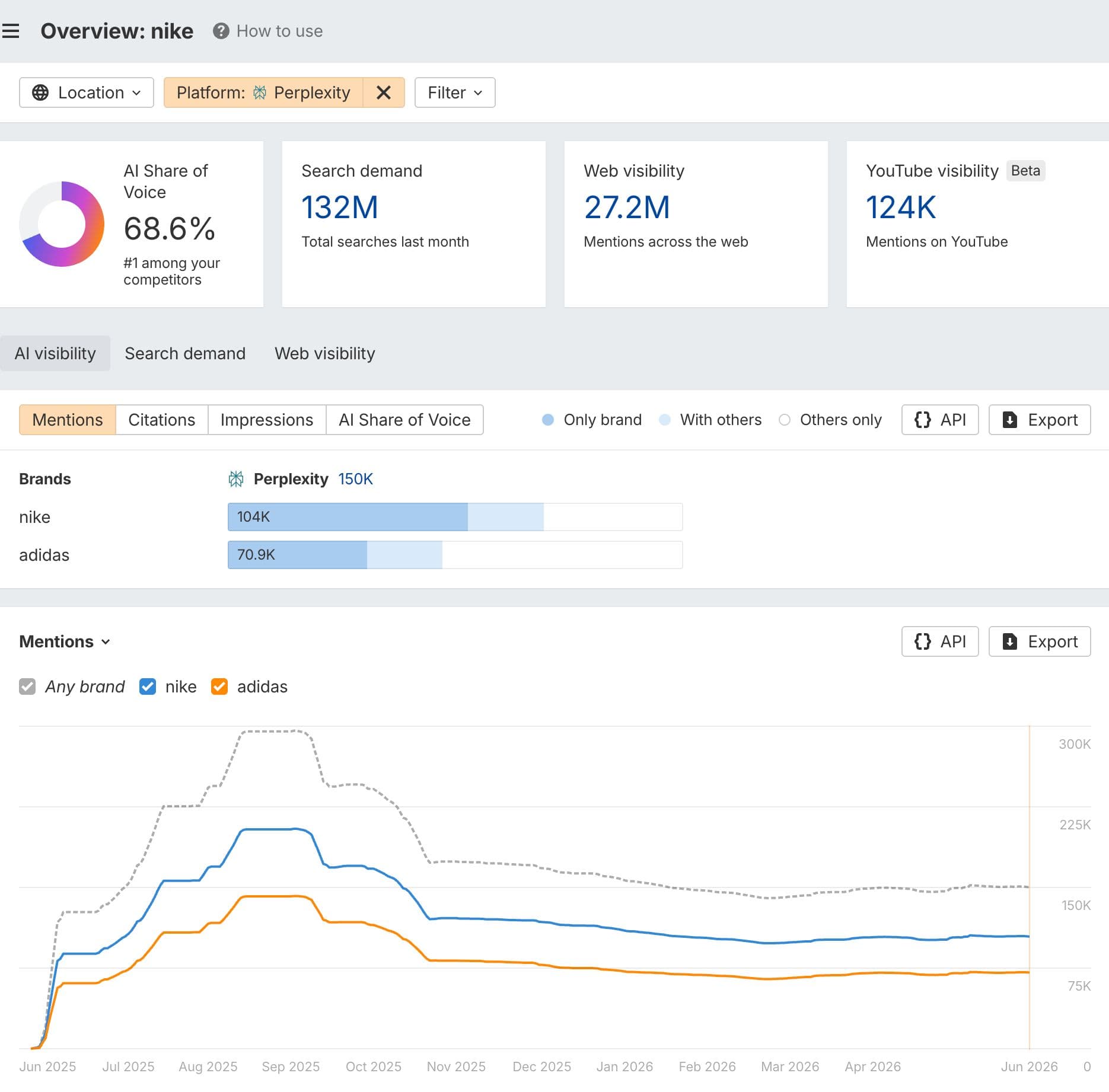
The important fight in AI search is no longer about who ranks first. It is about who gets cited, how often, and how much of the answer engine’s attention a domain can hold over time. Ahrefs’ June 1, 2026 Perplexity study puts that shift into sharp relief by measuring mention share, a domain’s citations as a percentage of the summed citations of the top 50 most-cited sources.
Citation share is the new visibility layer
That framing matters because Perplexity does not behave like a classic blue-link search engine. Perplexity says it is an AI answer engine that researches the open web in real time and returns concise, cited answers, and its help center calls it the world’s first answer engine with sources and citations included. In that environment, a brand is not just chasing one appearance. It is competing to become part of the answer foundation, the set of sources Perplexity repeatedly leans on when a user asks a serious question.
Ahrefs’ approach makes that competition measurable. By using mention share, the analysis shows how much of Perplexity’s source attention each website captures, and because it updates monthly through Brand Radar data, the picture is meant to move with the market rather than freeze it in a single snapshot. The practical lesson is blunt: if your domain is not taking share, another one is. In an answer engine, visibility is a zero-sum contest for citations.
How Ahrefs turns AI visibility into a measurable market
Brand Radar is the engine underneath that measurement. Ahrefs says the platform is powered by search-backed prompts, and its public page says it tracks AI visibility across AI answers, YouTube, and Reddit. The same page says its prompt database includes Perplexity and spans 389M+ total monthly prompts across the supported systems.
That scale is what makes the analysis useful for publishers and brands trying to understand AI discovery. Instead of asking whether a page can rank for a keyword, the question becomes whether a domain can earn a recurring place in the prompts that lead to sourced answers. Ahrefs’ mention-share model does not treat citations as decoration. It treats them as the product itself, which is exactly how Perplexity presents the experience to users.
The biggest strategic shift here is distribution. Ahrefs’ setup is built to reveal whether Perplexity spreads attention broadly across many domains or concentrates it among a smaller group of repeat winners. Because share is measured against the sum of the top sources, the market reads as a fixed pie: one domain’s gain is another domain’s loss. That is the most useful way to think about AI visibility right now.
Why Perplexity’s product design makes source competition unavoidable
Perplexity has spent years making citations part of its identity, not a side feature. In July 2024, the company said that from day one it included citations in each answer to ensure publishers receive proper credit and to build user trust. That positioning is important because it turns source selection into a public signal. When a user can see the references, the absence of your content is just as visible as its presence.
Perplexity’s publisher strategy reinforces that point. The company launched its Publishers Program on July 30, 2024 with initial partners including TIME, Der Spiegel, Fortune, Entrepreneur, The Texas Tribune, and WordPress.com. On December 5, 2024, it expanded the program by adding more than a dozen media partners, including The Los Angeles Times and The Independent. Those moves show that citation visibility is not only an SEO problem. It is also part of Perplexity’s broader effort to build licensing, trust, and publisher relationships around sourced answers.
That backdrop also explains why the market around AI citations has become so contested. Reuters reported in October 2024 that The New York Times sent Perplexity a cease-and-desist notice over content use, even as the company was publicly expanding publisher partnerships. The tension is obvious: AI answer engines depend on outside material, but the people who create that material want credit, control, and often compensation.
What repeated citation share means for publishers
For publishers competing for mention-level visibility, the target has changed. It is not enough to appear once in a query response. The stronger play is to become a reliable source that surfaces across repeated searches in your category. That means building content that is structured for extraction, easy to verify, and useful inside a cited answer, not just clickable in a results page.
In practice, the sites that tend to win this game are the ones that make source selection easy:
- Clear definitions and concise explanations that answer the question directly.
- Strong attribution, so the material is easy for an answer engine to trust and quote.
- Deep coverage of niche topics where the domain can become the obvious reference.
- Clean structure that helps an AI system lift the right passage without confusion.
That is where Ahrefs’ citation-share lens becomes valuable. It tells teams whether they are building a durable position in the answer market or merely collecting occasional mentions. The difference matters because Perplexity’s model rewards recurring source usefulness, not just isolated discoverability.
Deep Research raises the stakes even further
Perplexity’s 2025 Deep Research announcement makes the source economy even more aggressive. The company said the feature can perform dozens of searches and read hundreds of sources to produce a report. That signals a product direction built around heavier research depth and more citation opportunities, which means the pool of potentially relevant sources gets wider even as the competition for actual share stays ruthless.
The result is a more demanding visibility landscape for brands and publishers. If Perplexity is reading hundreds of sources but only elevating a select group in its answers, then the fight is not for presence in the web at large. It is for inclusion in the answer stack that users actually see. Ahrefs’ study captures that reality better than a simple ranking report ever could.
The bottom line
Ahrefs’ Perplexity study is useful because it changes the question. It asks not who ranks, but who gets cited, how often, and how much of the platform’s source attention a domain controls. In a product that surfaces sources by design, citation share is the clearest proxy for AI visibility, and the publishers that understand that will stop chasing traffic alone and start competing for repeated inclusion in the answers themselves.
This article was produced by Prism’s automated news system from verified source data, official records, and press releases, then run through automated quality and moderation checks before publishing. The system is built and supervised by the people who set the standards it runs under. Read our full AI policy.
Know something we missed? Have a correction or additional information?
Submit a Tip