AI Overviews pull paid search into the answer layer
AI Overviews are compressing the click path, and that means paid search has to earn its place inside the answer itself.
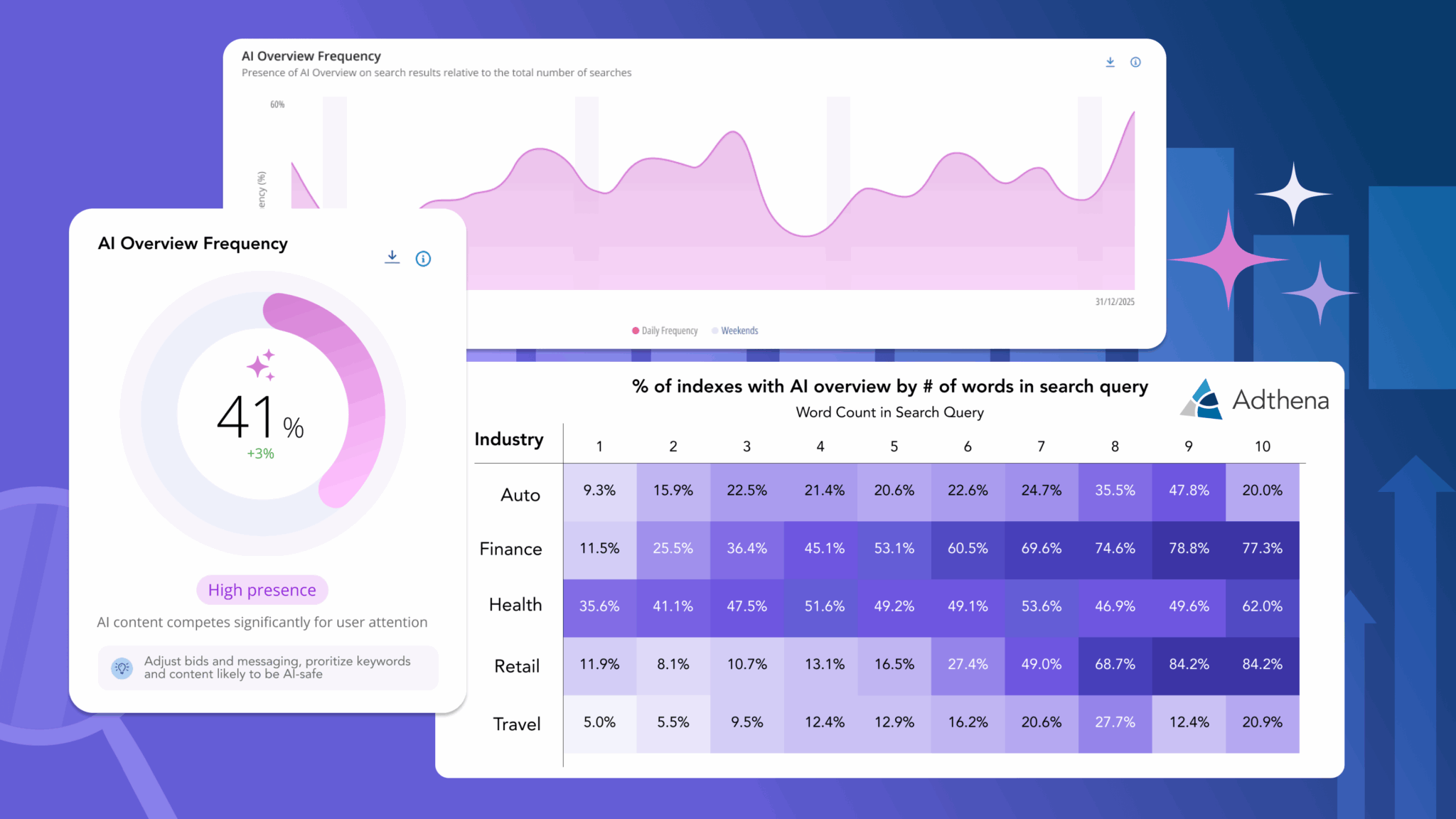
Paid search is now competing inside the answer
AI Overviews are changing search economics by moving discovery and decision-making onto the results page itself. Sarah Vlietstra’s guide makes the core shift plain: if the answer is delivered before the click, advertisers have fewer chances to win attention the old way and more reason to make campaigns eligible for the answer layer in the first place.

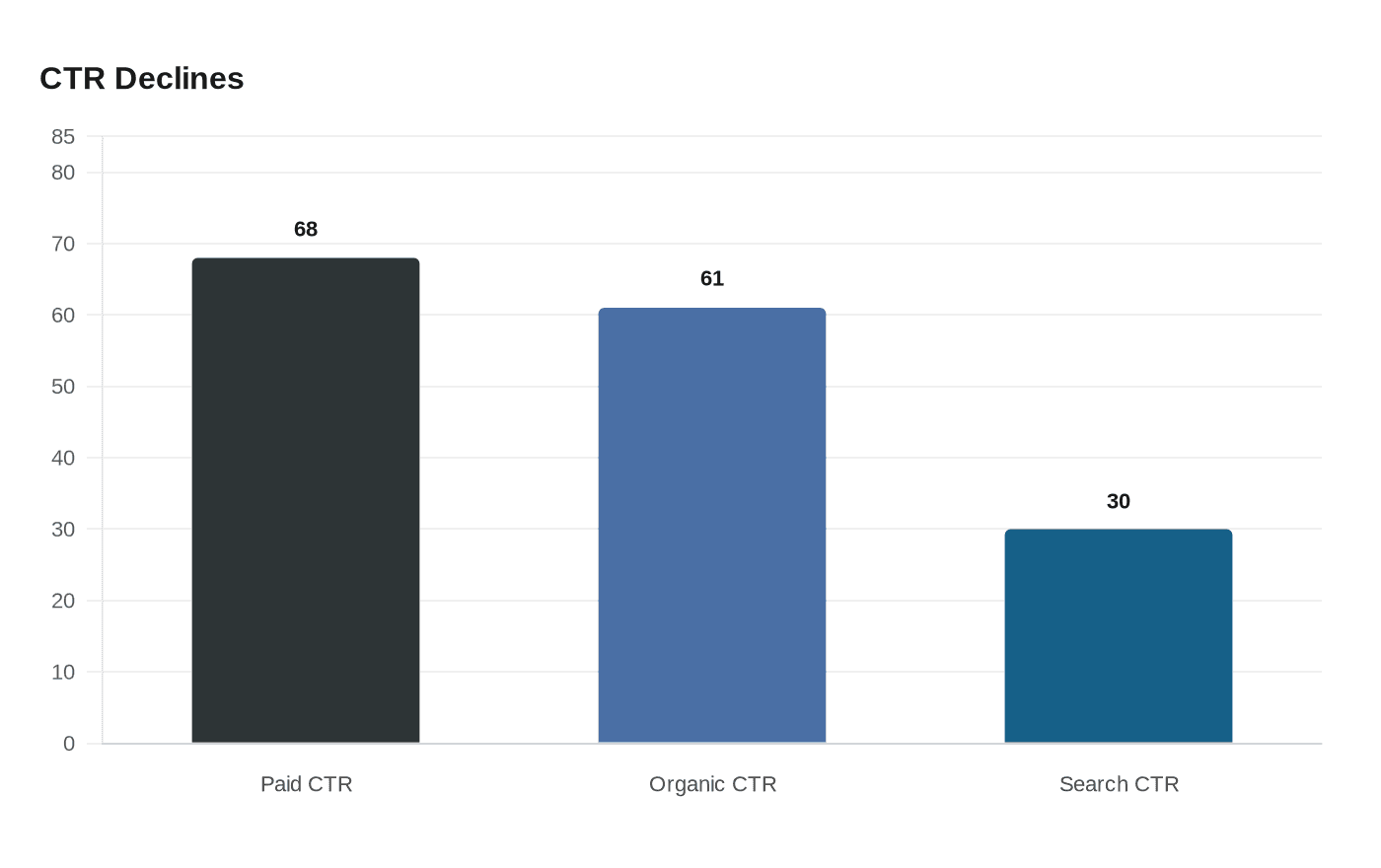
That matters because the surface is already massive. Google first rolled AI Overviews out to everyone in the United States in May 2024, then expanded them to more than 100 countries and territories in October 2024. Google has since said AI Overviews reach more than 1 billion users monthly, which helps explain why marketers are now treating them as a structural change, not a passing interface test. Independent analyses have added to the urgency, with Search Engine Land citing Seer Interactive data showing paid CTR on informational queries with AI Overviews fell 68% and organic CTR fell 61% since mid-2024, while BrightEdge reported search CTR down 30% year over year in a separate analysis.
Where ads can actually appear
Google’s own guidance now makes clear that text and Shopping ads from existing Search, Shopping, and Performance Max campaigns are eligible to show within AI Overviews. Google also says it evaluates both the user query and the AI Overview content when deciding whether to serve ads, which pushes campaign planning upstream. The issue is no longer just bidding into a keyword set; it is shaping the signals Google uses to decide whether your ad fits an answer-rich search result.
Placement is also more nuanced than many advertisers assume. Google has confirmed that ads in AI Overviews can show either above or below the overview, or within it, but not both at once. That means visibility is tied to how well the campaign and creative align with the query context, not simply to how aggressively an account bids.
There are limits as well. Google says it does not show ads in AI Overviews for sensitive verticals including adult, alcohol, gambling, finance, healthcare, and politics. For advertisers outside those categories, the opportunity is real, but it is filtered through a tighter eligibility system than traditional search.
The campaign types Google is favoring
The guide points advertisers toward the campaign types most likely to surface in this environment: Shopping, Performance Max, and AI Max for Search. That mix is telling. Google is rewarding systems that can combine feed quality, audience signals, and creative flexibility, rather than campaigns built around a single keyword strategy.
AI Max for Search is the clearest signal of where Google wants the market to go. Introduced in May 2025, it was described as a one-click suite of targeting and creative enhancements. Google later said in September 2025 that AI Max was rolling out globally in beta, and in April 2026 it said AI Max for Search was moving out of beta while legacy Dynamic Search Ads would begin upgrading to AI Max in September. Google has also said all advertisers globally can use AI Max in beta across Google Ads, Google Ads Editor, Search Ads 360, and the Google Ads API.
That rollout matters because it turns AI-driven coverage into a default operating model. If Dynamic Search Ads are being funneled into AI Max, the industry is being nudged toward broader automation, but with a stronger emphasis on structured inputs that tell Google what should appear and why.
How to redesign campaigns for the answer layer
The biggest mistake is treating AI Overviews like a pure automation problem. The practical challenge is not just whether Google can run your ads in a new placement; it is whether your campaigns give the system enough evidence to place them there with confidence.
The strongest tactics are concrete:
- Keep product feeds clean and complete, especially for Shopping and Performance Max.
- Match landing pages tightly to query intent so the page reinforces the same answer the searcher is seeking.
- Build audience structures that give Google richer signals about who should see the ad and in what context.
- Write creative in more conversational language, because the overview itself behaves like an answer surface rather than a standard results block.
- Audit query themes by intent, not just by keyword volume, so the campaign structure maps to how people ask questions inside AI-led search experiences.
This is where the work becomes more operational than philosophical. Feed quality now influences visibility, landing page relevance matters more because the system is judging contextual fit, and audience data helps Google place the ad inside a SERP that is already trying to resolve the query on its own. Retailers and performance marketers who keep only a bidding-first mindset will miss the point: the new competition is for eligibility inside the response, not just rank on the page.
What this means for paid search teams right now
The shift to AI Overviews rewards accounts that are built for signal density. Campaigns need stronger product data, clearer intent clustering, and creative that can survive in a conversational environment where the user may never reach a traditional list of blue links. That is especially true for Shopping and Performance Max, which already rely on asset quality and feed integrity, and now have to compete in a surface where the answer and the ad are closer together.
Google’s changes also show that this is not a side project. The company brought ads into AI Overviews for desktop users in the United States at Google Marketing Live 2025, then kept expanding AI Max globally and began the transition away from legacy Dynamic Search Ads. Taken together, those moves signal a durable redesign of search monetization.
For advertisers, the lesson is straightforward: campaigns must be built for the answer layer now. The brands that win will not just chase clicks after the fact. They will create the feeds, pages, signals, and creative that make them eligible when Google turns the search page itself into the response.
This article was produced by Prism’s automated news system from verified source data, official records, and press releases, then run through automated quality and moderation checks before publishing. The system is built and supervised by the people who set the standards it runs under. Read our full AI policy.
Did this article answer your question?