AI search leans on YouTube for high-intent purchase queries
AI assistants are turning YouTube into a purchase-decision layer, citing it far more than other video platforms and rewarding brands that show up in long-form, name-rich videos.
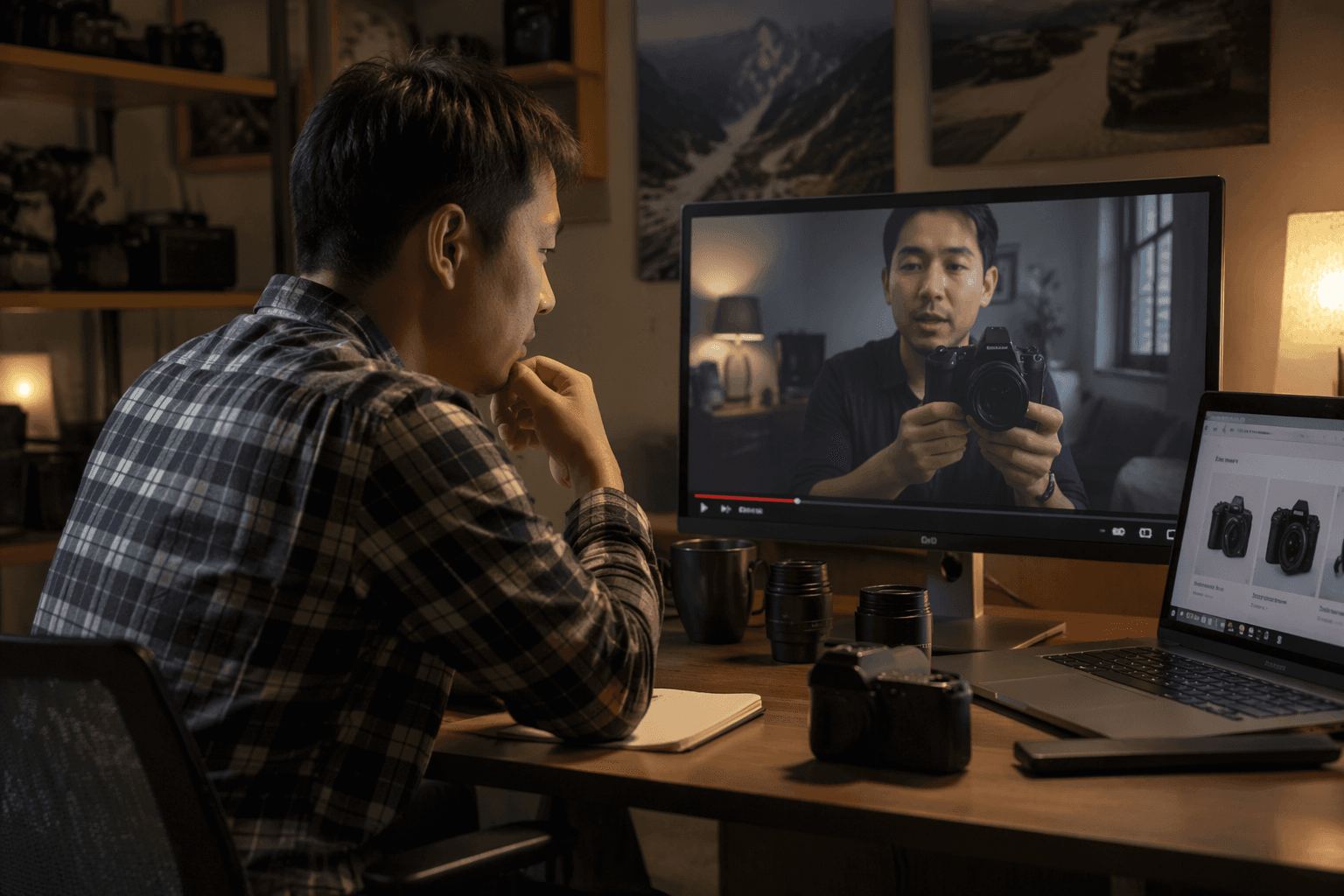
AI search is treating YouTube less like a media channel and more like a proof engine. For high-intent queries about pricing, product demos, reviews, and deal hunting, the systems are leaning on video as evidence, even when the video itself is not especially polished or popular. That creates a new credibility problem for brands: visibility is no longer only about ranking on the web, but about whether your video assets can be pulled into the answer layer when a buyer is already close to deciding.
YouTube is winning the retrieval contest
BrightEdge’s data makes the scale of the shift hard to ignore. Across ChatGPT, Perplexity, and Google’s AI products, YouTube was cited 200 times more than any other video platform. In Google AI Overviews, YouTube accounted for 29.5% of citations, and in Google AI Mode it still held 16.6%, while TikTok, Vimeo, Dailymotion, and Twitch barely registered.
That matters because the strongest citation patterns showed up exactly where commercial intent peaks. BrightEdge said YouTube was especially common on tutorials, pricing queries, deal-hunting searches, product demos, and reviews. In other words, AI search is not using video mainly for entertainment or background context. It is reaching for YouTube when users want help comparing options, validating claims, or getting a fast answer before a purchase.
Why low-quality videos can still shape AI visibility
This is the uncomfortable part for brands: citation power does not always track with production quality. The emerging pattern suggests that AI systems are prioritizing informational usefulness and semantic relevance over the old human signals of polish, subscriber count, or glossy editing. If a video clearly names a brand, covers the relevant category, and speaks to a transactional question, it can surface even if the asset would never feel like a standout piece of content in a human feed.
That is why this issue is really about bottom-funnel credibility. A weak but on-topic YouTube video can become a machine-readable source of truth at the exact moment a buyer is deciding which product, service, or platform deserves attention. For brands, the strategic takeaway is simple: if YouTube is part of the answer layer, then the quality bar is not just aesthetic. It is clarity, relevance, and retrievability.
The strongest brand signal is still the brand name on the video
Ahrefs gives this story its most useful tactical clue. After analyzing 75,000 brands, the company found that YouTube mentions were the strongest correlated signal for AI visibility across ChatGPT, Google AI Mode, and Google AI Overviews. Ahrefs reported a Spearman correlation of about 0.737, and defined YouTube mentions as brand names appearing in video titles, transcripts, or descriptions.
That definition matters. It means AI systems are not just rewarding a channel’s existence. They are reading the text around the video and using those textual signals to decide whether a brand should be surfaced. Ahrefs also found that branded web mentions correlated strongly, but slightly less than YouTube mentions, which reinforces how central video has become in the AI visibility stack.
The practical lesson is not to chase views for their own sake. It is to make sure the right brand and product language is embedded where AI can read it: in the title, in the transcript, and in the description. A video that says the name clearly, explains the use case plainly, and stays tightly connected to the query has a better chance of becoming citation material than a broader, prettier brand film.
Long-form video is doing the heavy lifting
OtterlyAI adds another important layer. In its 2026 study, 94% of AI citations went to long-form YouTube videos rather than Shorts. That suggests AI systems are still treating depth as a proxy for trust, especially when they need enough context to cite or summarize a product claim.
OtterlyAI also found that timestamped YouTube citations appeared in Google AI Overviews and Google AI Mode, but not in ChatGPT, Gemini, Microsoft Copilot, or Perplexity during its study window. That difference points to a platform-specific behavior in Google’s products: they are not only pulling video, they are pointing users to exact moments inside it. For commercial content, that is a strong signal that chaptered, structured videos may be easier for AI to parse and reference.
This is where format starts to matter as much as topic. A 45-second Short might be useful for social reach, but the citation pattern favors long-form assets that can explain, compare, and demonstrate. If the goal is AI visibility for purchase queries, the useful benchmark is not virality. It is whether the video can serve as a compact, well-labeled source of evidence.
Google’s own AI stack helps explain the trend
Google’s multimodal direction lines up with what the citation data is showing. Gemini 2.5 supports video understanding, and Google says support for YouTube videos is available through the Gemini API and Google AI Studio. That means video is not an afterthought in Google’s AI ecosystem. It is a first-class input that can be interpreted, indexed, and surfaced in response workflows.
Taken together, the product direction and the citation behavior point to the same conclusion: Google is building AI systems that can actually watch, understand, and reuse video. Once that becomes reliable, YouTube stops being just a discovery surface for people and becomes a retrieval layer for machines. That is the bigger shift brands need to plan for.
What makes a YouTube asset citation-worthy for commercial queries
The winning assets are likely to be the ones that combine machine readability with buyer utility. Based on the studies, the most citation-worthy videos are the ones that do three things well:
- Name the brand, product, or category clearly in the title, transcript, and description.
- Answer a bottom-funnel question directly, especially around pricing, comparisons, reviews, demos, or how-to guidance.
- Use long-form structure so the video contains enough context for an AI system to pull a relevant passage.
There is also a subtle but important implication in the Ahrefs data: even low-view videos can matter if the brand is mentioned often enough. That should change how teams think about production. You do not need every YouTube asset to be a campaign centerpiece. You need a dependable stream of useful, clearly labeled videos that cover the questions buyers actually ask.
The old mental model treated YouTube as a place to build awareness. The newer one treats it as a source of evidence inside AI search. For brands competing on commercial intent, that means video presence is now part of transactional visibility, and transactional visibility is where trust converts into demand.
This article was produced by Prism’s automated news system from verified source data, official records, and press releases, then run through automated quality and moderation checks before publishing. The system is built and supervised by the people who set the standards it runs under. Read our full AI policy.
Did this article answer your question?