AI search visibility hinges on citation accuracy, not just inclusion
AI visibility is won by citations that truly support the answer, not by being name-checked in a box.
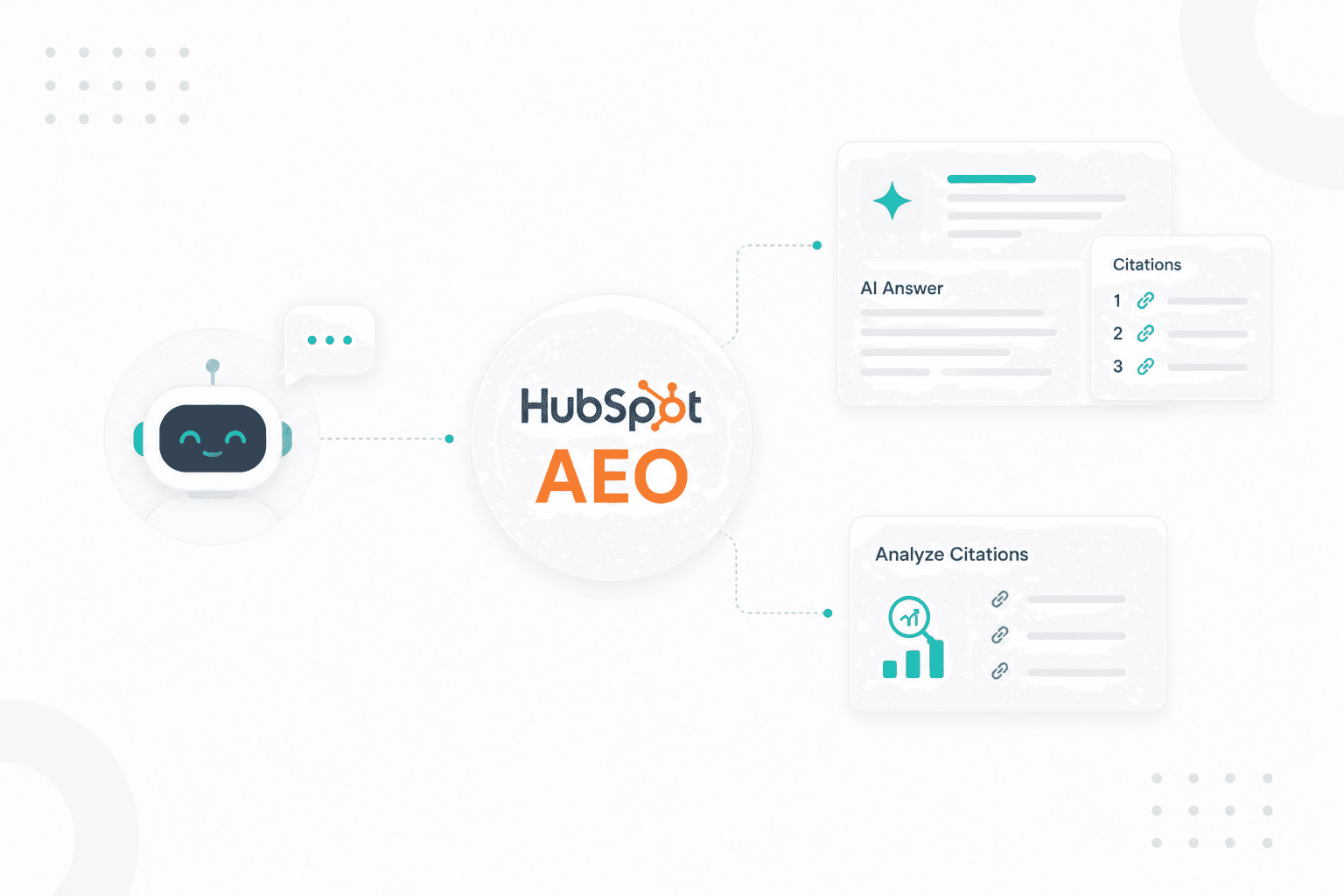
Generative search now rewards a harder standard than inclusion: a page has to help form the answer, not just appear near it. The distinction matters because an AI mention can be performative when the cited source does not actually support the sentence beside it. In practice, citation visibility only becomes source credibility when the answer is grounded, the attribution is accurate, and the citation materially shapes the output.
Citation visibility is not the same as grounding
The clearest warning comes from a Stanford EMNLP 2023 audit of Bing Chat, NeevaAI, Perplexity.ai, and YouChat. The researchers split verifiability into two tests: citation recall, which asks whether all claims are fully supported by citations, and citation precision, which asks whether each citation really supports the statement attached to it. That distinction is the core issue in AI search visibility, because a result can be surfaced and linked while still failing to support the answer with enough accuracy to earn trust.
The audit found fluent, informative systems that often missed on grounding quality. On average, only 51.5 percent of generated sentences were fully supported by citations, and only 74.5 percent of citations supported the sentence they were attached to. Those numbers separate presence from proof: inclusion alone is a weak signal if the cited material does not actually carry the claim.
Why trust breaks at the sentence level
For publishers, the practical problem is not just whether a page appears in an AI answer. It is whether the model can quote it faithfully, attribute it correctly, and use it in the right place. A citation that is decorative, vague, or only loosely related may increase visibility, but it does little for credibility if the surrounding sentence overstates what the source says.
That is why quote fidelity matters as much as mention volume. A source should be treated as evidence, not as set dressing. When an AI system cites a page that does not materially shape the answer, the citation becomes a visible badge with little analytical weight, and that is exactly the gap between being found and being trusted.
Search systems do not behave consistently
A 2026 ACL paper widened the frame by comparing Google organic search with five generative search systems from Google, OpenAI, and Perplexity. The study found substantial variation in how those systems rely on internal knowledge versus external sources, how diverse their source sets are, and how stable their outputs remain across time and repeated executions. That means the same query can produce different answer behavior and different source footprints depending on the engine and the run.
For AI search visibility, that instability changes the publishing goal. It is no longer enough to optimize for one retrieval event. Content has to survive reranking, synthesis, and repeated prompting across engines that may not pull from the same evidence base in the same way. The result is a moving target: visibility is partly about ranking, but increasingly about whether the page remains a dependable citation candidate across multiple executions.
What the citation-quality problem looks like in practice
The 2026 study’s cross-engine comparison shows why source diversity and stability are now buying criteria for visibility, even when the audience is technical rather than consumer-facing. If one system leans on internal knowledge while another leans heavily on external sources, the same page may be cited in one answer and ignored in another. If outputs vary from run to run, the page must be structurally clear enough to be repeatedly selected when the model re-synthesizes the answer.
That puts pressure on page-level evidence. Pages that make discrete claims, label them cleanly, and connect those claims to specific supporting material have a better chance of surviving the variability. The issue is not only getting into the candidate set, but remaining legible when the model chooses among possible sources.
GEO-16 turns visibility into an evidence problem
A separate 2025/2026 arXiv audit collected 1,702 citations from Brave Summary, Google AI Overviews, and Perplexity across 70 product-intent prompts and 1,100 unique URLs. From that dataset, the authors proposed GEO-16, a 16-pillar framework meant to translate page quality signals into a normalized score. The framework matters because it reframes optimization away from broad visibility talk and toward measurable page attributes that influence citation behavior.
That approach fits the broader finding from the Stanford audit and the ACL comparison: quality has to be legible to the system that selects and cites the page. Clear claims, tighter structure, and cleaner evidence signals are not cosmetic improvements. They are the conditions that make a citation more likely to be accurate, repeatable, and actually useful to the answer.
What trusted should mean in practice
The right test is not whether an AI assistant mentions a brand, paper, or page. The test is whether the cited source materially shaped the answer, whether the quotation or paraphrase stays faithful, and whether the citation really supports the adjacent claim. If those three things are missing, the citation may raise visibility without producing credibility.
That is the deeper lesson for AI search visibility: inclusion is a surface metric, but trust is an evidentiary standard. The pages that endure are the ones that can be repeatedly retrieved, consistently cited, and accurately used as support when the model assembles the answer.
This article was produced by Prism’s automated news system from verified source data, official records, and press releases, then run through automated quality and moderation checks before publishing. The system is built and supervised by the people who set the standards it runs under. Read our full AI policy.
Did this article answer your question?